Recurring themes in fiction

Many fiction writers include similar characters, settings, plot lines and underlying themes in different books even if they are not part of a series. This may be deliberate, if they have already found a successful formula and want to give readers more of the same. At other times it happens less consciously, and reflects personal experience or psychology.

In my last post I wrote about entering my eligible novels, through Draft2Digital, into Apple’s trial of digitally narrated audiobooks. Cardamine was first to be published in this format, and Carmen’s Roses is now available too. These two books were originally written several years apart, and until I listened to the previews of their first chapters I hadn’t quite realised that they both begin with an Englishwoman taking a holiday in New Zealand. Not surprising really, because such holidays were a significant part of my own life before I moved permanently to Auckland. Cardamine and Carmen’s Roses are quite dissimilar otherwise although their plots both involve a missing woman. This is the case in some of my other writing too although I don’t know why. I also realise that several of my novels feature unpleasant male doctors. These characters are not based on any one real individual, but are informed by various interactions I have had during my own medical career and as a patient myself. 

Cardamine, Carmen’s Roses and some of my other books can be found at https://books2read.com/jenniferbarraclough.    

The audiobook of Cardamine

I’m pleased to announce that my novel Cardamine: a New Zealand mystery is now available from Apple’s Audiobook Store.

Producing an audiobook in the traditional way, with the text read by live actors, is so expensive and time-consuming that I have never considered doing it. But I was recently invited through Draft2Digital to submit some of my fiction books for inclusion in Apple’s trial of using digital voices. It was free for me to take part, so I decided to accept.

Cardamine is set in New Zealand in the summer of 2019. Kate, on the last day of her backpacking holiday, loses her bag in a vineyard and misses her flight home to England. An eccentric elderly man comes to her rescue and invites her to stay on as his paid companion in his country home. The man’s wife is away, said to be back in her home country, but Kate comes to suspect that her absence has a more sinister explanation… 

My digital voice, called Amberley, has a British accent appropriate for the character of Kate. She’s not very good at pronouncing Māori place names, but otherwise I think she does a good job of telling the story. I am interested to see that Apple has set the price at twice that of the e-book, even though it was presumably very cheap to produce, and it will be interesting to see if anyone buys it.  

This book and some of my others others can be found at https://books2read.com/jenniferbarraclough

eBooks old and new

My new ebook Migraine and Me is nearly finished but I’ve left the final draft aside for a while, so I can check it through with fresh eyes before publication.

Meanwhile I’ve been continuing my project of “Going wide with D2D”. The aims are to bring some of my earlier books to a wider readership, and to update my basic skills in formatting text and using self-publishing technology. So Wellbeing for Writers and Beautiful Vibrations are now available not only from Amazon Kindle (kdp) as before, but also from many other ebook retailers as shown on this link http://books2read.com/jenniferbarraclough.

“A short practical guide about how to enjoy the journey to becoming a (self)published author, and how to cope with challenges such as lack of time for writing, lack of inspiration, negative criticism, and aversion to marketing. Jennifer’s experience as an author of both fiction and non-fiction books, combined with many years of working with clients in various therapeutic settings, has given her a wide personal understanding of the psychology of writing. This little book includes many practical tips for making the process run smoothly, and enhancing mental and physical wellbeing.”

“Anxiety, sadness, anger and loss of hope are common responses to serious or chronic illness. Symptoms of the condition itself, side-effects of treatment, concerns about diagnosis and prognosis, restriction of activity, and changes in relationships take their toll on both body and mind. Ideally, negative feelings will soon be replaced by a more positive adjustment, but sometimes they are severe or prolonged. Bach flowers are not a cure for physical disease but help to relieve the emotional distress often associated with it. Dr Edward Bach described them as having ‘beautiful vibrations’ capable of promoting positive mental states such as hope, courage and calm. This practical guide, illustrated by case histories and flower photos, explains how to select and use the remedies as part of a holistic approach to healing. Despite all its unpleasant aspects, the experience of illness can have a silver lining and the flower remedies help to bring this out.”

Going wide with D2D

In the world of indie publishing, “going wide” means listing books on several platforms rather than just one. Until now my self-published ebooks have only been available through Amazon KDP (Kindle Direct Publishing), though the print versions were already distributed more widely. Amazon has led the way in enabling writers to publish their work at minimal cost and I had been quite happy dealing with them over the years. But many complaints about their customer service can be found online, and I recently had a frustrating experience myself.

I was unable to access my KDP account because the one-time passwords (OTPs) were no longer coming through to my iPhone. I wasted hours on repeated failed attempts, online chats and calls to America. The customer service agents all tried to be helpful and suggested various solutions, which included sending copies of my passport and driving licence to Amazon. Nothing worked. I eventually discovered from another author on a local Facebook group that the problem was nothing to do with me personally, but affected all New Zealand phone numbers, and the remedy was to use an authentication app instead of an OTP.

This saga prompted me to look at other options, and so far I have republished two of my ebooks through the distribution platform Draft2Digital (D2D). These books are still available on Kindle, though no longer in the exclusive “Select” program, but are now also listed by many other retailers worldwide. I found D2D easy to use, because authors just need to upload their text, and D2D’s computer will deal with formatting and add details such as the title page and table of contents if required. I sent a couple of queries to the help desk and received helpful and intelligent replies.

The next challenge is to sell more books, and this is the difficult part. I love the process of writing them, and also enjoy learning the basics of how to format texts and upload them to the internet. But I thoroughly dislike marketing and seldom do any, other than via occasional posts on this blog, and therefore get very few sales. That doesn’t matter from a financial viewpoint because I don’t depend on authorship as a source of income. But it is nice to earn a little money in return for all the work I’ve put in, and more importantly to know that some people read and hopefully enjoy what I write.

So if you haven’t seen them already, please have a look at my two most recent novels which are both gentle mystery stories involving family relationships and domestic crimes. You Yet Shall Die is set in rural England with a timeline ranging from the 1940s to the 2000s. Cardamine is set in New Zealand just before the Covid pandemic. The ebook versions are available from many different retailers as well as Amazon; have a look through this link.

Changing covers

As a self-published author I really enjoy choosing the covers for my books, but have learned that it’s not just about finding a pretty picture. The cover image is very important for marketing purposes, so it can be worth employing a professional designer rather than relying on stock photos. “Don’t judge a book by its cover” may be good advice in theory but, in practice, our first impressions about both objects and people are usually based on their appearance. A split-second glance at the cover often determines whether or not a potential reader will look inside.

What makes a good cover for a novel? Ideally the image, in combination with the title, will “capture the essence of the book” so as to appeal to its target audience – a tall order. Experts advise that the image should be relevant to the genre, but distinctive enough to stand out from other titles in the field. It should convey something about the story in a way that excites readers’ curiosity. The design is best kept fairly simple, with a single focal point to draw the eye, and needs to look good in thumbnail view. Personally I think the colour scheme is also very important.

A highly skilled artist may be able to ignore these rules, and create a cover image which looks so stunning that it attracts potential readers even if it bears no obvious relation to what the book is about.

Revamping a book’s cover from time to time can stimulate sales by attracting a fresh group of readers, and I recently changed the image for my novel You Yet Shall Die. The original version showed a photo of the North Kent marshes, where much of the story is set. I really liked the appearance of that one, but it gave little indication of the genre or content. The new version, featuring an old-fashioned dressing table strewn with books, is more relevant to the plot and more likely to appeal to the mature women who are the main target audience – hopefully without putting off all the men, considering that several of my male friends have enjoyed it.

Original cover on the left, new one on the right.

You Yet Shall Die is a gentle mystery novel set in Kent and Sussex. Who is the woman who claims to be Dr Harper’s “love child”? What was the true cause of his wife’s early death? As Hilda Harper researches her parents’ early lives in postwar Oxford and Swinging London’s nightclub scene, she discovers some shocking secrets but also finds new hope for her own future. You Yet Shall Die is available in paperback or ebook format from Amazon.comAmazon.co.uk and other Amazon marketplaces.

Classifying crime fiction

The crime fiction genre is a broad field which includes multiple sub-genres: old-style country house murder mysteries, police procedurals, courtroom dramas,  psychological thrillers, location-based books such as Scandinavian or Scottish noir, and more. The emphasis nowadays is often on character and psychology rather than solving “whodunnit” puzzles, and there is an increasing overlap with general or literary fiction.

The classification of such books on Amazon is a great deal more complicated than the above descriptions might suggest. Many of the self-published authors I know are uncomfortable with internet marketing, or would rather spend their time on actual writing than on studying this aspect. But unless they know how to select categories and keywords wisely, their books will have little chance of being discovered by new readers. Having found it a challenge to use the system myself, I am writing this post to summarise my understanding of how it works. The following information will be too basic for experienced writers but may be useful for beginners. My examples relate to crime fiction but similar principles apply for any other genre. Plenty of more detailed advice can be found online.

Authors setting up their book descriptions on kdp (Amazon Kindle Direct Publishing) will be asked to select up to seven keywords. These can be either single terms or short phrases, and should be as specific to the content of the book as possible. There are certain rules regarding the choice of keywords, as explained below. Then they are presented with a list of categories corresponding to the BISAC (Book Industry Standards and Communications) system. They can select two categories from this list, and except for books that clearly belong to a specific sub-genre it is advisable to choose two different ones. For crime fiction, at least one of these would probably be “Crime” “Mystery and Detective” or “Thrillers”. Some books could also be put into other categories, for example “Family Life”. Again, is advisable to be as specific as possible by using the smaller subcategories as well as the main ones.

The chosen combination of keywords and BISAC categories will be used by Amazon to decide where to place the book in their system of “browse categories”, which number several thousand. A selection of these will be shown to potential readers who are searching the website for books of interest to them. For example, when I look on my computer for my favourite genre of “domestic noir”, a list of 20 other categories – 10 for books and 10 for Kindle – comes up on the left side of the screen.

Some categories have keyword requirements, for example a book will not be assigned to “Mystery, Thriller & Suspense/Mystery/Cozy/Culinary” unless one of the terms “food” “cook” or “bake” is included as a keyword. See this link for a full list of these regulations. Authors can email Amazon staff through Author Central to ask for their books to be placed in certain categories. There are minor variations between Amazon.com and Amazon.co.uk, and revisions are continually being made.  

I also publish my ebooks on Smashwords.com which uses a simpler system. The categories “Mystery & Detective” and “Thriller & Suspense” each have five subdivisions. “Crime” can be found as a subcategory under “Themes and Motifs”.

The good news for self-published authors who find this topic daunting is that they can change their categories and keywords as often as they wish. It is therefore possible to experiment with what combinations are most successful, as measured by Amazon sales rankings – shown on Author Central pages, or at the bottom of the product description for each book – or better still by actual sales. But the field is so competitive that few unknown authors will achieve much success through optimal categorisation alone, and will need to use additional methods of marketing.


Reflections on self-publishing from Margaret River

I spent last weekend in Margaret River, a small town south of Perth in Western Australia, at an informal reunion meeting for doctors from Oxford UK who now live in the Antipodes. Besides visiting some local vineyards, beaches, and limestone caves, most of us gave short talks to the group. Mine was on a non-medical topic – a basic overview of self-publishing. The content was not specific to doctors, but relevant to aspiring “indie authors” from any profession, so I’ll summarise it here.

First a brief personal background. Back in the 80s and 90s it was easy enough to find a traditional publisher for books about my medical specialty. I wrote or edited eight titles for academic publishers in the UK, and was sometimes even invited to produce new ones. It therefore came as a humiliating shock when my first novel was met with a series of rejection letters – some polite and encouraging but others not. After a particularly painful rebuff I gave up for many years. Then, when the self-publishing movement came on stream, I retrieved my faded typewritten manuscripts from the boxes where they had languished for so long and started revising them, as well as writing new ones. I have now become an indie author with eight titles to date, published as print-on-demand (POD) versions with Amazon CreateSpace, and as e-books on Smashwords and Amazon Kindle.

While so-called “vanity publishing” used to be expensive and stigmatized, now in the digital age self-publishing has become acceptable and affordable. So much so that everyone seems to be doing it – thousands of new books are self-published every day. A few, most famously Fifty Shades of Grey, are highly successful but most sell only a few copies. Those who embark on indie authorship in the hope of financial profit are therefore likely to be disappointed but there are many other rewards, as well as some potential pitfalls.

Besides writing the best possible content, indie authors have to deal with all the other aspects of the publishing process, although rather than do everything yourself you can employ some of the many freelance experts who can be found online. Editing and copy-editing are essential and I would strongly recommend that besides carefully checking the text yourself you ask several other people, whether professionals or honest friends, to point out the typos and mistakes in continuity that are almost always present. Formatting the text properly requires some technical expertise, and while some self-publishing platforms will accept whatever is submitted to them, others have strict formatting requirements. Uploading the completed text from a PC or Mac to your chosen online platform(s) is usually easy to do.

The following points are relevant for marketing purposes. Cover design is important because a split-second glance at the thumbnail image is often the basis on which potential readers will decide whether or not to “look inside” the book. Writing an enticing blurb, and choosing the most suitable categories and key words, will also help to attract readers. As regards pricing, the option of offering your e-books free of charge is undoubtedly the best way to obtain plenty of downloads but, unless your motive is to inform and uplift your readers rather than make a profit, giving away any more than a 20% sample would seem to devalue all the work which goes into their creation.

Self-publishing has both pros and cons when contrasted with the traditional route. Indie authors are assured of publication and have the freedom to control most aspects of the process. They have the flexibility to write books of almost any length, in any category or cross-genre. Publication can be complete in a few days or even a few hours. POD books and e-books need never go out of print or be remaindered. But the process is perhaps too easy, and the downside is that lack of independent quality control has led to a glut of mediocre books, meaning that many of the good ones are overlooked, and downgrading the status of indie authorship.

Many indie authors would say that having to handle their own marketing is the hardest and least enjoyable part of their work. They prefer to spend their time and energy on actual writing; feel diffident about promoting themselves; and be unsure how to go about it. But it has to be done and there are numerous methods available, for example:

Family and friends: tell your personal contacts about your book, and invite them to pass the information to their own circles. Some will be supportive, but others will not be interested to read it, or may not like it if they do.

Email signature: add a link to the book’s website to your personal email signature.

Social media: such as Facebook, Twitter and Linkedin.

Newsletter: hosted by a service such as Mailchimp.

Blog: the content does not have to relate directly to the book – someone who recently read my blog about cats emailed to tell me that she went on to buy a few of my medical titles.

Reviews: send free copies to selected book bloggers and media, but be aware they are overwhelmed with requests and may not respond.

Author pages: set up a profile on Amazon and other platforms.

Printed fliers or bookmarks: to give away at events, or through local libraries or cafes.

Presentations to groups

Online forums: discussion groups, such as those on Linkedin, relating to writing and/or to the subject-matter of your book.

Paid adverts and publicity campaigns: though expensive, these are not always effective.

Luck undoubtedly plays a part in determining which of the books in this supersaturated market will succeed in terms of sales. But even if you do not sell many copies it is satisfying to have your finished product “out there” and to have learned some new skills along the way.

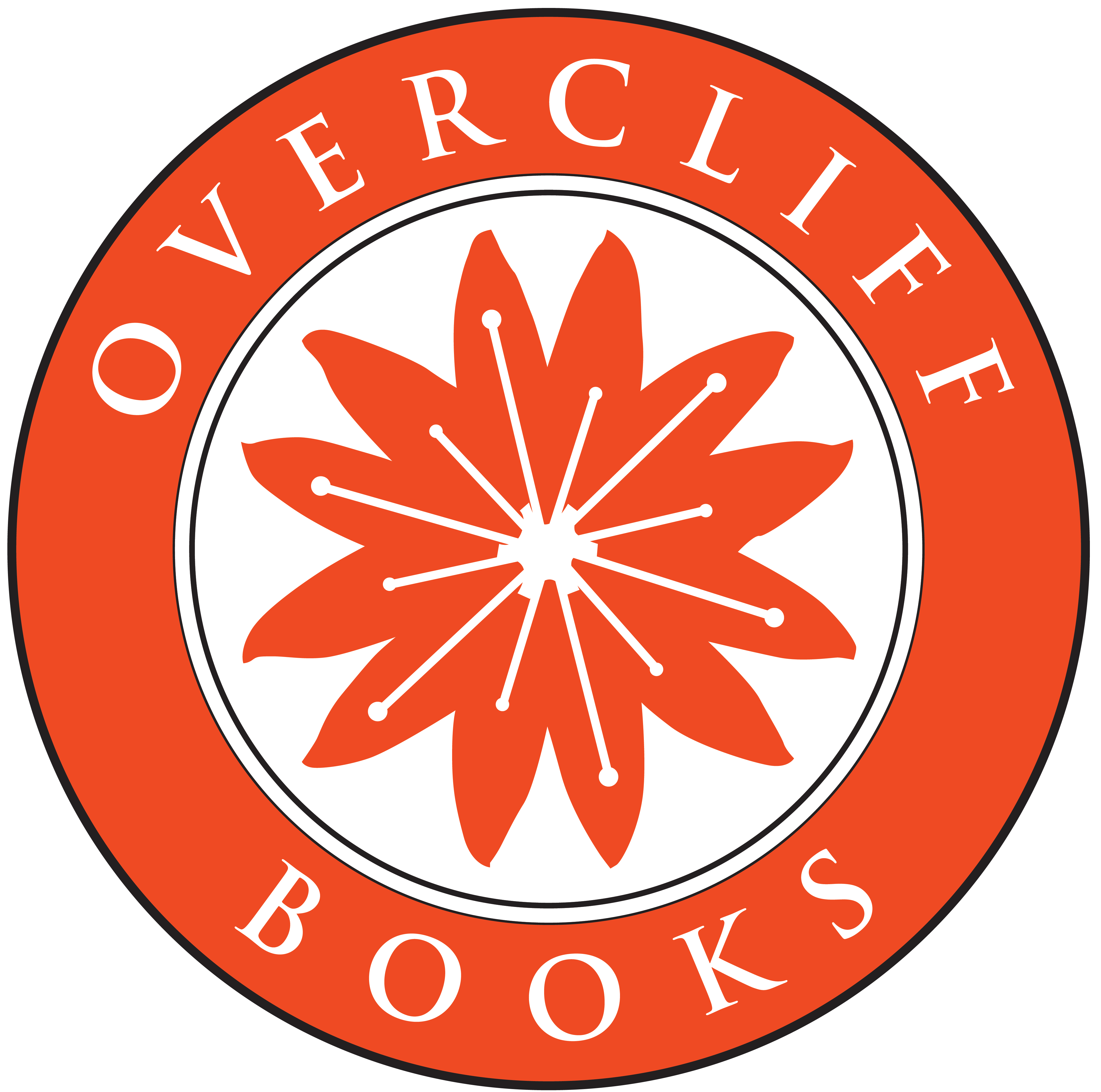
This was quite a long post, but has only provided a highly condensed overview of the self-publishing process. More detail of my own take on how to enjoy being an indie author can be found in my short e-book Wellbeing for Writers.

Cover W4W

Wellbeing for Writers

I’m pleased to announce that my little ebook Wellbeing for Writers is now available from Amazon Kindle, Smashwords and other online sites.

Born out of my long experience as a part-time author alongside former careers in psychological medicine, life coaching and Bach flower therapy, this is a guide about how to maximise the satisfactions and minimise the frustrations which often arise while writing, publishing and marketing a book. Topics include structuring the process, finding inspiration, maintaining physical and mental health, coping with criticism, aligning personal values with writing, and more.

While mainly focused on the psychology of authorship, it also includes plenty of tips about the basic practicalities.

Most of the content is available for free on this blog … but for a nominal cost you can read it combined in one volume, rearranged in a logical order, and revised and updated throughout.

Please have a look on Amazon or Smashwords, and forward this to any of the aspiring authors among your circle of contacts.

cover-w4w


Turning a blog into a book

Having covered quite a wide selection of topics on this blog, I decided to combine some of the posts into a short ebook.

Turning a blog into a book would be quite an easy project for a writer who had started off with that aim in mind, and planned out the topics of the posts in advance. A non-fiction example is the cookery blog which formed the basis of the book Julie and Julia, and of the film with the same name. The method can also be used for fiction, as the modern equivalent of the Victorian fashion of serialising the chapters of a novel in a magazine before publishing it as a whole. It gives the writer the option of making changes to the book as it develops, in response to comments from readers.

The contents of this blog were not planned out in advance, and if I had used one of the paid services which can handle the technical aspects of “booking a blog”, the result would have been a hopeless muddle. My posts were written in random order rather than in any logical sequence, and there was some overlap of content between them. Adapting them into a book involved a great deal more editing than I expected. But I have finished it now and I hope the resulting ebook, called Wellbeing for Writers, will be published this week.

Quality vs Quantity

Indie authors are often advised to “keep adding new content” by publishing three or four new titles per year, as well as writing frequent posts on their blogs and social networking sites among other marketing activities. There may be a commercial justification for this – “the more books you have published, the more you are likely to sell” – but is it in the best interests of the profession in the long term?

Few writers can really have enough talent, or time, to generate such a large output without compromising the standard of their work. The market is already flooded with self-published books, many of which are poorly written and edited and contain recycled material. As a result some of the more excellent and original ones, which deserve to be widely read and have the potential to become classics, are easily overlooked.

It’s wonderful to see so many opportunities for today’s indie authors to get their work “out there”, but the process is so easy and affordable that it is tempting to use it too casually. “Keep on writing” is certainly sound advice for those wanting to develop their skills, but “keep on publishing” may not be.

Having said all this, I admit that I published three books of my own in 2014 and have another coming out soon. However, they had been many years in gestation, and I won’t be continuing with this rate of production.