Sadness on New Year’s Eve

With the death of my mother Clare (Doreen) on 31st December 2015, my “annus horribilis” has drawn to a close. I have never experienced such a concentrated series of sad events. In summary:

June: the dear family dog Khymer had to be euthanised. Clare and I had been walking him on Takapuna Beach for eight years.

July: I learned that one of my closest friends in England had terminal cancer.

September: my husband Brian had a near-fatal heart attack and subsequently underwent major cardiac surgery, again almost dying from post-operative complications (as documented in earlier posts on this blog).

October: just a week after Brian was discharged from hospital, still in a weak state, my mother suffered a huge bowel prolapse. She too almost died, but survived an emergency operation which left her with an ileostomy.

December: my mother had a stroke which deprived her of speech and paralysed the right side of her body. After ten days in hospital she died peacefully with me at her side.

The decline in my own health over this period clearly shows how the repeated experience of stress – the long nights in emergency departments, the practical demands of caring for two sick family members, the continual worry about their welfare – can play havoc with the balance of body and mind.

The good things? My mother was able to live almost independently in her own home nearly till the end, retaining her sharp mental facilities – she still took an active interest in world affairs, enjoyed doing crosswords, and was able to read and comment on the novel that I completed shortly before she died. Acute medical and nursing services in the Auckland hospitals are first-rate. The kindness and helpfulness of family, friends and neighbours has been overwhelming. And my husband has made a splendid recovery.

Surely 2016 will be a happier year, though maybe not an “annus mirabilis”. I hope to recover my well-being enough to enjoy some outings and holidays with Brian, now that he has a new lease of life; to cope successfully with the task of managing my mother’s estate; and then maybe start writing again.

The lure of the murder mystery

I’ve always enjoyed reading crime fiction, especially the more benign kind of murder mystery epitomised by Agatha Christie’s books. Old-fashioned though these may be, they are still popular today. I think several elements contribute to their enduring appeal: An intriguing puzzle, with a credible solution that is not too obvious, although it could in theory have been worked out from the clues hidden in the text. An ending that demonstrates the triumph of good over evil, and the restoration of justice. Descriptions of crime and criminal psychology that manage to be both sympathetic and entertaining, and never sordid or sensational. Perhaps the universal fascination with death. I could never aspire to anything near the standard set by Agatha Christie, but her influence may be apparent in Fatal Feverfew, one of the books I wrote about thirty years ago but did not publish until now.

The main action takes place in an isolated healing retreat in England’s west country. Lucia, accompanied by her husband and cat, arrives there to recuperate from a recent illness only to find that she is suspected of poisoning their hostess. Lucia reluctantly takes on the role of detective and, with the help of the local doctor, succeeds in uncovering the true course of events.

It can be purchased online as an ebook in various formats from Smashwords.com; and also from the Amazon website for your country of residence, either as a paperback or for a Kindle device.


ff-cover-smashwords

Tit Willow

Last night we attended a vibrant performance of The Mikado at the Torbay Theatre on Auckland’s North Shore. The Mikado is among the most popular of Gilbert and Sullivan’s comic operas, and I’d certainly seen it a couple of times before, though that was a long time ago and I couldn’t recall details of the plot. So I didn’t understand why I seemed to know all the songs by heart. They were familiar almost note-for-note and word-for-word.

Afterwards, I remembered once being told that the first thing I ever said was “Tit Willow”. This sounded rather unlikely and I supposed it was some obscure family joke. But when I asked my mother this morning she said “Yes, that’s true – your Uncle Geoffrey taught you to say it.” (Uncle Geoffrey being the WW2 Spitfire pilot who wrote Geoffrey Guy’s War). She explained that when I was a baby her own mother, my grandmother, had bought a record of The Mikado which I liked very much. Apparently, as soon as I was carried downstairs in the mornings, I would wave at the gramophone demanding that it be played over and over for as long as the adults could bear to listen.

I don’t recall any of this, but it seems to prove that early childhood memories are indeed retained in our subconscious minds, and can surface many years later in the right setting.

For a Youtube video of the song, please paste this link into your browser: https://www.youtube.com/watch?v=AoAmmiTzliI


Heartsong

Waiheke, though only a short ferry ride away from Auckland city, is like a different world. We spent twenty-four hours there, visiting the Heartsong Retreat at Rocky Bay on the south side of the island.

Planned as a special occasion, being our first trip away from home since Brian’s cardiac collapse three months ago, it turned out even better than we hoped it would be. Following violent thunderstorms on the previous night, the skies cleared on the voyage out, and the weather stayed sunny throughout our stay. We had lunch at Vino Vino in the main village of Oneroa, on the deck looking over the sea, before catching one of the ancient buses for a bumpy but scenic ride up and down hills covered in vineyards and native bush. Every aspect of Heartsong was lovely: our comfortable private cottage with its flower gardens and ocean views, the spa pool surrounded by palm trees, the walks down to the beach, the hot stone massage, the friendly cat and dog, the delicious meals brought up to us by the welcoming and caring staff.

Spiritual teachers and self-help experts say that our well-being does not depend on circumstances and surroundings, because true happiness comes from within. I am obviously not highly evolved enough to appreciate this, having felt so much more energetic and relaxed while on Waiheke. Hopefully the benefits of our “mini-break” will be sustained through the next round of hospital appointments and period of domestic routine.

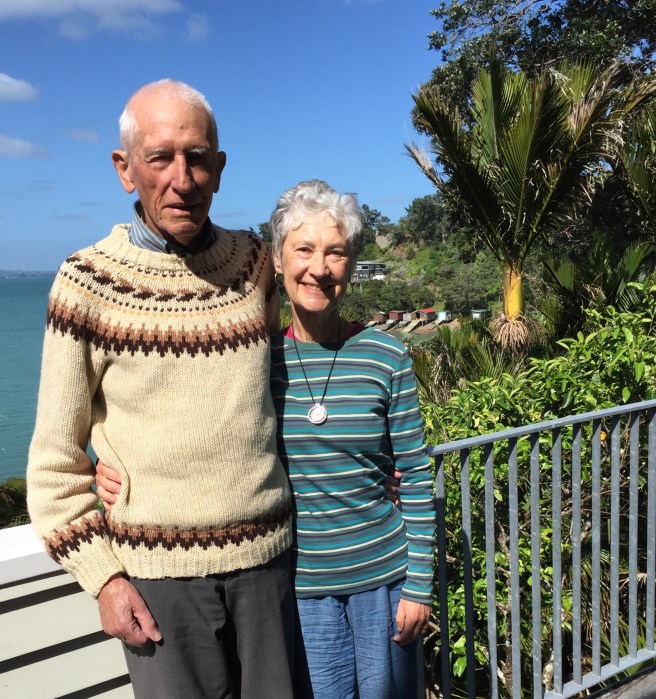
Here we are at Heartsong, with the beach huts at Rocky Bay in the background.

B & J @ Heartsong Retreat.jpg


Frequent attenders

As a former doctor, I know that people who frequent medical settings are often regarded as a burden on the health service, and often attract negative labels such as “fat file patients” or “heartsink patients”. Now, after many years of being reasonably well and not taking any regular medication, I fear we are in danger of entering this category ourselves. As Brian remarked today, our lives have come to resemble a medical soap opera.

The latest episode began last Wednesday. My appointment in gynaecology outpatients at North Shore Hospital finished in time for me to go over to Auckland City for the evening’s choir practice. But just as we were about to start singing, Brian called my mobile phone. He had fallen over in the garden and hurt his leg. What would otherwise have been a fairly minor injury was potentially serious for someone on the anticoagulant drug warfarin, and his thigh was gradually swelling up. A kind neighbour drove him to North Shore Hospital and I set off at top speed to meet him there.

I have become very familiar with the hospital’s car parking system and bus services, and with the layout of the emergency department. The doctor who had seen me during my episode of hypertension and tachycardia last month greeted me warmly. I also recognised the doctor who had examined my mother prior to her emergency surgery for bowel prolapse.

Brian was assessed by a highly competent nurse specialist who, having discussed his case with the consultant on call, cleaned and bandaged his leg wound and recommended an overnight stay, with two-hourly neurological observations just in case there were any signs of bleeding into the brain. Luckily there weren’t.

After another largely sleepless night for us both, I drove back to the hospital to bring Brian home. For the rest of that day he could hardly walk and was in considerable pain, but since then has been gradually recovering from this latest setback. After review with his GP, we agreed that he could now stop taking warfarin, so that is one less drug for the twice-daily medication round.

We have many more outpatient visits coming up in the next fortnight: pacemaker clinic and ECHO cardiology (Brian), abdominal CT and surgical review (my mother), hypertension clinic (me). I have also booked a session of energy healing for myself. I hope I can keep the morning free for that appointment and that it will help with my episodes of fluctuating blood pressure, heart rate and body temperature which are presumably stress-induced. Meanwhile lying on the grass with one of the cats, in this case Leo, is the best way to relax.

IMG_0661

Life imitating art

Not long after publishing a series of novels with a medical theme, and my previous blog post about the portrayal of illness in fiction, I was overtaken by some real medical dramas. Both my husband and my mother required emergency hospital admissions followed by major surgery, and I developed some health problems of my own. All this reminds me of the saying about “life imitating art”. This is attributed to Oscar Wilde, although I don’t think he meant it in quite the literal way I am using it here.

The similarity between the content of my own writings and the events in my family was too general to be truly remarkable. All the same it was perhaps an illustration of the Law of Attraction: the idea that continued mental focus on a topic, in this case sickness, will result in its practical manifestation.

There have been other much more striking instances of fiction seeming to predict future events. One example is the novella called “The Wreck of the Titan” which foretold the sinking of the Titanic in considerable detail. Some readers dismiss this as coincidence, others believe in a metaphysical explanation.

There is also a saying about “art imitating life”, which means that creative work can be inspired by true events. Certainly, most writers do base their stories to some extent on personal experience. But whether the traumas of recent weeks will provide material for my own fiction in future is too soon to say. Some aspects  – for example the responsibility of having to make life-or-death decisions on a relative’s behalf, the complexities of the mind-body connection, the pitfalls which can delay the diagnosis of a serious disease, the search for meaning in illness – could certainly be woven into an interesting plot, though it would require a more skilled writer than me to do them justice. But dealing with long-term illness in the family also involves a lot of sadness, worry, waiting, tedium and hard work – which hardly make for interesting or uplifting reading. I shall try to find more cheerful subject-matter for my next book.

The long and winding road to recovery

Today is a Sunday, and also All Saints Day. After many weeks of absence, I’d been looking forward to returning to St Patrick’s Cathedral to sing in the choir at 11 a.m. Mass, always an uplifting experience. But I didn’t make it. With our various family health issues still ongoing, dealing with domestic practicalities and medical appointments leaves little time or energy for anything else.

Although life is still not easy, there are plenty of good things to be thankful for. Brian is making a splendid recovery from his cardiac surgery five weeks ago – though an atheist, he talks of a “miracle”. He can go for long walks on the beach; climb up and down the steep hills around our house; and do some work in the garden. The limiting factor is that he cannot yet lift heavy weights, because it will be three months before his divided sternum will be fully healed. Nor, because of the pacemaker insertion, can he raise his left arm above shoulder level. His mood is cheerful, and there is no sign of the cognitive impairment which he feared might follow such a massive operation. Having reached the age of 82 without being on any regular medication, he is now on five different drugs, which are presumably necessary at present though we hope some of them can be discontinued in future.

Meanwhile, the health of my 91-year-old mother has become the main focus of care and concern. Now home from hospital following emergency abdominal surgery, she is making a good recovery from the operation itself, and striving with great determination to cope with independent life again. But there are problems with managing her ileostomy and I only hope a satisfactory system can be worked out, and that it will be possible to reverse the procedure in a few months time.

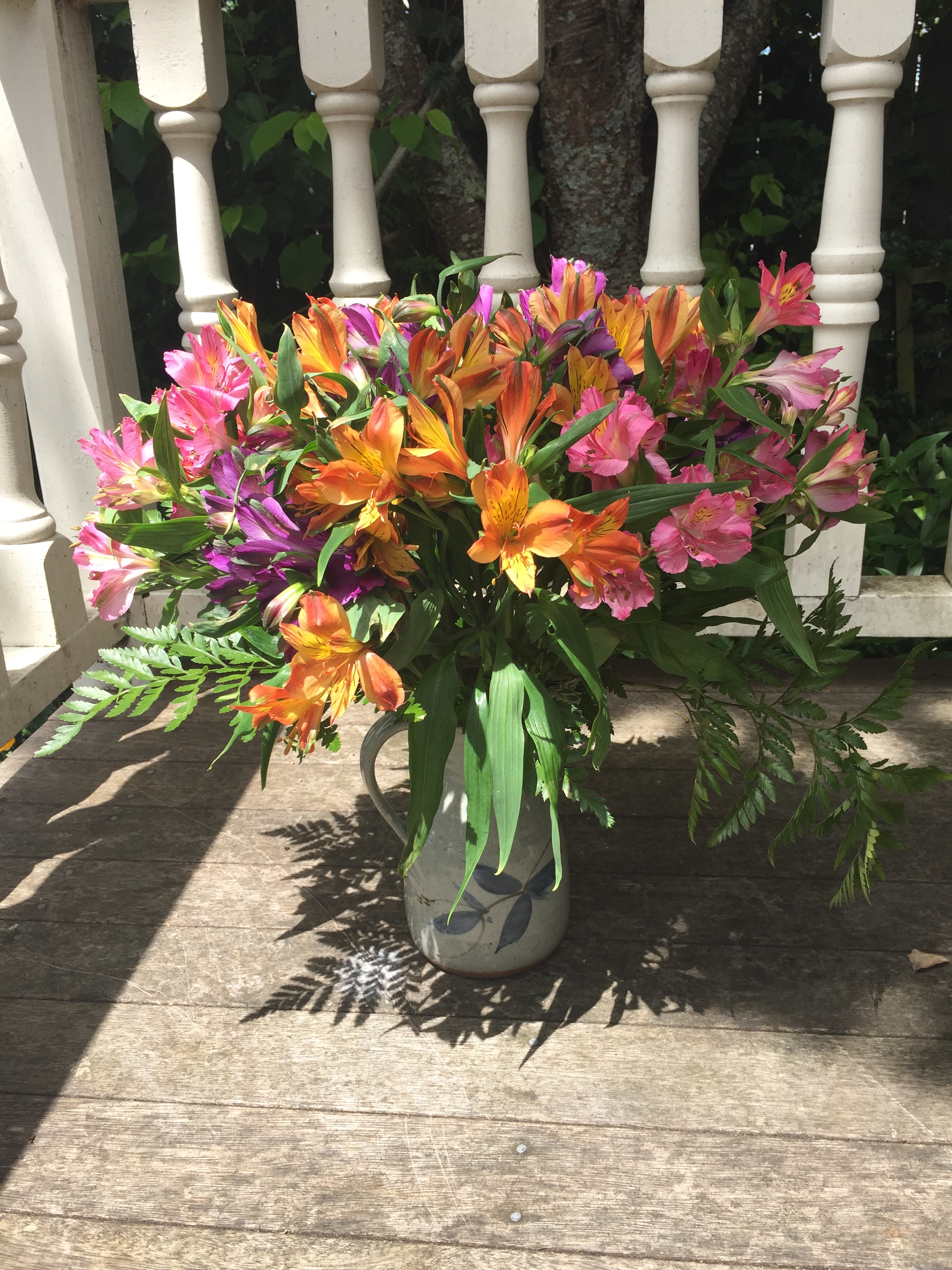
My own symptoms continue on and off, and while further investigations are in progress I try not to worry about them too much. Friends and family continue to be wonderfully supportive and we have greatly appreciated all the messages of support, the lifts to hospitals, and the gifts of food and flowers including this lovely bouquet from the Cathedral Choir.

Flowers from choir

Why troubles never come singly

Just as our lives were beginning to settle down, with Brian recovering from his heart surgery and its subsequent complications, our household was hit by another health crisis. A few days ago Clare, my 91-year old mother who lives next door, developed acute abdominal symptoms. For the third time in recent weeks I called the emergency ambulance, and for the third time spent most of the night helplessly keeping watch by the hospital bedside of a desperately ill relative. The surgeons were doubtful whether Clare could withstand the operation which would be necessary to save her life. I pressed them to try, for the alternative would be an agonising and undignified death, but they were reluctant to attempt such a major procedure in the middle of the night. Meanwhile repeated large doses of morphine and other drugs were failing to control Clare’s pain, nausea and distress, though eventually the anaesthetists performed an epidural which brought her some relief.

There was better news next morning. The surgeons did decide to operate, and Clare survived the removal of large sections of necrotic bowel. So far – though it is very early days – she is making good progress in hospital.

It seems incredible that our lives, so contented and well-ordered for the last few years, have been suddenly disturbed by this sequence of traumas. Sayings such as “troubles never come singly” “it never rains but it pours” and “bad things come in threes” suggest that negative events do have a tendency to cluster in time. I noticed this when I carried out my own research study to investigate “Life events and breast cancer prognosis” which involved repeated interviews with over 200 women over a three year followup. While some of these women reported very few happenings during the study period, there were others who experienced a whole series of disasters. Sometimes it was possible to identify a chain of events leading on from one another. Sometimes all the events seemed to stem from one single cause, which in some cases appeared to involve the personality and behaviour of the person concerned. Few of the events could be considered totally independent from those who experienced them.

Were the recent misfortunes of our own family linked, part of a cascade of events beginning with Brian’s heart attack? I have always tended to be sceptical of the theory that most illness is due to “stress” (the results of my own study, cited above, gave no support to the popular notion that stressful life events promote the growth of breast cancer). But there is no doubt that psychological stress can lead directly to imbalances of the body’s neurological, endocrine and immune systems, as well as to impaired self care due to missed meals and lack of sleep. I have no doubt that anxiety, overwork and exhaustion since Brian became ill have contributed to my own recent health problems of high blood pressure, sinus tachycardia, a posterior vitreous detachment of the eye, and delayed healing of biopsy wounds.

“Stress” is not the only possible explanation for the clustering of events, and maybe there are also metaphysical causes. According to the Law of Attraction, negative thoughts and feelings in response to adversity are likely to result in more of the same. And an astrologer friend, who like me was born under the sign of Aquarius, has cited “the ghastly Saturn square Pluto events which have befallen Aquarians of late”. I am trying to “take one day at a time” and appreciate good things like the spring roses blooming in our garden.

big pink rose

My husband’s heart Part 3: Cardiac rehabilitation

Over two weeks have gone by since Brian had his open heart surgery, and it is one week since he was discharged from inpatient care.

We are both very happy that he is back home, though there continue to be ups and downs in his condition. During good periods he is able to walk short distances both inside and outside the house, and to eat reasonably well. However he has relapsed into atrial fibrillation on several occasions, and a recent blood test showed him to be anaemic. At times he feels weak and breathless and is unable to get warm. Formerly an avid reader, he has no interest in books at present, though he does follow the news on his computer.

We were advised that recovery from such a huge operation takes about three months, so perhaps cannot expect too much too soon. His medication – currently including amiodarone, warfarin, aspirin, an occasional beta blocker – will be reviewed by the cardiologist next week.

After the previous month of acute anxiety combined with frantic activity – travelling to and from the hospitals to visit Brian every day while managing practical, legal and financial affairs at home and dealing with medical appointments for myself – my own life has entered a quieter domestic phase. My role as nurse-housekeeper is not unduly arduous, so I am catching up on lost rest and sleep. Brian and I have time to spend together in a relaxed way talking, listening to music, or watching the four cats in the garden.

Daisy with flowersLeo on gatepostMagic on plum tree best photohomer at feijoa tree

All the regular engagements which once provided structure to my weeks – singing with St Patrick’s choir, volunteering at Auckland SPCA, attending Auckland Film Society, dog walking on Takapuna beach, coffee dates with friends in the city, yoga class – have been cancelled for the time being. The activity which means the most to me, creative writing, is also on hold. Apart from this blog and emails to friends I have written nothing for six weeks, but look forward to getting back to editing my new novel soon.

My husband’s heart Part 2: Auckland City Hospital

Following on from my previous post: Brian spent 18 days in the cardiology unit of North Shore Hospital. On 23 September came the long-awaited news that a place for him was available at Auckland City Hospital. Accompanied by a nurse carrying a defibrillator, he was transferred by ambulance across the Harbour Bridge, and admitted to the cardiothoracic surgery ward in preparation for a five hour procedure to bypass his left coronary artery, replace his aortic valve, and repair the aneurysm of his ascending aorta.

We kissed farewell as he was wheeled through the doors of the operating theatre next day, and then for the first time since it all began I broke down in tears. Fortunately a close friend was available to take me out for coffee and listen to the story of our recent woes.

When the surgeon phoned me that afternoon to say that the procedure had gone well my relief was enormous. But when I arrived to visit Brian in the intensive care unit later on, I was told that he had had a stormy few hours. A group of doctors and nurses were gathered round his bedside. He was deeply unconscious and blood was flowing out through the drains in his chest.

Despite repeated transfusions of blood and blood products, his condition did not improve and shortly before midnight the decision was made to recall the surgical team and take him back to theatre. I was trembling with fear and distress, and very thankful that family members had come in to sit with me and then drive me home.

After the second operation, which involved the removal of blood clots and fluids, Brian began to get better. By next morning his vital signs were stable, and I was present to watch him being awakened from his drug-induced coma.

Two days later he was moved out of the intensive care unit into a four-bedded ward, where he stayed for over a week. On some days he made rapid progress, and on some days his condition caused concern. On two occasions he went back into rapid atrial fibrillation and required intravenous amiodarone to restore sinus rhythm. At other times his heart rate became too slow, and a week after the first surgery he had a pacemaker fitted. He had some brief spells of anger and despair, but overall remained remarkably positive.

Brian in Wd 42 after heart op.jpg


For myself, the physical and emotional demands have felt almost overwhelming, and I developed several apparently unrelated medical problems during the month that Brian was in hospital. These included an episode of hypertension and tachycardia beginning on the same night that, unknown to me, Brian’s recurrent arrhythmia was causing great concern. Anxiety and exhaustion were the obvious triggers for my own symptoms and, despite having done so much clinical and research work in the field of mind-body medicine, this was my first significant personal experience of stress-related illness. If I had had such an experience before my retirement I think I would have been a better doctor.

Brian has now been discharged from hospital, and although life may not be easy during the projected recovery period of three months, we are both happy and relieved that he is home again. Through this whole saga I have been tremendously grateful for the skill and kindness of the hospital staff; the marvels of modern medicine and surgery; the practical support, good wishes and prayers of family and friends; and the comforting presence of our three cats.