“Unfaithful unto Death”

My latest novel is a black comedy called Unfaithful unto Death. Here is a short extract:

Chapter 1: A Doctor’s Lot

Somewhere in southern England around 1980

Evening surgery was running late, and Dr Cyril Peabody wanted his dinner. He tried to ignore the rumblings of his empty stomach and concentrate on his work.

His tenth patient, the village postmistress, waddled into his consulting room with maddening slowness. “Evening, doctor.”

“Yes, Mrs Bream, what’s the trouble?”

“Just a touch of indigestion, I shouldn’t wonder,” she replied complacently.

Cyril did not consider this an adequate reason for taking up his time on a fine Friday evening. He said “You’re grossly overweight, you know.” Mrs Bream looked so indignant that he tried to make a joke of the matter by rubbing his hands together and adding “Don’t worry, my dear madam, we’ll soon have you looking as sylph-like as a schoolgirl once again.” She gave him a hostile stare.

“Now. What exactly do you mean by indigestion?” asked Cyril.

Mrs Bream looked at him as if he was a backward child. “Dr Greatorex used to give me some white medicine,” she informed him.

Cyril murmured “Curse these country bumpkins” to himself as he wondered how far to investigate her case. He wrote in Mrs Bream’s file “?Indigestion?” enclosed by prominent quotation marks, and added “Low IQ.” He recalled with nostalgia his time as a hospital doctor, when there would have been a student nurse to undress this old biddy ready for him to carry out a physical examination, and to write out the cards for the relevant tests: chest X-ray, barium meal, cholecystogram, full blood count, urea and electrolytes, liver function, ECG. As it was, doing it all himself did not seem worth the effort.

He reached for the prescription pad, saying in a bracing tone “Jolly good. I’ll give you some more white medicine. Come back and see me if by any chance it doesn’t do the trick. And we need to get rid of a stone or two.”

“Evening, doctor,” said Mrs Bream, and before she was out of the room, Cyril firmly pressed the bell for his last patient: Sebastian de Winter, age forty-four, of Easton Green Manor.

Sebastian de Winter was a giant of a man with a thatch of black hair, a jutting forehead and a worried expression. He glanced suspiciously at the notes on the desk. Cyril asked briskly “Well, Mr de Winter, what’s the trouble?”

“I had another bout of chest pain after lunch today. Scared the hell out of me. My blood pressure’s way out of control – you know that I suppose? Garth Greatorex has been handling the problem but he’s off duty this evening. Well, you know that too of course.” The patient leaned forward and continued earnestly “Frankly, Dr Peabody, I want a second opinion. They tell me all this is due to stress. It’s a month since I had a full physical checkup, and I’d like you to give me another ECG.”

Cyril’s interest was aroused by talk of chest pain, blood pressure and ECGs. He decided to ignore the mention of “stress”, for it would be too bad if this case turned out to involve one or both of his two pet hates, “social problems” and “psychiatry”. Cyril was interested in human bodies; he enjoyed finding out what was wrong with them, and gained satisfaction from putting them right. He was not at all interested in the human mind. He replied “By all means, Mr de Winter, delighted to oblige. As you may know, I had a great interest in cardiology in my most recent hospital post. We’ll give the problem a thorough review.” Fatigue forgotten, he rose to the challenge of demonstrating his medical expertise and, with any luck, outshining his senior partner Garth Greatorex in diagnostic skill.

Sebastian de Winter gave a history of chest pain occurring after meals and accompanied by a sensation of dread. He also complained of headaches and disturbed sleep. Cyril did not ask about his personal circumstances but the patient volunteered an account. The symptoms had started soon after his father’s sudden death from a heart attack. Sebastian had inherited the Easton Green estate with two hundred acres of farmland, and a vineyard just starting production. The burden of managing these assets was a heavy one, and his wife did not give much support. He was drinking up to half a bottle of Scotch every night in an attempt to relax and get a few hours’ sleep. He worried about his high blood pressure; Dr Greatorex’s various prescriptions had either failed to bring it down, or caused unacceptable side effects.

Physical examination revealed no abnormality except a raised blood pressure reading of 175/95. Cyril fetched the portable ECG from the clinical room. He took pride in this machine, which had been out of order when he arrived at the practice. He had got it working properly and used it on many of his patients, though none of the other doctors showed any interest in the tracings he obtained.

Sebastian de Winter’s ECG showed mild left ventricular hypertrophy, but Cyril felt able to give an honest reassurance that it was “essentially within normal limits”. The patient replied “Thank God.” Cyril wondered what to do about the raised blood pressure. The man had already been tried on many of the standard drugs: frusemide, propranolol, bethanidine, methyldopa. In the drawer of Cyril’s desk there were some free samples of a new drug called Amaz. It was claimed to reduce blood pressure by some novel mechanism that Cyril could not remember. Recalling the excellent lunch at the Angel’s Arms which Millford Pharmaceuticals had given to celebrate the launch of this new product a week or so before, Cyril announced “I’m not too happy about the blood pressure, but I’ve got some splendid new tablets here which should bring it under control. Come back next week and we’ll see how they’re suiting you.”

“The stuff Greatorex gave me made me feel sick as a dog all day,” said Sebastian de Winter mournfully. “I suppose I’ve got to expect the same with these.”

“Nausea is a common side effect from medication of any kind,” Cyril told him. He added an opinion of his own “Mainly psychological in origin – don’t think about it and you won’t get it, in other words.”

The patient made no move to leave. He asked “Couldn’t you give me something to help me sleep?”

“Never prescribe sleeping pills. Deplorable things,” said Cyril, who never suffered from insomnia himself. He had had enough of the consultation, and was determined not to be drawn into anything that smacked of psychiatry or social problems. Defeated, Sebastian de Winter put the bottle of Amaz into his pocket and shambled out of the consulting room.

Eight o’clock. Cyril put his stethoscope into his medical bag, snapped it shut, and was striding out of the Health Centre when Linda, the young receptionist with the fluffy blonde hair and curvy figure, waylaid him. “Dr Peabody! There’s two late visits come in!”

He cursed his bad luck under his breath. “Not your day, is it?” remarked Linda brightly.

“I sometimes think a doctor’s lot is not a happy one, Linda. Are these visits really that urgent?”

“Well, I should think the first one is. Poor Mr Harland, he only lives up the lane there, he’s got lung cancer and he’s very bad. His wife’s a nurse at Harphamstead Hospital – she wouldn’t ask for a visit over nothing, I’m sure.”

“Suppose not,” said Cyril. “And what’s the other?”

“Old Miss Gray from Cottage 2 by the duck pond. Says she wants to see one of the male doctors urgently. She’s a little bit eccentric, you know,” said Linda. “Actually, between you and me, she’s plain batty. Don’t tell anyone, but she came round here one day and told the whole waiting room Dr Greatorex was a brazen libertine – whatever that may mean. He was awfully cross.”

Cyril smirked with relish over the anecdote. He asked “And what’s wrong with this Miss Gray?”

“She wouldn’t say. She wants to speak to you in confidence.”

“And where is this duck pond?”

“In the dip past Graves Farm. At least it’s on your way home.”

Cyril did not appreciate the tranquil summer evening scene as he drove away. He was beginning to suspect that his recent career change had been a big mistake. His only previous experience of family medicine had been as a single-handed locum in a quiet West Country practice during his summer holiday. He had rather enjoyed that, and considered he had achieved several significant diagnostic triumphs. But working as a dogsbody at Market Beeching Health Centre, with the senior partner breathing down his neck, was what his mother would call quite a different kettle of fish.

***

Unfaithful unto Death is available for Kindle or in print from Amazon.com or your local Amazon site, and as an ebook from Smashwords and other online retailers. Please share this with any of your contacts who might enjoy it.

UUD Smashwords cover

Tarot

Many years ago a friend introduced me to the fascinating and mysterious world of the Tarot, a set of 78 cards that has been used since ancient times for divination and as an aid to psycho-spiritual development and intuition. Its origin is unknown; the complex images could be seen to derive from the myths, legends and belief systems of many civilisations including those of Egypt, India and China, and it has been known in Europe since at least the 14th century. There are numerous different decks available, featuring artwork in styles ranging from the traditional to the quirky.

I studied the Tarot myself for a while and did occasional readings for friends, but was perhaps deterred from continuing when I realised what powerful effects the symbols could have. With their universal relevance they almost always seem to relate to the life situation of the “querent”. One woman told me afterwards that her chosen cards had been instrumental in her decision to divorce her husband; fortunately this turned out a good decision. One man took his spread to be predictive of his own death, despite my efforts to interpret it more constructively, and he did die suddenly not long afterwards. It is indeed hard not to be shocked and distressed by some of the cards, such as Death, The Hanged Man and The Devil, even though they are not intended to be taken literally; instead, they symbolise in different ways a common Tarot theme, that of letting go of the old to make way for the new. Other cards, such as The Star and The Sun, show much more beautiful and positive images. Whether or not the Tarot has any occult significance, as opposed to being a psychological tool, I think it should be regarded with respect and not used frivolously.

The insightful reading I had yesterday from Samantha Jung-Fielding stimulated much reflection and promise for the future. To summarise just a few of the cards that particularly resonated with me: Ace of Swords: change beginning on the mental level with new attitudes and ideas. The Empress: creativity and abundance, happy relationships. Nine of Swords: fear and despair, but the threats are in imagination rather than reality. The Fool: appearing as the final card in my spread, this represents the start of a new adventure! My complete Celtic Cross spread is pictured below.

Celtic cross


Memories on Milford beach

In this morning’s winter sunshine we walked along the bottom of the cliffs between Takapuna and Milford, part of Auckland’s North Shore Coastal Path. This must be one of the best short walks in New Zealand but, as the warning sign says, it “requires a reasonable level of fitness and is not suitable for prams”. It is not really a path at all, but involves stepping over mounds of black boulders and lava flow, the residue of long ago volcanic activity from what is now Lake Pupuke. In the middle there is a narrow concrete section with a steep drop on both sides. At low tide, the rock pools and golden bathing beaches are exposed. At high tide there is a risk of getting soaked by the waves crashing against the rocks. There is a spectacular view across the sea to the island of Rangitoto, another extinct volcano.

beach

This walk holds many memories for us. Towards the Milford end we pass the house where Brian and his brother grew up. When his parents came to live there in the 1930s it was a modest weatherboard dwelling. There was no heating and the roof leaked, but having a beach outside the garden gate provided a wonderful outdoor environment for children. In the early 1980s, after Brian and I had met in England, we came out to spend holidays there. His mother looked after us beautifully and I remember idyllic hot summers when we went swimming every day and drank gin in the evenings. Now the house, no longer in the Barraclough family, has undergone a multi-million dollar conversion. The only reminder of Brian’s parents and brother, all now dead, is a plaque on the bench outside the fence.

Medicine in memoir and fiction

I’ve been staying up late to read Do No Harm – a compilation of clinical case histories,  interspersed with personal memoir, by British neurosurgeon Henry Marsh. It gives a riveting, though sometimes gruelling, account of the challenges involved in operating – or deciding not to operate – on patients with life-threatening conditions such as brain tumours, brain injuries, and strokes.

Henry Marsh writes with honesty, thoughtfulness and compassion and his book would seem equally accessible to healthcare professionals and general readers, though it is not for the squeamish. I would strongly recommend it to anyone considering a career in neurosurgery, for it can be difficult to find authentic accounts of what working in this or any other medical specialty is really like. Although my own ambition to become a doctor was partly inspired by the library books I read as an impressionable teenager – The Healing Knife by George Sava was one, and another was about a leper colony in Africa – they were already out of date, and I suspect conveyed a romanticised picture. When I got to medical school and was confronted with the reality it became clear that I had little interest or ability in either surgery or tropical diseases, and chose quite a different career path.

Why don’t more doctors write books along the lines of Do No Harm? One reason must be the risk of breaching confidentiality and causing distress to patients themselves or to their relatives. The books by the late neurologist Oliver Sacks – for example The Man who Mistook his Wife for a Hat – are among the best-known examples of the genre, and won wide acclaim from many sources, but have been criticised in some quarters for exploiting vulnerable people.

Another consideration is that any realistic and balanced account is bound to expose the limitations of medicine, and the vulnerability of its practitioners. Perhaps this is not so important now that doctors and hospitals are no longer regarded with unquestioning trust and respect. Henry Marsh makes no attempt to gloss over the fact that some of his cases had a bad outcome, whether because the prognosis was hopeless to begin with or because he or his colleagues made mistakes. He clearly feels these failures keenly, agonising over them even if they were not his fault, giving parts of the text a confessional quality. He is also remarkably outspoken about his frustration with hospital management and the ways that modern NHS bureaucracy can hamper patient care. His frankness about these negative aspects is refreshing, although if I had the misfortune to be needing neurosurgery I think I might regret having read this book and realising how much can go wrong.

I have no intention of writing a factual account of my own medical career, partly for the reasons given above, partly because I don’t remember the details well enough. But writing is therapeutic and when channeling my work experiences into fiction I often find myself emphasising the darker side of my former profession. Readers may find my books unduly cynical unless they appreciate the role of black humour in defusing the stresses of working in medicine.

Food Bag Day

Our weekly delivery of raw ingredients from My Food Bag arrived today.

I used to enjoy cooking, but during the dark days of last year the need to plan the menus, go to the supermarket and prepare the food came to seem a daunting challenge, especially as I was finding it a struggle to eat. I resorted to buying in ready-made dishes from the various companies which service the Auckland area. These tended to become monotonous, and generated excessive amounts of waste packaging, but were a great help when the health of the family was at its lowest ebb and my days were occupied with hospital visits.

Even after both Brian and I had largely recovered, my culinary creativity was still lacking. I relied on a limited repertoire of dishes, most of which could be made in in bulk in the slow cooker and heated up as required. This too became monotonous so, despite feeling rather guilty about spending extra money on a domain of life that I should have enough time and energy to manage myself, I decided to try My Food Bag. So far this has been a success – but not in the way I expected.

I no longer have to choose the menus or buy the food, but the time I spend on last-minute dinner preparation has greatly increased. Far from becoming lazier in the kitchen, for the first time for years I am doing things like grating beetroots and toasting sesame seeds. Tonight’s recipe, “spiced chicken with carrot, feta and mint bulgur”, will require 18 different ingredients and five separate cooking utensils. The quality is excellent, with fresh seasonal vegetables and free-range meat, poultry and fish; the quantities are large so there is often enough left for next day’s lunch; and most of the packaging can be recycled. All except one of the meals has tasted delicious, we have been introduced to many new recipes and techniques, and Brian has not minded doing the washing up.

[Update one month later: We have now downsized to “My Own Food Bag” – intended for one person, but quite enough for us two]

Homer: the odyssey continues

The adventures of the white-and-black cat described in my recent post Homer’s story still continue.

After my mother died Homer never gave up his attachment to her house, and although he did move in with us part-time, he started visiting the young couple who were renting next door to my mother. They became very fond of him, and when they bought a house of their own in Bayswater we agreed to a trial adoption.

We had Homer microchipped in case he went wandering again, although considering that six years had passed since he made his repeated journeys from Bayswater to Devonport, we hoped he would have outgrown his wanderlust.

I visited Homer and his new owners every week and we did everything we could to help him settle into his new home. All went well for a month, but on the first night after a cat door was fitted, he exited through it and turned up in Devonport – over 3 km away – next morning. After some tearful discussions we agreed that Homer had should be allowed to stay in the area he loves so much.

Fortunately, the new couple who are renting next door have also become fond of Homer, and are giving him food. He still likes to spend time around my mother’s vacant house, lying on the doormat as illustrated below. Last week he became obviously distressed when her furniture was being cleared out. But the new owners move in next week and I understand they are cat-lovers too, so I hope Homer will get on well with their two kittens, and that having meals available from three different houses won’t make him get too fat.

Homer on mat


A giveaway backfires

I recently gifted a print copy of my novel Fatal Feverfew to the winner of my latest Goodreads Giveaway. Soon afterwards she posted a rating on the website, giving it 1 star and commenting “the writing was dull, the plot was poorly written, and the characters were extremely unlikeable and boring. I really struggled to finish this book.”

In my younger days I would have been depressed for weeks after reading a review like that. Now I am more philosophical, reminding myself that you can’t please all of the people all of the time. All the previous novels that I put through the giveaway programme received 4 or 5 star ratings, and I can’t believe this latest one is so much worse than the rest. I do wonder whether someone who has to “struggle to finish a book” would do better to abandon it and move on to something they enjoy reading – this is my own policy now, and I don’t write a review unless I can say something positive.

So, my latest giveaway has backfired as a marketing method – or has it? A day or two after that damning review was published, a little peak in sales of both Fatal Feverfew and some of my other books showed up online. Maybe this proves the truth of the saying that there’s no such thing as bad publicity.

Here are some suggestions about how to cope with bad reviews.

Stress and the heart

Although I used to work as a general hospital psychiatrist, I doubt if I fully appreciated the power of the mind-body connection till I became ill myself. Last year, during a prolonged period of anxiety and exhaustion due to my husband’s heart attack and cardiac surgery followed by my mother’s bowel obstruction and fatal stroke, I started to experience alarming episodes of fast irregular heartbeat, faintness and tightness in the chest, accompanied by high blood pressure. Other symptoms around this time included weight loss, insomnia, spells of fatigue, hot flushes and cold chills. Medical investigations showed a few minor abnormalities which were not regarded as very significant.

The episodes of tachycardia and hypertension continued to happen after everything else had settled down, as if they had taken on a life of their own. My husband, who has now made an excellent recovery himself, believes that being in the “front line” of so many traumatic events caused me to develop a variant of the condition described in the First World War as “shell shock” or “soldier’s heart”. Many other diagnostic labels were suggested from various sources: “broken heart syndrome” “post-traumatic stress disorder” “atypical depression” “autonomic neuropathy”. The diagnosis from a recent specialist consultation was “paroxysmal hypertension” also known as “pseudopheochromocytoma” and preventive treatment with beta-blocking and alpha-blocking drugs has been successful so far. From being barely able to cope with daily activities a few months ago I am now almost back to my usual self, but with an increased awareness of the fragility of life and health and the unpredictability of the future.

While the type of stress-related syndrome described above is not life-threatening, there are more serious cardiovascular conditions that can be partly attributed to stress. I am not an expert in “psychocardiology”, but my experiences led me to look through the research literature and I found some well-established links. These probably stem from a complex interplay between biological and lifestyle factors: over-secretion of stress hormones such as adrenaline and cortisol, and lifestyle habits such as smoking, drinking too much alcohol, lack of exercise, lack of sleep, and general neglect of self-care. For example: Coronary heart disease, building up gradually over the years, is associated not only with the well-known physical risk factors such as hypertension and high cholesterol but with psychosocial ones: long term difficulties such as being unemployed, lonely, unhappy in marriage or at work, suffering from anxiety or depression and according to some studies the personality characteristics of impatience, competitiveness, hostility and suppression of emotion. Acute traumatic events, such as experiencing the death of a loved one or being involved in an accident, can precipitate angina, arrhythmias or heart attacks (myocardial infarction caused by coronary artery blockage) in predisposed people. The risk of death from heart disease  is increased during the first year of widow(er)hood. Those who survive a heart attack, and become anxious and depressed afterwards, have a worse medical prognosis than patients whose mental health is not so affected.

Mind-body connections, though widely accepted in theory, do not always have much impact on clinical practice. It is perhaps inevitable that, in the highly specialised world of hospital medicine and surgery, there tends to be a narrow focus on the diseased part rather than a more holistic view. Staff who are expert in technological procedures may not have the time or skill to deal with the lifestyle and psychological aspects of illness, for example many cases of depression and anxiety on cardiology wards are not recognised or treated.

Most cultures regard the heart as the seat of emotion, and in the energy medicine traditions of the East the “heart chakra” is associated with love, compassion, empathy and forgiveness. Can cultivating such qualities protect against heart disease? Not only are they difficult to measure, but most studies in medicine and psychology focus on negative factors rather than positive ones. However, there is evidence that life satisfaction, optimism, and happiness lower the risk. Owning a dog, which besides encouraging regular exercise provides a reliable source of unconditional love, is also conducive to heart health. Cats apparently have less cardioprotective effect, but they do know how to demonstrate the art of relaxation.

Homer supine


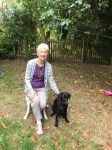
Bonnie the family dog

Nine months have passed since the last time I walked on Takapuna beach with my mother and Khymer. After both of them died I had good intentions of continuing the regular walks, in their memory, and for the health benefits of “earthing” barefoot on the sand. It wasn’t so much fun on my own and I soon gave up doing it.

But now Khymer’s family have a new puppy. Bonnie is a rescue dog, pedigree unknown, though pointer is certainly part of the mix. She is affectionate and intelligent and already, at about five months old, has learned to obey several commands.

Accompanied by our niece Libby, I walked Bonnie for the first time today. She enjoyed chasing seagulls, retrieving her ball, playing with other dogs and splashing about in the waves. No dog can replace Khymer, but the circle of life continues and the bond with Bonnie will grow. I hope to be walking her for many years to come.

Bonnie 5 months old

Reflections on self-publishing from Margaret River

I spent last weekend in Margaret River, a small town south of Perth in Western Australia, at an informal reunion meeting for doctors from Oxford UK who now live in the Antipodes. Besides visiting some local vineyards, beaches, and limestone caves, most of us gave short talks to the group. Mine was on a non-medical topic – a basic overview of self-publishing. The content was not specific to doctors, but relevant to aspiring “indie authors” from any profession, so I’ll summarise it here.

First a brief personal background. Back in the 80s and 90s it was easy enough to find a traditional publisher for books about my medical specialty. I wrote or edited eight titles for academic publishers in the UK, and was sometimes even invited to produce new ones. It therefore came as a humiliating shock when my first novel was met with a series of rejection letters – some polite and encouraging but others not. After a particularly painful rebuff I gave up for many years. Then, when the self-publishing movement came on stream, I retrieved my faded typewritten manuscripts from the boxes where they had languished for so long and started revising them, as well as writing new ones. I have now become an indie author with eight titles to date, published as print-on-demand (POD) versions with Amazon CreateSpace, and as e-books on Smashwords and Amazon Kindle.

While so-called “vanity publishing” used to be expensive and stigmatized, now in the digital age self-publishing has become acceptable and affordable. So much so that everyone seems to be doing it – thousands of new books are self-published every day. A few, most famously Fifty Shades of Grey, are highly successful but most sell only a few copies. Those who embark on indie authorship in the hope of financial profit are therefore likely to be disappointed but there are many other rewards, as well as some potential pitfalls.

Besides writing the best possible content, indie authors have to deal with all the other aspects of the publishing process, although rather than do everything yourself you can employ some of the many freelance experts who can be found online. Editing and copy-editing are essential and I would strongly recommend that besides carefully checking the text yourself you ask several other people, whether professionals or honest friends, to point out the typos and mistakes in continuity that are almost always present. Formatting the text properly requires some technical expertise, and while some self-publishing platforms will accept whatever is submitted to them, others have strict formatting requirements. Uploading the completed text from a PC or Mac to your chosen online platform(s) is usually easy to do.

The following points are relevant for marketing purposes. Cover design is important because a split-second glance at the thumbnail image is often the basis on which potential readers will decide whether or not to “look inside” the book. Writing an enticing blurb, and choosing the most suitable categories and key words, will also help to attract readers. As regards pricing, the option of offering your e-books free of charge is undoubtedly the best way to obtain plenty of downloads but, unless your motive is to inform and uplift your readers rather than make a profit, giving away any more than a 20% sample would seem to devalue all the work which goes into their creation.

Self-publishing has both pros and cons when contrasted with the traditional route. Indie authors are assured of publication and have the freedom to control most aspects of the process. They have the flexibility to write books of almost any length, in any category or cross-genre. Publication can be complete in a few days or even a few hours. POD books and e-books need never go out of print or be remaindered. But the process is perhaps too easy, and the downside is that lack of independent quality control has led to a glut of mediocre books, meaning that many of the good ones are overlooked, and downgrading the status of indie authorship.

Many indie authors would say that having to handle their own marketing is the hardest and least enjoyable part of their work. They prefer to spend their time and energy on actual writing; feel diffident about promoting themselves; and be unsure how to go about it. But it has to be done and there are numerous methods available, for example:

Family and friends: tell your personal contacts about your book, and invite them to pass the information to their own circles. Some will be supportive, but others will not be interested to read it, or may not like it if they do.

Email signature: add a link to the book’s website to your personal email signature.

Social media: such as Facebook, Twitter and Linkedin.

Newsletter: hosted by a service such as Mailchimp.

Blog: the content does not have to relate directly to the book – someone who recently read my blog about cats emailed to tell me that she went on to buy a few of my medical titles.

Reviews: send free copies to selected book bloggers and media, but be aware they are overwhelmed with requests and may not respond.

Author pages: set up a profile on Amazon and other platforms.

Printed fliers or bookmarks: to give away at events, or through local libraries or cafes.

Presentations to groups

Online forums: discussion groups, such as those on Linkedin, relating to writing and/or to the subject-matter of your book.

Paid adverts and publicity campaigns: though expensive, these are not always effective.

Luck undoubtedly plays a part in determining which of the books in this supersaturated market will succeed in terms of sales. But even if you do not sell many copies it is satisfying to have your finished product “out there” and to have learned some new skills along the way.

This was quite a long post, but has only provided a highly condensed overview of the self-publishing process. More detail of my own take on how to enjoy being an indie author can be found in my short e-book Wellbeing for Writers.

Cover W4W