Getting books right first time

Along with poor sales and critical reviews, one of the setbacks that authors may encounter is the discovery of mistakes in books that have already been published. I’ve heard it said that there’s no such thing as a perfect manuscript, which is probably true. I try to pick up all the errors in my own books before publishing them but when I recently reread three of my earlier ones, in preparation for speaking on the historical crime panel at the Rotorua Noir festival back in January, realised I had failed. I found mistakes in all of them – small mistakes, maybe ones that most readers would never notice, but they annoyed me and I eventually decided I must put them right. At the same time I decided to do some rebranding, changing the cover images on Amazon and adding a new logo.

Overcliff logo HQ

Making these changes was only possible at all because the books had been published independently rather than traditionally. Even so, the process was fairly tedious, expensive and time-consuming. I don’t have the skill to do my own formatting, so I needed to pay an expert to have the previous versions updated. There have been technical difficulties in getting the new covers showing on some of the the Amazon websites.

Has it been worth the time and money involved, apart from relieving my own discomfort about having an imperfect product? Copies of the previous versions are still in circulation, and there’s nothing to be done about that. The experience has shown me the importance of getting it right first time. I admit that I haven’t always followed the basic guidelines:

  • Ask several people to read an advanced draft of your manuscript to check for errors of content; for example flaws in the plot, inconsistent naming of characters, or anything else they may notice.
  • Consider employing a professional copy editor to pick up mistakes in grammar, punctuation or spelling in the final version.
  • Check the proofs thoroughly yourself, even if you are so familiar with the text by that stage that you can’t face reading it yet again and feel impatient to get the book published.

No doubt the new versions of my novels are still imperfect. The cover design is not quite uniform between the three, but this does not really matter. If there are remaining errors in the text, they will have to stay there for the present. Anyway, they are now available for purchase as either paperbacks or ebooks, so if you haven’t already seen them please have a look now. Overdose is set in an old mental asylum, Fatal Feverfew in a healing retreat and Unfaithful Unto Death in rural general practice. They give a historically accurate, if mildly satirical, picture of medical practice and social attitudes in 1980s England. Some readers have found them shocking and others have thoroughly enjoyed them. Here are the links:

Overdose: Amazon.com Amazon.co.uk Smashwords

Fatal Feverfew: Amazon.com Amazon.co.uk Smashwords

Unfaithful Unto Death: Amazon.com Amazon.co.uk Smashwords

Photo 1980 book covers

Books I’ve enjoyed #4

As usual, most of my recent choices belong to the categories of crime fiction, biography, psychology or medicine. They are listed alphabetically according to title, and the links refer to the versions on Amazon.com.

Blood Orange by Harriet Tyce: Adultery, alcoholism and unnatural death among lawyers in London. Although the characters are unlikeable and the content rather sordid at times, I agree with the statement on the blurb that this psychological suspense novel is “bold, provocative  and utterly gripping”.

How to Change your Mind by Michael Pollan: There is renewed interest in using psychedelic drugs such as LSD and psilocybin for treating certain mental disorders, relieving the distress of dying patients, and enhancing the wellbeing of healthy people. This long book contains detailed information about the history, politics and chemistry of these drugs, and describes the author’s own experience of taking them.

In Extremis: the Life of War Correspondent Marie Colvin by Lindsey Hilsum: Marie Colvin was a courageous and intrepid reporter who continued working in the war zones of the Middle East after being shot by a sniper and losing the sight of one eye. She was eventually killed by a rocket attack in Syria. This book, described in more detail in my recent blog post Two Brave Women, is written by a close friend and colleague with direct knowledge of her adventurous career and tumultuous personal life. 

Ladder to the Sky by John Boyne: A long literary novel about a psychopath who will stop at nothing to achieve his ambition of becoming a famous author. Lacking the ability to produce original material of his own, he becomes increasingly ruthless about poaching it from elsewhere. The complex narrative includes a fictional encounter with a real writer, Gore Vidal. I heard John Boyne discussing the ethics of using other people’s ideas and experiences for writing novels at the 2019 Auckland Writers’ Festival.

Nothing Bad Happens Here by Nikki Crutchley: Set in rural New Zealand, this is an easy read and unlike many modern murder mysteries it is not too long and not too graphic. The disappearance of a young woman tourist is investigated by a sympathetic local cop, and a journalist tackling problems of her own. I discovered this book through hearing the author speak at the 2019 RotoruaNoir festival.

On the Marshes by Carol Donaldson: The author is an environmentalist who leads a simple alternative lifestyle on the North Kent marshes, and has a deep knowledge of the local ecologyCombining travelogue and personal memoir, her book is a beautifully written and engaging account of a year spent walking over these isolated wetlands while adjusting to the end of a relationship. I was brought up near the area and recently felt the desire to revisit it; my next novel will be partly set there. 

Our Friends in Berlin by Anthony Quinn: A wartime thriller set in 1941 during the London Blitz. This story of espionage combined with an unlikely love affair has an intriguing plot and is elegantly written. I became so involved with the characters that I found myself quite affected by the bittersweet ending.

The Incurable Romantic by Frank Tallis: Stories of obsessional or delusional sexual love, from a psychotherapist’s case book. Although presented as true verbatim accounts, they include so much detail about the patients concerned that they must either be highly fictionalised or show no regard for confidentiality. These reservations aside, the book contains interesting descriptions of disorders such as morbid jealousy and de Clerambault’s syndrome, notoriously difficult to treat.     

The Knife’s Edge by Stephen Westaby: Since my husband’s life was saved by cardiac surgery I have had huge admiration for those with the skill, stamina and courage to practice this specialty. Westaby writes graphic descriptions of operating on complex and apparently hopeless cases. He also makes some frank personal disclosures. Following a frontal lobe brain injury sustained during a student rugby match, he changed from a quiet shy young man to a brash extrovert with some psychopathic traits. This probably helped rather than hindered his progression to pioneering heart surgeon. I regret that I never met him in Oxford although we worked in different hospitals there at the same time. 

The Sealwoman’s Gift by Sally Magnusson: Inspired by true events, this novel is about an Icelandic family captured by pirates in 1627 and taken to Algeria to be sold into slavery. The privations they experience, and the psychological tensions that ensue, are described from the point of view of a pastor’s wife who gives birth on the voyage and is subsequently separated from her husband and children. I seldom read historical fiction, but was given this book for Christmas and enjoyed it. 

The World I Fell Out Of by Melanie Reid: Following a riding accident, British journalist Melanie Reid became almost completely tetraplegic. This memoir describes her long years of rehabilitation, first in hospital and then at home. With courage and determination she navigates the limitations and indignities of coping with a spinal injury, gradually achieving a level of function much better than predicted. More detail about her frank and darkly humorous account can be found in my blog post Two Brave Women

Two brave women

My list of non-fiction recommendations for 2019 will include two biographical books about women who sustained life-changing injuries in middle age. By coincidence, both books arrived together from my local library last week, and I noticed several similarities between their subjects: both were born in the late 1950s, grew exceptionally tall and athletic, worked as journalists for the Times newspaper group, and were injured as a result of their chosen activities. But the nature of their traumas, and their ways of coping, were very different.

My former medical career brought me into contact with many people recovering from serious illness or injury. Emotional responses varied tremendously. Initial distress usually resolved, being replaced by the capacity to accept and cope even with longterm impairment, often including some positive changes in attitudes, beliefs, relationships or way of life. But not everyone was able to adjust, and some were left with ongoing psychiatric symptoms. Given the complex interplay of biological, psychological and social factors unique to each case it is unwise to generalise or to predict individual responses, and blanket advice to “think positive” or show a “fighting spirit” can be unhelpful. The stories of the women in these two books illustrate this diversity. 

Melanie Reid (1957 – ) was thrown from her horse in 2010 when he refused a cross-country jump. She sustained spinal fractures which rendered her tetraplegic apart from having limited function in her right hand. Her memoir The World I Fell Out Of describes the months she spent in hospital, and subsequent years back at home with her husband. The practical limitations of being largely confined to a wheelchair mean that the mundane essentials of living – washing, dressing, toileting, eating and drinking – require assistance, and occupy a large part of each day. The inability to move, the bodily disfigurement, the loss of sexual attractiveness, being deprived of the sense of touch, have a huge emotional impact for patients themselves and for those close to them. To a healthy person all this might sound so horrific that it would inevitably lead to deep despair and the desire to end it all. Spinal cord injury is in fact one of the few medical disorders shown to be associated with a raised suicide rate (Harris and Barraclough 1994). Melanie Reid does make brief reference to considering a one-way trip to Switzerland, and to taking antidepressants, but on the whole her mood stays upbeat. With tenacious determination to work on rehabilitation, her physical function improved much more than her doctors predicted. She was eventually able to drive a car, and even return ride a horse until she was thrown off again and suffered further injuries. She has overcome this setback, and continues to channel her mental energy into writing. This book, and her “Spinal Column” in The Times, contain frank and often darkly humorous accounts of life following her accident.

Marie Colvin (1956-2012) lost the sight of one eye after being shot in the face and chest by snipers in Sri Lanka in 2001. In Extremis: the life of war correspondent Marie Colvin, written by her friend and colleague Lindsey Hilsum, gives a comprehensive account of her life and complex character. Described as brave, passionate, driven, intellectually outstanding, beautiful, glamorous and generous, she has been hailed as the greatest war correspondent of her generation. Yet quotations from her diaries reveal an inner insecurity and her personal life was tumultuous, marked by heavy drinking and smoking and a succession of doomed love affairs. The optic nerve injury, though not the main focus of the book, was a watershed. Her blind eye had been preserved and looked normal from outside, but she always covered it with a large black patch: “part of me in a way, something that would make a clear division between life before and after”. She also replaced all her clothes with those of a more “architectural” cut than her previous “lacy or flowing styles”. As soon as she was physically fit she resumed assignments in the Middle East but worsening nightmares, panic attacks, anxiety and depression eventually forced her to take leave and undergo psychiatric treatment for post traumatic stress disorder. Over the next few years, while her intrepid forays into war zones and graphic dispatches brought international acclaim, her private life became increasingly miserable and chaotic. She was killed by a rocket attack in Syria in 2012.  

Inevitably, reading such stories makes me wonder how I would cope with a life-changing injury myself. And it could happen to anyone, even someone like me who is neither athletic nor adventurous and is not attracted to extreme sports or situations. My most demanding activity is dog-walking and even this can be hazardous – I have already had two bony fractures due to being knocked or pulled over by excited canines. Both injuries have healed perfectly but I know they could have been much worse, in which case I very much doubt that I would have been able to marshal such courage and determination as that shown by Marie Colvin or Melanie Reid. But none of us can predict how we will respond if faced with a health challenge of such magnitude as theirs. 


Daisy rest in peace

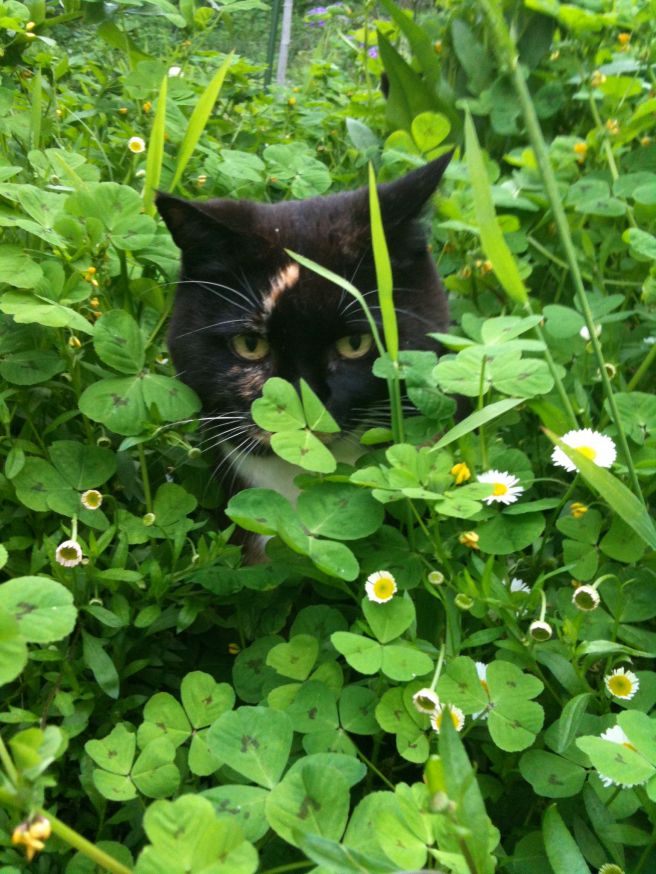
Daisy with flowersToday we had to say goodbye to our eldest cat, Daisy, who has died at the age of about seventeen years. Her coat was dark tortoiseshell, and she had a distinctive ginger stripe on her forehead.
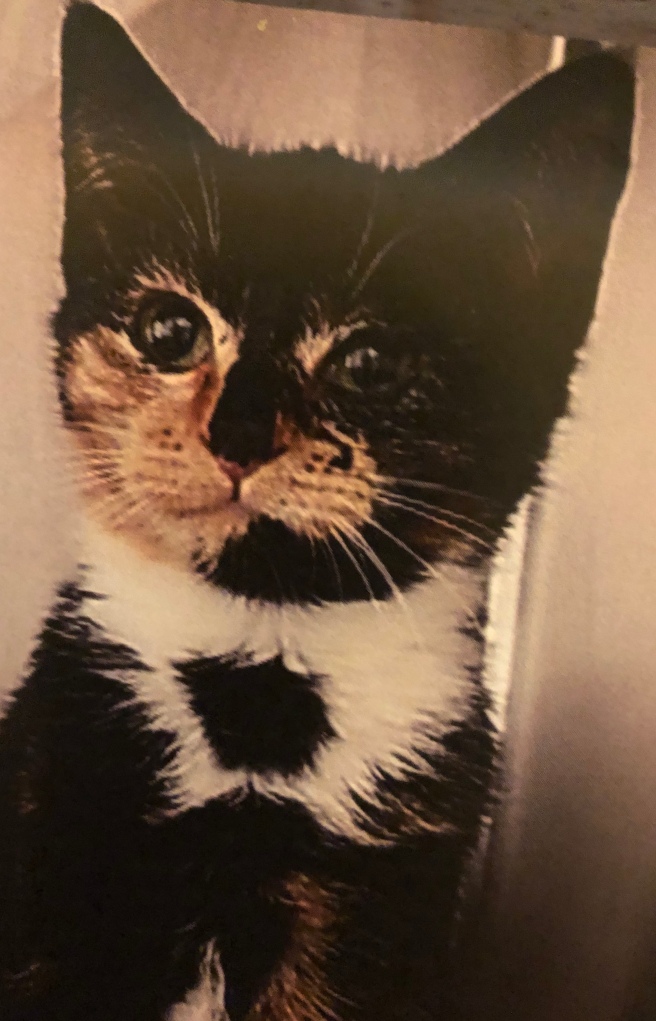
Daisy came to us for foster care when she was a young mother with three tiny kittens. Her previous owners had dumped them all at the vet clinic. As always happens with our foster cats, we ended up adopting her after the kittens were old enough to be rehomed and she had been desexed.

Daisy was a strong character, who liked human company but barely tolerated our other cats, and would attack any dog who visited the property. Her greatest enthusiasms were playing the piano, especially the bass keys, and licking the cream from our breakfast porridge bowls.

Her health had been gradually failing in recent months. Her kidney function was poor, so she was on a special renal diet and needed to drink a great deal of water, but still appeared to enjoy life. Yesterday evening she suddenly went downhill, dragging her back legs and hardly able to walk. We made the harrowing decision to book her in for euthanasia next day, and I did my best to keep her comfortable in a quiet room overnight. By morning she was semiconscious, and died peacefully at home a few hours later. It was a mercifully quick and natural death.

Now Daisy is buried in our garden along with the other cats who have shared our lives since we came to New Zealand – Cindy, Floella, Felix and Homer. We will miss Daisy very much but still have our two lovely four-year-olds, Magic and Leo.

Update one month later:  I was very touched to receive, from our friends at Auckland SPCA, this photo of a new kitten with similar tortoiseshell colouring who has been named after Daisy and is now up for adoption.

Daisy Jnr

Writing plans 2019: Kent, cats and family secrets

I came home from the RototuaNoir crime writing festival in January fired with enthusiasm for working on my next novel. The story is inspired to some degree by my own life experience, involving some old family secrets, and set in the North Kent marshes close to where I was brought up. Writing from my home in New Zealand I have rely on the internet to refresh my memories of these isolated wetlands beside the Thames estuary, a haven for birds and wildlife littered with relics of light industry. The video in this blog post by Carol Donaldson conveys the area’s strange appeal.
The crime element of my new plot, which is purely fictional, is essential to the story but occupies a relatively small part of the text. This is in keeping with the trend, noted at the festival, for the term “crime fiction” to include much more than the traditional who-dun-its and police procedurals. “Crossover” books which combine crime with, say, the historical or romance genres or qualify as literary fiction are increasingly popular.
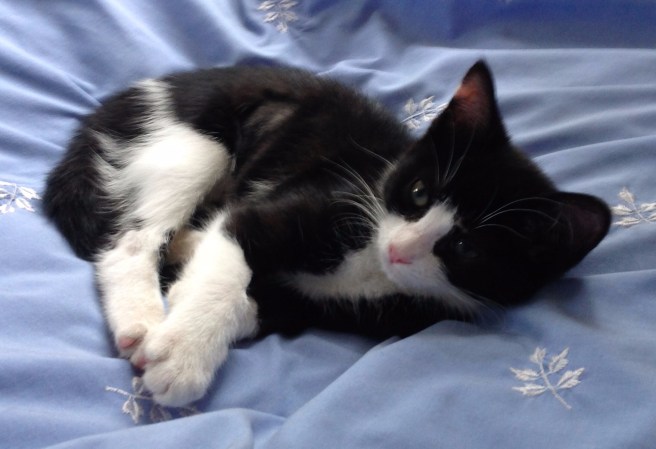
The characters in my new novel are also fictional, with the exception of rescue kitten Magic who plays a small part as herself. Despite its feline content, I don’t think the book will belong in the BISAC category of Fiction/Mystery & Detective/Cozy/Cats & Dogs, as it touches on some serious themes. I would prefer to see it coded as Fiction/Family Life or simply Fiction/Crime.
magic-on-bed.jpg
I hope the new novel will be published later this year. Meanwhile some of my earlier books are being discounted in the Smashwords sale from March 3 to March 9, so please have a look at this link and consider downloading one or more of them for less than the cost of a cup of coffee! They include the three 1980s medical crime-cum-black comedy novels I presented at the RotoruaNoir festival; the more recent Three Novellas set between England and New Zealand; and non-fiction books mostly on health-related topics.
Lastly, if you found this post through the “North Kent” tag, you may be interested in the new book Sunday’s Child by Jean Hendy-Harris describing some vividly detailed memories of what life in the area was like in the post-war years.     

Writing crime fiction set in the recent past

Recently I had the pleasure of attending New Zealand’s first crime writing festival, Rotorua Noir. I’d been invited to take part in a panel session called “Digging into the Past”, which was a surprise because my novels are set within my own lifetime and I had not previously thought of them as historical. But of course they are, because the world has changed such a lot in recent decades. Writing about the recent past, which I will arbitrarily define as covering the 70-odd years following World War 2, is somewhat different from tackling more obviously historical settings such as medieval England or Ancient Rome.

Human nature doesn’t change much and nor do the basic motives for murder. PD James summed these up as the four Ls – Love, Lust, Lucre and Loathing. To these might be added Lunacy, although that is an outdated term and it would be a cop-out to use it as the sole explanation for a fictional crime. Only a minority of murders in real life result from the delusions and hallucinations of mental illness. Most murderers do however have some or all of the personality characteristics which are labelled psychopathic, and psychopaths have always existed.

So, the main challenge for writers of historical crime fiction is getting the background right. Checking on the dates of major events is easy enough. It is harder to capture the subtle cultural changes – when did certain behaviours, attitudes and terms of speech that once were commonplace start to be regarded as outdated or inappropriate? Social attitudes have changed considerably, with the advent of political correctness and greater acceptance of minority groups. Then there are the practical details of everyday life, for example: When did the use of computers and mobile phones become widespread? When did the contraceptive pill became available to unmarried women? When did gramophone records give way to cassettes and CDs? What clothes were in fashion, and what songs were in the Top 10? What did people have for breakfast? While most readers might not pick up inaccuracies about such matters, a few will delight in pointing them out.

How should the writer deal with those historical aspects which might cause confusion unless they are explained? “Show not tell” is the ideal. Overloading the text with facts, in the style of a history lesson, is to risk boring and patronising the readers. A better way to convey information is through the characters’ speech and behaviour, which demands considerable skill, or by including explanatory notes at the beginning or end of the book.

My own long and winding path to becoming a fiction writer illustrates these points. During the 1980s I wrote three novels based on my experiences of working as a doctor in England:  Overdose set in a psychiatric hospital, Fatal Feverfew in an alternative health retreat and Unfaithful Unto Death in rural general practice. Having previously found publishers keen to accept my medical books, it was a shock to find that fiction publishing was a different ballgame and after a few rejections I gave up. I put my typescripts away in a box, and almost forgot about them.

In 2000 my husband and I moved to Auckland, and having retired from medicine I had time to take up other interests and decided to have another go at fiction. I wrote three linked short novels: Carmen’s Roses, Blue Moon for Bombers and The Windflower Vibration, set between England and New Zealand with flashbacks to the characters’ earlier lives as far back as 1940. Self-publishing had become a viable option and, feeling that I was getting too old to spend time waiting for responses from traditional publishers, I decided to try the indie way and thoroughly enjoyed the freedom it conferred.

Wondering what to write next I remembered my 1980s novels, though I wasn’t even sure if they had survived the major decluttering process which preceded our move. I managed to find the faded typescripts and read them again. Some of their content seemed old-fashioned and rather shocking – arrogant doctors who disrespect their patients, accept lavish hospitality from drug companies, drink alcohol before driving, sexually exploit junior colleagues – such behaviour would not be tolerated today although it would be naive to believe it never happens. Should I tone my text down, to avoid offending modern readers? But I decided to leave it largely unchanged, as an only slightly exaggerated record of how things sometimes used to be.

The timeline of my forthcoming novel You Yet Shall Die shifts between the late 20th and early 21st centuries. While writing it, I found it useful to draw up a detailed chronology listing the dates of the main events and the characters’ ages at the time. This list, not for publication, helped to prevent me from making mistakes.


Our “Optimum Wellbeing Retreat”

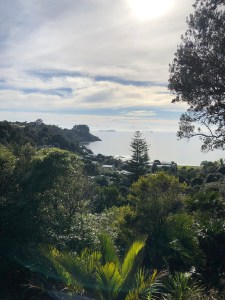
Brian and I spent five days at Gwinganna, an upmarket “lifestyle retreat” set in 200 hectares of native bushland high above Australia’s Gold Coast. We stayed in the Billabong Villas.

Billabong Villas Gwinganna

I was apprehensive about being woken at 5.30 a.m., deprived of caffeine, alcohol, sugar, dairy and gluten (any guest caught smuggling in such items is sent away without a refund), and having only limited access to my iPhone. I had cut down on coffee and tea beforehand in the hope of avoiding withdrawal symptoms but, in common with several of the other 50-odd other guests, I had a mild headache for the first two days. Then I felt well for the rest of the course.

The environment is beautiful, with walking tracks traversing the woodlands and valleys, and two outdoor swimming pools. There are plenty of wallabies and birds, the occasional koala and one sociable peacock.


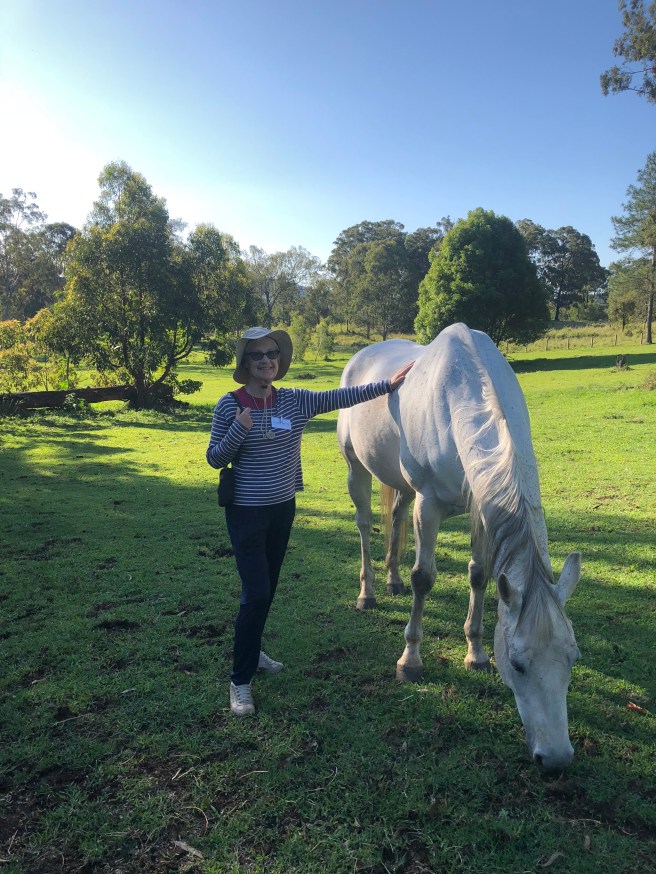
The morning timetable is intensive, with just a cup of herbal tea at 6 a.m. before the qi gong session held in a field overlooking the sea. Then a choice of activities: an energetic walk, a gentle walk, or a guided tour of the orchards and vegetable gardens. A substantial breakfast at 8 a.m. is followed by a stretch class, then again a choice of activities such as yoga, Pilates or dance. More herbal tea at 11 a.m. and then a talk on nutrition, exercise or managing stress. Lunch at 1 p.m. includes fish or chicken with large salads and sometimes vegetable soup. Afternoons are free to rest, swim, or experience one of the many special therapies. A massage and a facial are included in the price of the retreat, and over 80 other modalities ranging from Reiki to colonic irrigation are available at extra cost. Missing my own animals, I had a session of Equine Assisted Therapy.

Horse therapy Gwinganna

Dinner is at 7 p.m. with fish or meat or vegetarian options. After that most people are ready for bed, though on some evenings there are group meditation sessions.

All the staff are passionate about Gwinganna’s approach and most have worked there for many years. Several of the guests are also old hands, attending once or twice each year because they are stressed by high pressure jobs or coping with chronic illness. Brian and I had already been feeling alright before we went there, but we both enjoyed the experience, and returned feeling refreshed and relaxed. Pleased that my body composition analysis showed a normal bone mass and low belly fat, I decided that my usual diet and lifestyle are healthy enough, and do not intend to make any major changes although I feel less desire for coffee and wine. My muscle mass was a bit on the low side so I am back to cold water swimming.


Books I’ve enjoyed #3

Here is my annual roundup of some books I have recently enjoyed or found interesting. They are arranged by alphabetical order of title, and the links refer to the Amazon versions.

A Life of My Own by Claire Tomalin: The memoirs of a literary editor and biographer whose distinguished career has been combined with an eventful personal history. Despite her experiences of family tragedy, she has found contentment in later life. She comes over as remarkably intelligent, energetic and capable, and writes in elegant prose without a trace of self-pity or self-praise. 

A Treachery of Spies by Manda Scott: The narrative of this long and ambitious thriller alternates between France and the UK, the 1940s and the present day. Investigation of the murder of an elderly woman reveals links with her past as an SOE agent during the wartime Resistance. The historical detail is extensively researched. An absorbing read, even if the convolutions of the plot had me baffled in places. 

Admissions by Henry Marsh: Another memoir from the British neurosurgeon whose previous book Do No Harm was on my 2016 list. Descriptions of his clinical cases and frustrations with the NHS are interwoven with reflections on his own life and the approach of old age. Thoughtful, frank, provocative and drily humorous.

Air Force Blue by Patrick Bishop: Following on from Fighter Boys and Bomber Boys, this is a masterly account of the history of the Royal Air Force and its role in World War Two, illustrated by personal accounts from those who lived through the conflict.

Bluff by Michael Kardos: A fast paced American thriller about a magician who turns to cardsharping in the hope of reviving her failing fortunes. I don’t know how to play poker, so much of the detail went over my head, but even so I found it a gripping read with a clever twist at the end. Not for the squeamish.

Into the Gray Zone by Adrian Owen: Through years of painstaking research using neuroimaging techniques, the author has shown that brain-damaged patients who appear to be in a vegetative state are sometimes aware of what is said to them and capable of mental responses. This has important implications for their clinical care, even when recovery is not possible.

Salt Lane by William Shaw: Having been brought up in Kent, I liked the descriptions of the remote landscape near Dungeness which forms the backdrop to this British murder mystery. The investigation, led by a female police detective with a complex private life, touches on the topical theme of illegal immigration.

The Kingdom by Emmanuel Carrere: This extraordinary book is described as a novel but the first part, the story of a French intellectual’s passionate though transitory immersion in the Catholic faith, appears to be autobiographical. I did not finish the second part, a fictional account of early Church history focused on St Luke and St Paul.    

Unmasked by Andrew Lloyd Weber: a memoir by the brilliant composer of many hit musicals (Cats, Evita, Phantom of the Opera and more), who was brought up in a bohemian London family and has led a colourful life. 

Words at the Threshold by Lisa Smartt: The utterances of dying people are often dismissed as nonsensical ramblings, but this linguistic analysis of some clinical examples suggests they often contain insights about this life and the next, expressed in symbolic terms.  

I haven’t published any new books of my own this year, but the Smashwords version of Carmen’s Roses – the first of my Three Novellas – is free from this link until Christmas Day. If you enjoy it you might also like the others in the trilogy: Blue Moon for Bombers and The Windflower Vibration. All these are also available through my author page on Amazon.

Memories of Bomber Command

This year I have been volunteering with the International Bomber Command Centre (IBCC). This charity, based in Lincoln UK, was “created to provide a world-class facility to serve as a point for recognition, remembrance and reconciliation for Bomber Command” and officially opened in 2018 as part of the RAF centenary celebrations. My role involves carrying out audio interviews with World War II veterans who now live in the Auckland region of New Zealand.

Image 3(photo courtesy of IBCC)

My interest in military aviation stems from having edited Geoffrey Guy’s War, my late uncle’s memoir about his experience as a photographic reconnaissance pilot in World War II (see here for a detailed summary and review). That led me to read some of the many other books about the conflict, and go to a local airport to take a trial training flight; one of the peak experiences of my life.

By a combination of skill, hardiness, and good luck my IBCC interviewees had not only survived the war, but lived to an advanced age; they were at least in their mid-90s and the oldest was 100. Several had flown in Lancasters as pilot, flight engineer, navigator, bomb aimer, wireless operator or gunner. As the photograph shows, these operations also involved a large number of ground staff. I have not interviewed any of these, but they played an essential role.  Another man in my group was a pilot with the Pathfinder force, dropping flares to mark the targets for bombing. The only woman I saw had served in the WAAF, processing the photographs taken during the raids to show which targets had been hit. Many of the men continued in aviation work after the war, and one of them was chosen for the role of a pilot in The Dam Busters movie. They felt great pride in their service as evidenced by all the books, photos and memorabilia in their rooms. Even those whose memories were failing were immediately able to recall their service numbers.

Personal anecdotes were many and varied: Being shot down in a bombing raid over Germany, and spending the rest of the war in a POW camp after a failed attempt to escape through a tunnel. Parachuting into occupied France, and managing to cross over the mountains into Spain, disguised with the help of local people. Performing a slow roll in the Gypsy Moth used for training, in deliberate defiance of the order “No aerobatics”, and getting himself and the aircraft smothered in hot oil. Managing to fly home safely after the navigator of his two-seater Mosquito lost consciousness.

They described some gruelling events with calm detachment, often with humour, and obviously had no doubt that their service had been worthwhile. Patriotism, camaraderie and the love of flying must have sustained them through the years of extreme hardship, challenge and loss. Bomber Command has been criticised because its operations caused the deaths of German civilians, and a few interviewees expressed regrets about this, but regarded it as unavoidable: “It was them or us”.

As a former psychiatrist I am interested in the mental and physical disorders that can affect military personnel. I touched on this topic in an earlier blog post and in my short novel Blue Moon for Bombers. Even a couple of my IBCC interviewees, a highly resilient group who did not develop any major problems, spontaneously mentioned symptoms such as nightmares persisting for some years after the war ended.

It is a pity that this work could not have been carried out before now. The quality of some recordings is compromised by the frailty of the aged participants. Other veterans who might have been included are too unwell to take part or have already died. But better late than never, and when they have been uploaded to its website, these veterans’ interviews will contribute towards the IBCC’s aim of “ensuring that generations to come can learn of [Bomber Command’s] vital role in protecting the freedom we enjoy today”.

Diary: Happy Sunday

This post about a day in my life was written mainly as a record for myself, and may or not be of interest to anyone else.

Daylight saving in New Zealand ended yesterday and so I got up even earlier than I usually do on Sundays, to catch the ferry into downtown Auckland for choir rehearsal before Mass at St Patrick’s Cathedral. It was going to be a full day, as I had been asked to give a reading at the SPCA‘s annual Blessing of the Animals service at St Matthew’s in the City in the afternoon. And then, if I was back home in time, go to a tea party at our neighbour’s house.

I had had a migraine the day before; not the terrible kind I used to get when I was younger, confining me to bed with a bursting headache and repeated vomiting, but bad enough to make the simplest tasks seem like onerous burdens. Every cloud has a silver lining and, after recovering from one attack, there is always at least a week before the next. So despite missing an hour’s sleep, I was migraine-free on the Sunday and able to enjoy all the activities planned for the day.

Choir promised to be a challenge because along with two traditional items from our repertoire, Almighty and Everlasting God by Orlando Gibbons and Jesu Thy Blessed Name by Douglas Mews, we were to give our first performance of Oh For the Wings of a Dove by Felix Mendelssohn. There are only three of us in the alto section and our part is not very easy. But if we did make any mistakes I think they would have passed unnoticed by the congregation as they listened to the beautiful soprano solo and organ accompaniment of this piece.

Mass finished quite early so I had time to sit outside in the spring sunshine and eat my sandwich lunch before walking up to St Matthew’s.

The Animal Blessing Service used to be an even bigger event than it is nowadays, preceded by a procession up Queen St and including larger animals such as donkeys, goats and once even a black bull. Now it is confined to the church itself and dominated by dogs of all shapes and sizes, all apparently having a good time and some barking their heads off. The few cats in their cages kept very quiet. I was unable to bring my dog-share Labrador Ireland, but he would no doubt have caused chaos with his enthusiasm for jumping on top of other dogs and “helping” with my reading.

Animal blessing St Matthews

Besides the prayers and readings we heard three sweet songs from a children’s choir, and a wise and witty address from SPCA’s regional manager about what we could learn from dogs. They never cease to find joy in familiar everyday activities and things, and to show curiosity about new ones. They know the value of long rests, and are not governed by to-do lists. They are free of expectations and blame; if their owners come home late they are simply delighted to see them. They have an endless capacity for love.

After two afternoon teas, first with SPCA colleagues and then with the next-door neighbours, it was home to cook the supper and watch the final episode of Hitler’s Circle of Evil on Netflix. This may sound an incongruous choice, but it is an excellent series which has helped to expand my knowledge about the history of World War II, relevant to the interviews with Bomber Command veterans that I am currently carrying out for the IBCC and will describe in a later post.