

On a lovely sunny autumn day Brian and I visited Rangitoto, the volcanic island a short ferry ride from our home.

We walked up the steep track towards the summit.

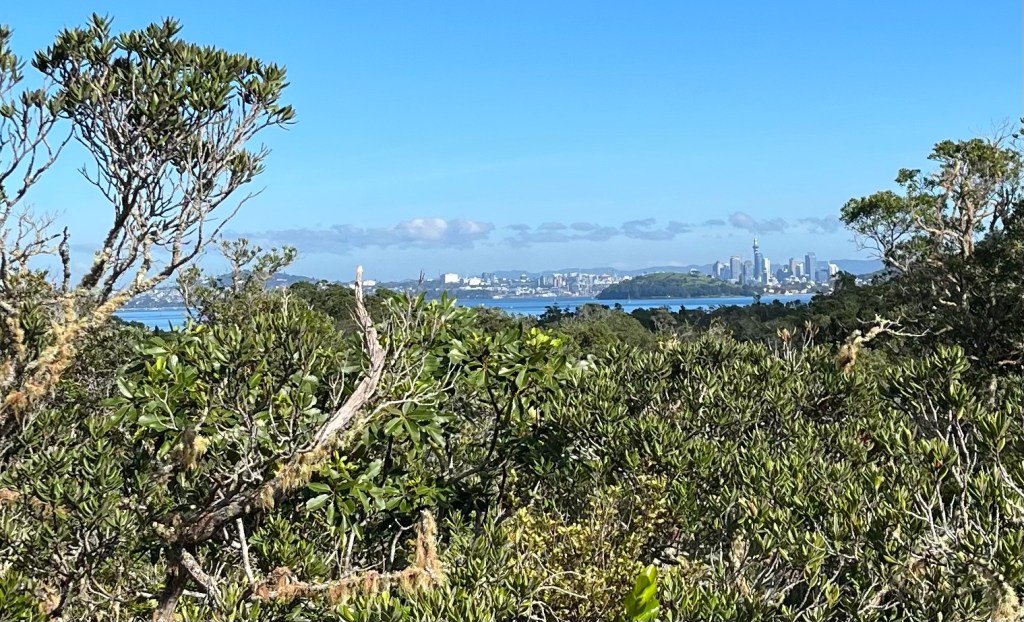
When we last visited some years ago we made it to the top, but not this time. Not only do we have less stamina nowadays, but the upper parts of the track are quite hazardous after the recent floods. So we went back down and sat in the sun to eat our packed lunch (there are no cafes on the island). Afterwards we walked along the coastal path towards Islington Bay.

I was going to write a short description of Rangitoto, but thought AI might do it better. The following text was generated in a few seconds by ChatGBT.
Rangitoto Island is a volcanic island located in the Hauraki Gulf near Auckland, New Zealand. It is one of Auckland’s most iconic landmarks and a popular destination for tourists and locals alike.
Geology: Rangitoto Island is a volcanic cone that emerged from the sea around 600 years ago, making it one of the youngest islands in the Hauraki Gulf. It is part of the Auckland volcanic field, which consists of around 50 volcanic cones and craters scattered across the Auckland region. Rangitoto’s distinct symmetrical shape and its dark volcanic rock create a striking visual contrast against the blue waters of the gulf.
Natural Environment: The island is predominantly covered in dense vegetation, including native New Zealand flora such as pohutukawa trees, ferns, and shrubs. The pohutukawa trees, with their vibrant red flowers during the summer months, have earned Rangitoto the nickname “the Red Tree Island.” The island’s rugged landscapes and scenic trails provide opportunities for hiking and exploration, allowing visitors to experience its natural beauty up close.
Recreational Activities: Rangitoto Island offers various recreational activities for visitors. The island is accessible by a short ferry ride from downtown Auckland, making it a convenient day trip destination. Upon arrival, visitors can embark on walking tracks that lead to the summit of the volcano, offering panoramic views of Auckland’s skyline, the Hauraki Gulf, and the surrounding islands. Exploring the lava caves formed by ancient volcanic activity is another popular activity on the island.
Cultural Significance: Rangitoto holds cultural significance for the local Māori people, who consider it a sacred site. The island’s name, “Rangitoto,” translates to “Bloody Sky” in Māori, which is believed to originate from a historic battle that took place there. The island is home to archaeological sites, including Māori pa (fortified village) remains, which reflect its historical importance.
Conservation and Protection: Rangitoto Island is part of the Hauraki Gulf Marine Park and is managed by the Department of Conservation (DOC) in New Zealand. The DOC focuses on preserving the island’s natural environment, protecting its wildlife, and maintaining the integrity of its volcanic landscapes. Visitors are encouraged to respect the island’s fragile ecosystem by following designated tracks and leaving no trace behind.
Overall, Rangitoto Island offers a unique blend of natural beauty, volcanic history, and cultural significance. Its accessibility, diverse flora and fauna, and recreational activities make it an attractive destination for nature lovers, hikers, and those seeking a memorable experience in the Auckland region.


 Jennifer Barraclough