When is it time to stop?

Watching Joe Biden’s determination to cling on to power despite his obvious physical and mental decline has made me think again about a question that keeps arising as I get older: Is it better to stop doing things while the going is good, or to carry on till it is clear you are not coping?

I am a few years younger than Biden. I feel fit and well, in fact better than before since my sleep pattern has improved and I have grown out of the migraines that plagued my earlier life. And yet, looking back over the last few years I realise what a lot of my former activities I have given up. This has sometimes been because of external factors outside my control, such as family illnesses and transport difficulties and lockdown effects, but also reflects the gradual loss of energy and confidence that comes with aging.

Not all the changes are bad. My life is quieter, and more locally based. I still enjoy driving but no longer fancy long trips, which must reduce my environmental footprint. I have resigned from my previous choir over in Auckland city, but joined another which is nearer and requires less time commitment. I don’t do sessions at the animal rescue centre any more, but help to look after two dogs as well as my own two cats. I closed my Bach flower client practice some time ago, but still make up remedies for friends. Instead of the film society in the city, I go to the local cinema or watch DVDs at home. I have joined a book group, dance and TRX exercise classes in the village where I live, and made a few new friends there. I still love writing and would hate to give that up, yet I don’t write as fluently as I used to, nor do I have so many new ideas. I don’t want to be like well-known authors such as Agatha Christie and PD James, whose later novels were so inferior to their early ones. Perhaps my latest book Migraine and Me will be my last.

There may come a time when someone wanting to continue as an active and productive member of society becomes a nuisance, an embarrassment or worse. But this is not inevitable. Older people can have much to contribute due to their long experience of life, and it is a mistake to underestimate them on grounds of age. The English environmentalist and chimpanzee expert Jane Goodall recently undertook a lecture tour around the world at the age of 90, and I’m told that her presentation in Auckland was inspiring.
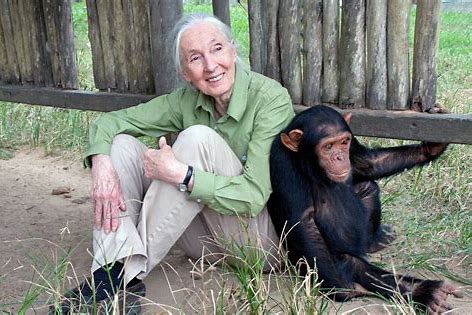
Jane Goodall with a chimpanzee

Sugar


Guidelines for “healthy eating” come and go. At one time we were advised to avoid fat, now it is said that certain fats are extremely valuable. There are conflicting views about whether such foods as meat, dairy and legumes are good to eat. But one thing on which most of today’s experts do agree is that sugar is extremely bad for the health, and contributes to diverse forms of chronic disease.

Many authorities are now telling us to give up refined sugar completely, although a moderate intake of naturally occurring sugars such as fructose in fruit is okay. I don’t presume to question their advice, which is based on good evidence from large population studies. But there are always individual exceptions to general rules – consider for example the case of my friend Jenks.

Jenks is about to celebrate his 104th birthday. A widower, he lives alone and independently in his own house in England. Every year he flies, on his own, to New Zealand to visit his daughter. He cannot walk very well, but otherwise he is in good physical health and is not overweight. His mental faculties are intact and he uses the internet to keep in touch with the outside world. He has a calm and cheerful temperament.

Jenks has a hearty appetite and has loved sweet foods all his life. In England, besides the main meal of the “meat and two veg” variety which is delivered to his home each day, he eats plenty of processed cereals, biscuits and cakes, fruit juice, fruit tinned in syrup, milk chocolate, cakes and sweets. He takes sugar in coffee and tea. He also enjoys cheese and wine.

His daughter has been keeping a record of his diet while he is staying with her in New Zealand, and here is a typical day’s entry:

Breakfast: Apple juice, Muesli type cereal with milk, Toast and jam, Coffee with 1 sugar, Nectarine

 Mid-morning: Coffee with 1 sugar, 2 sweet biscuits

 Lunch: Bread, crackers & cheese

 Afternoon: Tea with 1 sugar, Cake, Biscuit

 Dinner: Fish & chips, Passion fruit, Chocolate, 2 glasses wine.

In between meals he will have eaten nibbles of sweets, dried fruits and nuts. He has a secret stash and tucks in on demand. 

Most people who ate like this every day without taking any exercise might be expected to become obese and diabetic and die from heart disease long before the age of 104. But not Jenks. Perhaps, as my late mother-in-law was fond of saying, “It’s all in the genes”.

On turning 70

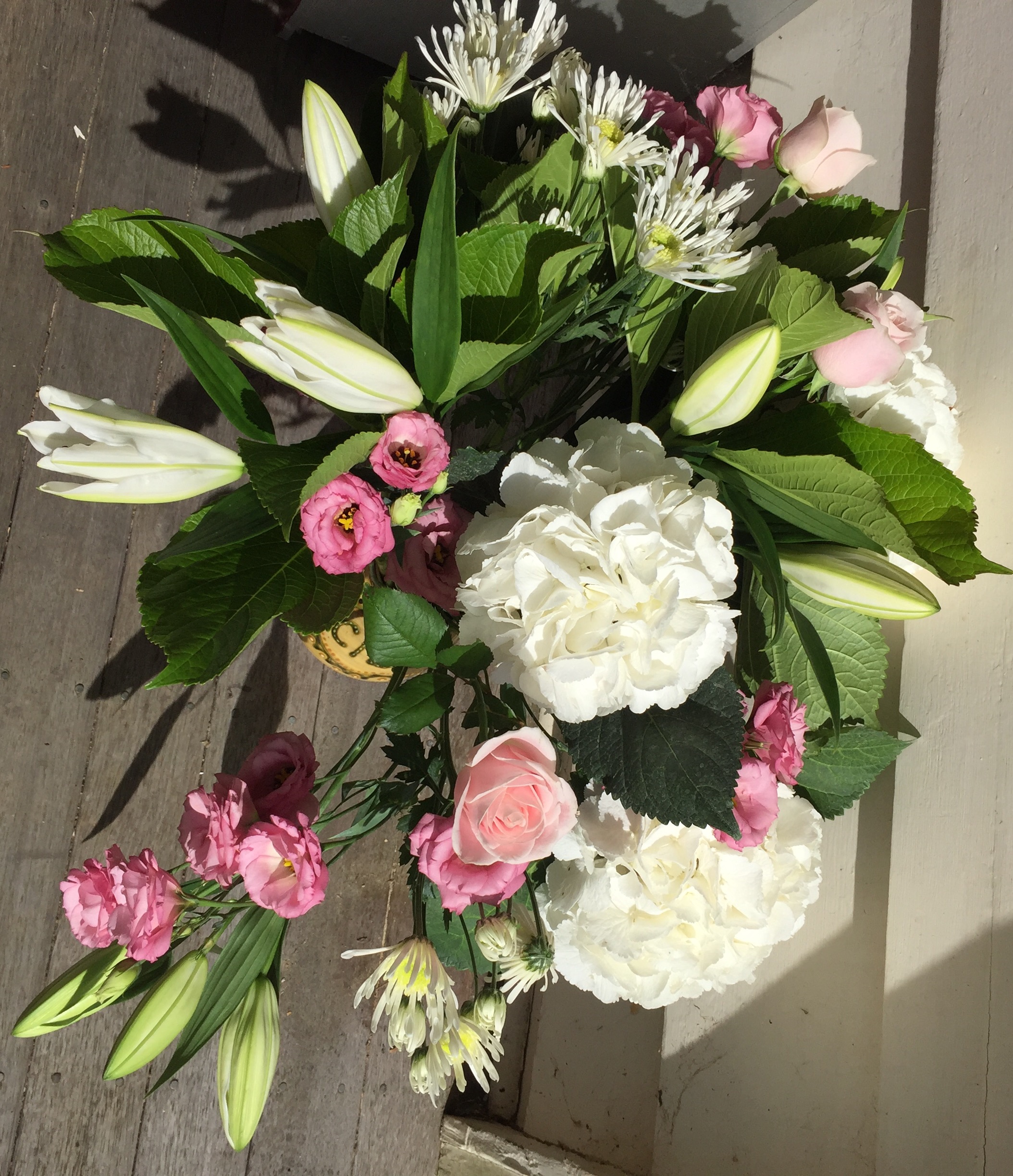
Today was my 70th birthday. I had been dreading this particular milestone, despite telling myself that it is pointless to feel defined on the basis of age, and that I know plenty of people who are still going strong not only over 70, but over 80 or 90 or even 100. Despite my misgivings I don’t feel any older than usual this evening, and I had a lovely day including lunch with friends at a seaside restaurant in the glorious sunshine of our New Zealand summer, and a big bouquet from husband Brian.

file-4-02-17-10-22-45-am

Ageing has many negative aspects, but also some positive ones. Ideally, it is said to be a time of contentment, enhanced wisdom and spirituality, liberation from old constraints and perhaps a chance to start something new. I’ve ordered a book called 70 things to do when you turn 70, no doubt full of inspirational ideas along these lines. For myself I have few ambitions at present, though having just finished the memoir that will be described in my next post, I do hope to write more books. And in my next life I would like to learn to fly. Meanwhile I appreciate being in happy circumstances and good health – having finally grown out of the severe migraine attacks that blighted most of my adult life is a huge bonus. It is a relief to be free of the responsibilities of paid work, and seldom having to do anything unless I want to, although I still feel an obligation to spend my time on something “useful” and am not comfortable with a life of pure leisure. The free travel pass is very nice too.

The older writer

Young authors with the potential for a long future career, especially if they are photogenic or have an unusual background, are the ones most likely to find favour with agents and publishers. But many wellknown authors have continued to produce new work of a good standard in old age. I have just finished reading Angela Bull’s excellent biography of Noel Streatfeild (1895 – 1986), who wrote numerous books besides the famous children’s classic Ballet Shoes, and who published her last novel when she was in her mid-eighties. Other English women authors who continued writing in their later years include Agatha Christie (1890 – 1976), Iris Murdoch (1919 – 1999), and P. D. James (1920 – ) who is, I understand, currently working on another book at the age of ninety-four. There are many more examples.

A few successful authors did not seriously begin their writing career until late in life. For example Mary Wesley (1912 – 2002) wrote the first of her seven novels for adults when she was seventy-one. Her books were original, sexy and regarded as slightly shocking and several of them, including The Chamomile Lawn, became best sellers. As the saying goes “It’s never too late to become what you might have been.”

Creative writing is one of those skills which is often well preserved, and may even improve, as age advances but there is a limit. It has to be acknowledged that books written by older people are not always of top quality, and sometimes only accepted for publication on the strength of their authors’ previous reputations. Mary Wesley knew when it was time to stop, and wrote no more novels after she turned eighty-three. Other older authors, in contrast, have continued to publish more books after they are past their peak. Linguistic analysis of the later works of both Agatha Christie and Iris Murdoch reveals signs of cognitive decline: a limited vocabulary, a vagueness of expression, and the tendency to repetition. Does this mean they should have stopped writing? I don’t think so; even if the later books by these remarkable women are not quite so good as the earlier ones, they still display outstanding talent and are valued by many faithful fans.

Older writers do possess certain advantages. They have a wide life experience to draw upon for material. If they are free of work and family responsibilities, they have ample time to write. They are likely to be driven by a genuine love of writing and the wish to create a quality product, rather than by the slim hope of achieving fame and fortune.

I had reached my sixties by the time I began to revisit my childhood passion for writing fiction, and I hope to find enough inspiration to continue for a good few years yet. Having no desire to produce best-selling books, I write mainly for my own satisfaction, however I only consider the activity worthwhile if at least some people read and enjoy my work. My second novella Blue Moon for Bombers: a story of love, war and spirit has just been published; I will post an extract of the text and details of purchasing options on this blog next week.