
Feline heartaches

I couldn’t stop crying when the time came to take our latest foster kitten, Nico, back to the rescue centre. We have fostered many kittens before and I have never been seriously upset about saying goodbye to them. Indeed it has been rewarding to see them grow in health and confidence while in our care, and be passed as ready for adoption. But Nico was somehow different.

He came to us at four months old, an unremarkable-looking tabby kitten, very thin because he had been suffering from bowel infections and presumably been malnourished in earlier life. He thrived while he was here, and quickly made himself at home, being let out of the foster room during the day if I was there to supervise him. He was energetic, playful and affectionate and he won our hearts.

We have two cats of our own, both 10 years old now. Leo, the male tabby, made friends with Nico right away. He enjoyed grooming him, and the two of them ate side by side.
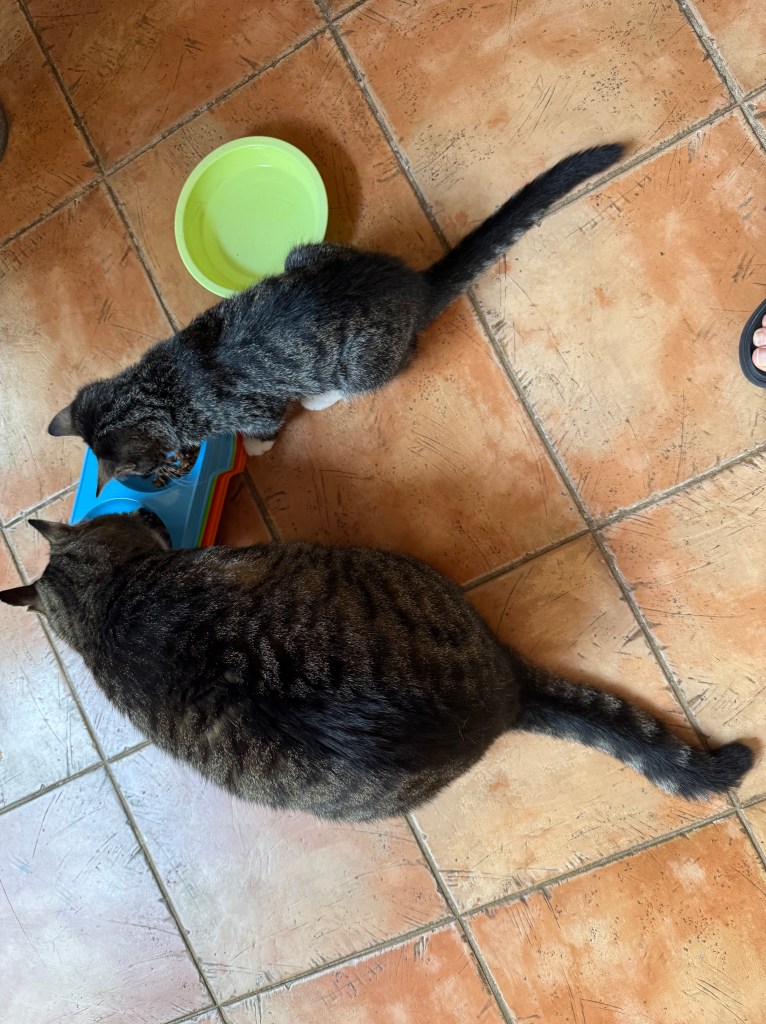
Leo and Nico

But Magic, our black and white female, reacted quite differently. She always knows when there are kittens here even when they are shut away in the foster room, and leaves the house for long periods, refusing to eat unless her meals are served outside. It has been worse this year and she has been completely absent from the property at times.

My husband Brian doesn’t usually get involved with the foster kittens, but he took to Nico so strongly that he suggested adopting him. We had long discussions about this. I wanted it too, because I had become so fond of Nico.But logically I knew it would be a mistake. I think we are too old to take on a young kitten who is likely to outlive us. Looking after three cats is a big commitment and expense. And a major barrier would be Magic’s mental health. Even now that Nico has been gone for several days, and I have given the foster room a thorough clean, she is reluctant to come into the house again. Al least she was back in our garden today, but didn’t take kindly to having her photo taken. “No good deed goes unpunished”, and by caring for foster kittens I have caused much heartache for Magic.

Magic

Fostering is a lot of work and after doing it for a month, first for the two timid kittens and then for Nico, I am glad to have a rest and be free for other things. But I still miss Nico very much and do hope that he, along with all the many other cats and kittens currently in the shelter, will find the right forever home.  

Update 5 days later: Nico has been adopted, and Magic has returned home.

A canine memorial service

A group of dogs who were bred in Auckland’s Guide Dog Centre meet every week for a “play date” in one of our local parks. Most of them are Labradors, either black or yellow. They include puppies in training, working dogs both active and retired, and those who were withdrawn from the training programme and are living as family pets. I was introduced to this group through Ireland, a four-year-old black Lab in the “withdrawn” category, who is owned by a local family. I am his “dog-sharer” who walks him almost every afternoon, as described in a series of my recent blog posts.

Three of the long-term canine members of the group have died in recent months. Two of them were near the end of their natural lifespan, which for Labradors is 10-12 years. The third, who was a little younger, had developed heart failure. Today we gathered in a beach-side reserve to honour their memories. The weather pattern of sunshine and showers mirrored the bittersweet mood of the occasion. There were tears as each of the bereaved owners delivered a short eulogy to their dog, but there was pleasure in sharing food and drink with friends while watching the younger Labs chase each other round the grass and jump into the water. Like a human memorial service, it was a significant event.

When I lived in England I volunteered with the Society for Companion Animal Studies (SCAS) to provide telephone support to people who were distressed by the loss of a pet. Through that work, as well as through my personal experience, I learned that the death of a beloved companion animal can be no less devastating than a human bereavement. Those who do not love animals find it difficult to understand grief of such intensity, and may make hurtful remarks like “It was only a dog” or “Why don’t you just get a new one”. A lost pet cannot simply be replaced in the same way as a worn-out garment or an old car. Having said that, many owners will find comfort by bringing another animal into their homes when they feel ready to do so.

Coping with the loss of a cat

For animal lovers, grief over the loss of a much loved pet can be just as severe as that which follows a bereavement in their human families. I know this not only from my personal experience, but from what I have heard from friends and clients who are mourning the death of feline or canine companions. It is also backed up by published research. However, the death of a companion animal is not always recognised as the major trauma which it is often perceived to be. What can bereaved pet owners themselves, and those around them, do to ease the pain? This post outlines some things which I have found helpful since Felix died.

The support of family, friends and veterinary staff: I have been greatly comforted by all those who have sent a sympathetic email or card, brought flowers for his grave, or offered healing therapies. I expect there are some who cannot quite understand the depth of my sadness, but everyone has been kind, and noone has trivialised my loss with comments like “it was only a cat” or “you can always get another”.

A funeral ceremony and a marked grave: It felt right to hold a small ceremony for him, and to bury his body in a secluded part of the garden which I can visit every day – although, as one perceptive friend said “You’ll never be able to move house now.”

Expressing feelings through talking and writing: Many bereaved pet owners benefit from talking with an understanding person, whether in a formal counselling setting or in everyday life, and I have a number of friends with whom I have been able to talk about Felix. For me, writing is the best medium for self-expression. I initially created this blog just as a private site where I could store photographs of Felix, but writing about a few cat-related topics has proved quite therapeutic, and drawn a few messages of support from strangers round the world.

Happy memories: I remember many happy times with Felix. There were also some worrying ones, because he suffered several episodes of serious illness during his life, but I can honestly say that I always looked after him in the best way I could.

Other cats: I am glad there are other feline presences on our property. Our female cat, Daisy, seems quite pleased that Felix is no longer around and Homer, a male cat who officially belongs to me but decided to move next door, has been making more return visits here. It would be impossible to “replace” Felix and I have no wish to try, though maybe I will fall in love with another black-and-white kitten at the SPCA one day.

Bach flower remedies: I took Star of Bethlehem, which is the main remedy to be considered for shock or grief. Other remedies could be suitable in certain cases, for example Pine for owners who feel a sense of guilt or self-blame, or Sweet Chestnut for those in deep despair. Remedies from the Bach series can also be useful for treating emotional distress in animals themselves.

The passage of time: Life goes on, and though I will never forget Felix and always miss him, it is getting easier as the weeks go by.