
Bottle babies: feline neonatal care

I have fostered many homeless kittens over the years, but none less than 10 weeks old. I recently attended a workshop at my local animal rescue centre to learn about fostering neonates. These have usually been brought in by members of the public who have found an abandoned litter without a mother cat. Caring for these orphaned newborns is a full-time job requiring great dedication, as they need attention every 2 hours both day and night if they are to survive. After arrival at the centre they are allocated to a foster parent who can pick them up as soon as possible and take them home along with all the necessary equipment: carry cage, towels and bedding, microwavable heat pad, formula feed, bottle and teats, digital scale and bowl for weighing, syringes and toileting cloths.

Photo by Sam Paeez on Unsplash

The care routine, as demonstrated on a stuffed toy at the workshop, involves preparation and warming of formula food, hand washing, toileting, weighing, bottle feeding, toileting again, cleaning, burping, changing the bedding, cleaning the bottle, hand washing again, and recording notes to send in to the centre. The process is then repeated for the next kitten. It is best for each foster home to have more than one, so they can learn to socialise and play with each other.

They will spend the first 3 weeks in their cage, then at 3-5 weeks move into a larger crate, and then when they have learned to feed themselves and use a litter tray they have access to a small secure room but are not allowed outside. When they can eat solid food and have reached about 1 kg in weight, usually at 8-10 weeks of age, they return to the centre to be desexed, microchipped and vaccinated. Some will need a further few weeks of fostering, for example if they are still on medical treatment. They are then ready to go to their forever homes. Kittens at this stage are very appealing and are usually adopted within a few days of becoming available. Sometimes the foster parents can’t bear to part with them, as was the case with Magic and Leo (pictured) whom we decided to keep after fostering them 8 or 9 years ago.

Leo

Things do not always go smoothly. Small kittens from deprived backgrounds are vulnerable to infections such as cat flu, ringworm and Giardia. For this reason they need to be checked daily for symptoms such as lethargy, loss of appetite, diarrhoea, vomiting, sneezing, discharge from eyes or nose, scratching or hair loss. They also need to return to the centre once a week to be examined by a vet. Not all of them will survive, sometimes due to a condition called the fading kitten syndrome, which can develop for many reasons though often the cause is unknown. One friend of mine has questioned the wisdom of putting so much effort into saving their lives, when there are so many unwanted cats in New Zealand. But it would seem very hard hearted to let them die. A better solution to overpopulation is desexing, which is now being stepped up again having been suspended during the Covid pandemic.

Maybe reading this post will encourage others to consider neonatal fostering, After reflecting on the content of the workshop, I don’t think I have enough physical or mental stamina for the night work involved in looking after “bottle babies”, but I look forward to taking in some slightly older kittens again this summer.
Happy birthday Marco and Polo

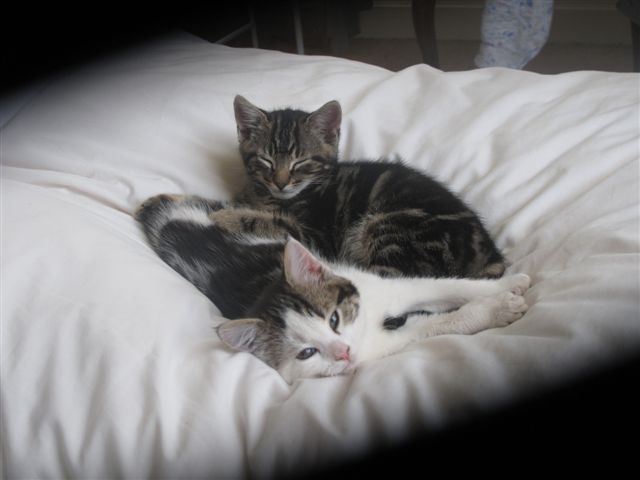
I had forgotten that today, 1st September, was the estimated date of birth of the two kittens I fostered last year. Here is a picture of them at about nine weeks old; the dark mackerel tabby is Marco (male), and Polo (female) is the tabby and white.

marco-polo-9-weeks-old


It was a lovely surprise this morning to receive birthday messages and photos from both their respective “forever homes”. I had been overwhelmed with applications to adopt them as soon as their details went up on the Lonely Miaow website, and it was up to me to select the most suitable ones – a big responsibility. Fortunately I chose well, for they quickly settled in with their new families and are greatly loved.

Fostering has both ups and downs. It was a lot of work looking after the two lively little kittens and they caused a fair amount of damage around the house. But we became very fond of them and could hardly bear to see them go. Fortunately I was able to keep in touch and visit them both now and then.


Magic and Leo

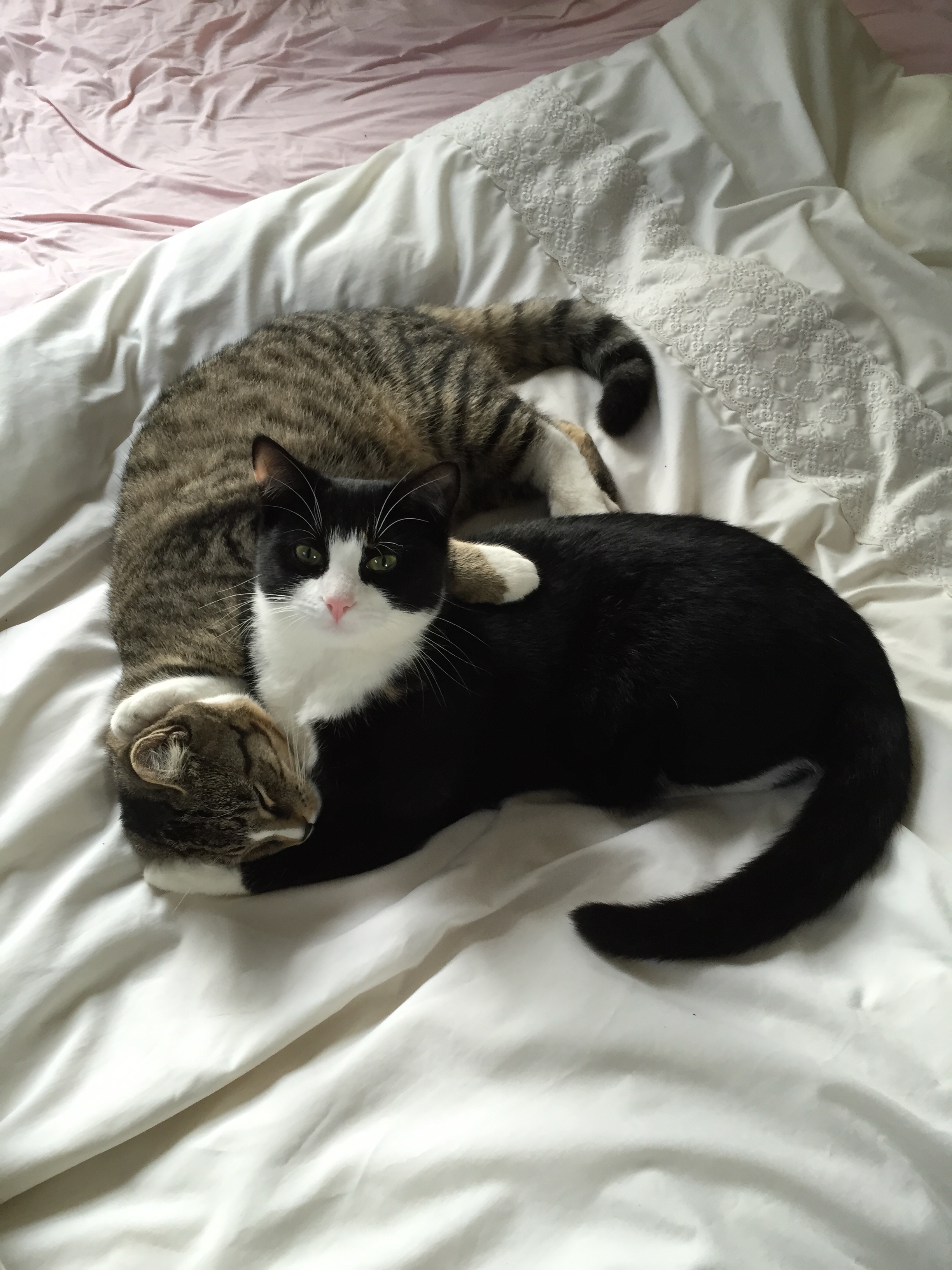
I still miss Felix, but the two young cats who have now taken his place in our home are a great delight. A few weeks after adopting Magic from the SPCA, I agreed to foster little Leo for the Lonely Miaow. As soon as the two kittens set eyes on each other they started playing-fighting, and bonded so closely together that I decided to adopt Leo myself.

They are both happy, healthy and friendly but otherwise quite different in appearance and temperament. Magic, the black and white female with gold spots, is now around nine months old. She is a small cat, quick and graceful in movement, full of energy, a keen hunter and seems totally without fear. Leo the male tabby, though probably three months younger, is already bigger and heavier than Magic. He is a placid, cuddly cat with a very loud purr.

I wonder how much their differences in personality are due to genetics, and how much to environment. Being rescue cats, I presume they both suffered some adversity in early kittenhood, but I don’t have detailed knowledge of their backgrounds.

magic-leo-still-in-love


“Replacing” a lost cat

It is impossible to “replace” an animal who has died, and for more than a month after losing Felix I felt no desire to get another cat. This was partly because there is other feline company in this house, for besides having our own dear Daisy, we receive frequent visits from two male cats who live nearby.  Another reason was that I dreaded the prospect of growing to love another and then, more likely than not, having to go through the agony of bereavement again in a few years’ time.

Then I began to feel differently. I started scanning websites about cats available for adoption, and felt very tempted when I found a young black and white male who not only looked just like my own Felix but also had the same name. However, many experts advise against seeking a carbon copy of the previous cat – there is a risk that the two animals will always be compared, usually to the newcomer’s disadvantage.

Many experts also advise against getting another cat “on the rebound” while still grieving for the one which was lost. However there are no rules and sometimes this is the best way of easing the pain, at the same time as giving an unwanted animal a new home. On a recent volunteer shift at the SPCA I met a woman whose cat had died only one week earlier. She had apparently been crying ever since, but after choosing a new kitten to adopt was transformed with joy.

Rather than permanently adopting another cat myself at this time, I have decided on a compromise. Last week I accepted an invitation to become a foster carer for a local cat charity, and am very much looking forward to picking up two kittens – not black and white, but tabby – from the vets tomorrow.