
Downsizing

The home which my husband Brian and I shared for 25 years is not a suitable place for me to spend the rest of my life. A wooden villa built before 1870, with gardens and a pool, it is too big and expensive for me to maintain on my own. Now, almost a year since Brian died, it is time for a change. I will be very sad to leave this property but hope it can be sold to a young family who will love it as much as we did.

The prospect of moving with my two cats to a smaller, warmer, more modern house closer to the village is both exciting and daunting. Inevitably it means giving up many possessions. I don’t like the term “decluttering” because it could imply that these surplus goods are junk, which most of them are not, even if they may be too old-fashioned to have any monetary value.

William Morris said Have nothing in your houses that you do not know to be useful, or believe to be beautiful. More recently, in Marie Kondo’s popular system, the key question to ask when deciding whether to keep an object is “Does it spark joy?”

With the starkly named method of Swedish Death Cleaning, older people are advised to reduce their possessions to the essentials, so as to save trouble for their survivors. That sounds very noble. But although I do try to keep my things in good order and take unwanted ones to charity shops, I am reluctant to give up those non-essentials that will continue to “spark joy” for however long I have left to live.

There are many items that I want to keep for sentimental reasons. The wooden chest from a country fair with the initials B and J on top. The picture we bought the first time we went to a London exhibition. Brian’s vast library of books on diverse subjects, and copies of all his academic publications. The jewellery that I seldom wear but reminds me of our holidays together. The footstools and cushions that my mother embroidered with cats and flowers. And the many volumes of photos …
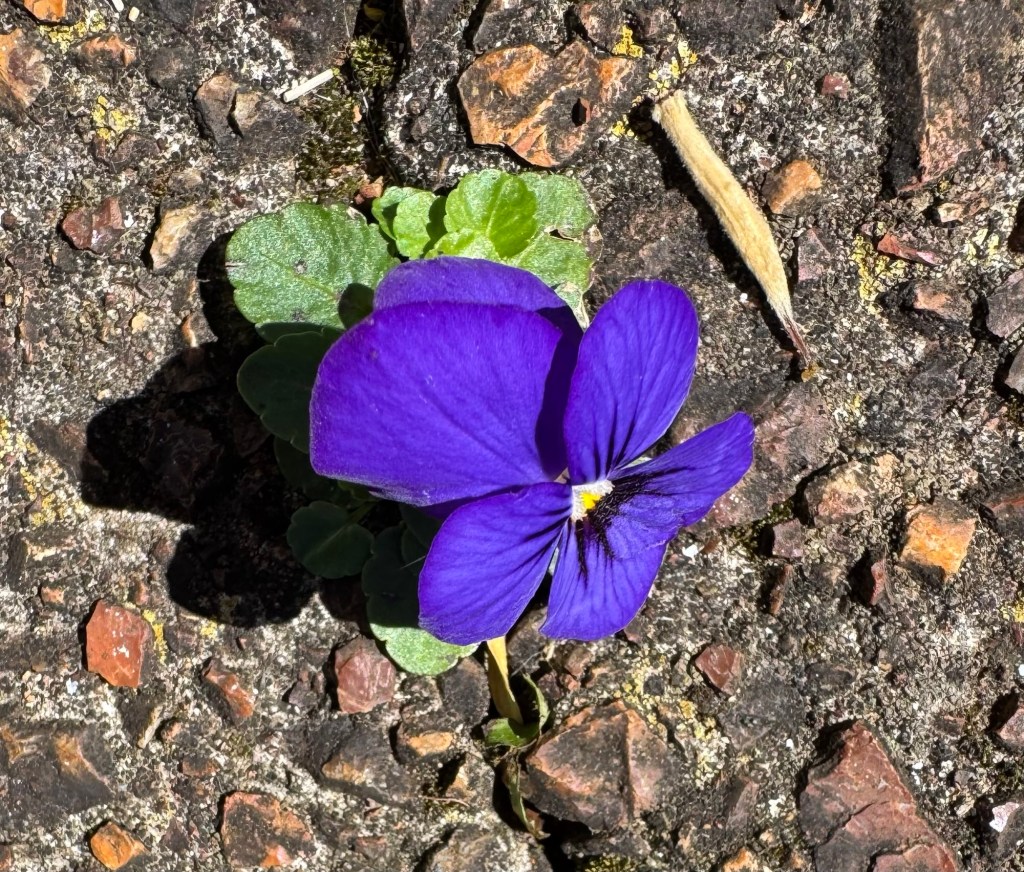
A sweet little flower self-sown in a crack in our garden path.

Style after 70

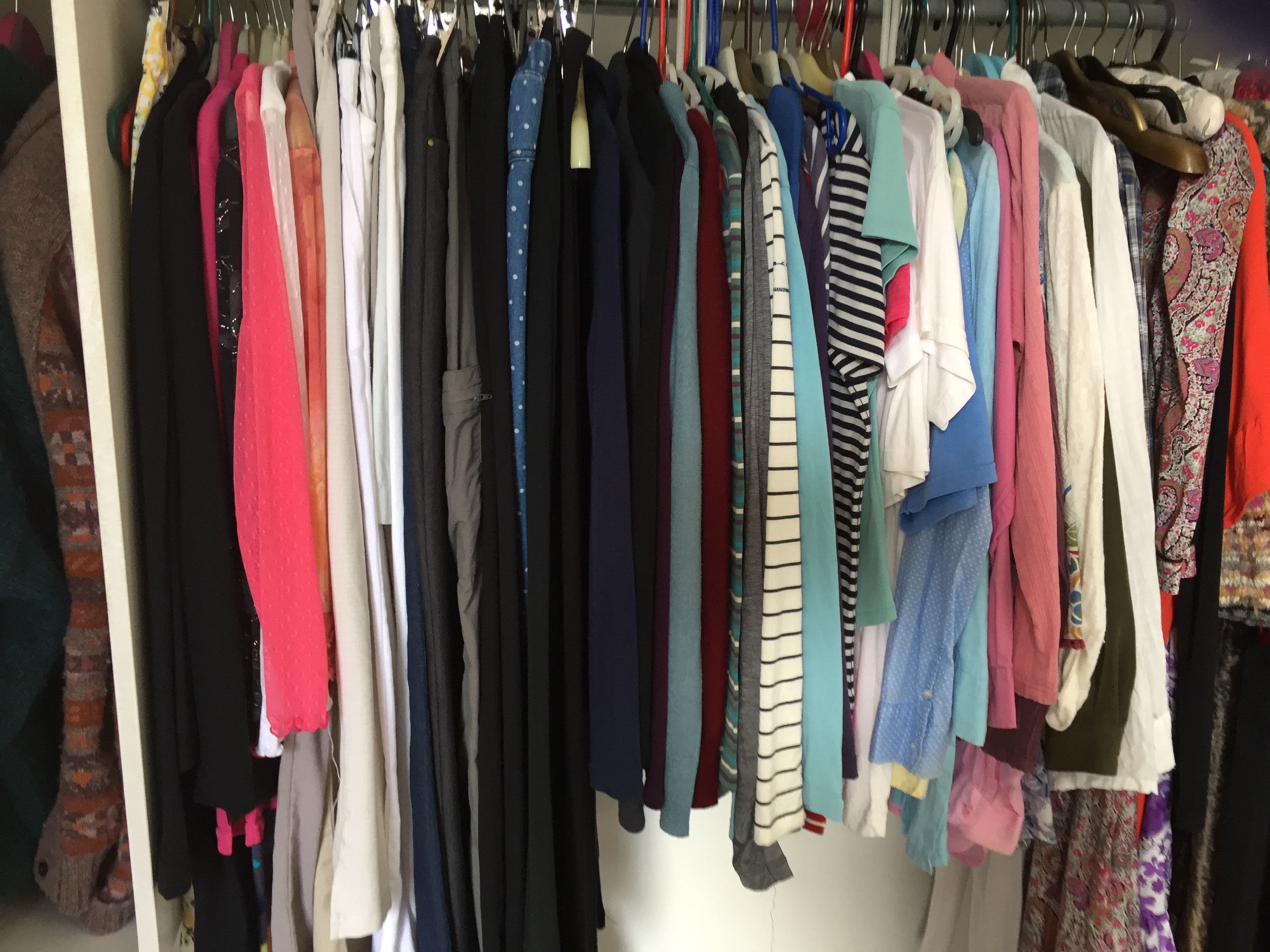
With spring on the way, this feels like a good time to sort out my wardrobe. Despite my policy of giving away one garment whenever I get a new one, I have too many clothes and some of them no longer seem suitable.

Circumstances, priorities and bodies change with advancing age, often calling for adaptations in dress style. Some older women become more adventurous and frivolous, following the latest fashion trends or putting purple highlights in their hair. Some stick to a safe formula such as wearing only black, white or navy blue. Some have clearly lost all interest in their appearance, and opt for the comfort and convenience of old tracksuits. Personally I have become rather more conservative, aspiring to a simple practical and classic look, and hoping to avoid any impression of “mutton dressed as lamb”. So all my shorts and jeans, and anything too brightly coloured, will be going to the charity shop.

But other superfluous garments are hard to part with. Some have sentimental value because they were given to me by someone I care about, or bring back memories of a special occasion. Some that were quite expensive to buy have become faded and out of date, having languished too long in the cupboard being “saved for best” and hardly ever worn. Some are old favourites that I still wear a lot, but probably shouldn’t because they look awful if I happen to see them in a photo of myself. Others simply “might come in”. I suppose it is an exercise in letting go of the past and I could apply Marie Kondo’s advice to “keep only clothes that bring you joy”, as described in her book The Life-Changing Magic of Tidying Up.

My long-held ideal is having a wardrobe planned according to a logical system: a certain number of clothes of each type for each season, all colour-coordinated of course. Despite many attempts over the years I have never quite managed to achieve this. Fashion – and life – is always changing, and can never be perfect.

File 14-08-17, 12 20 13 PM