A canine memorial service

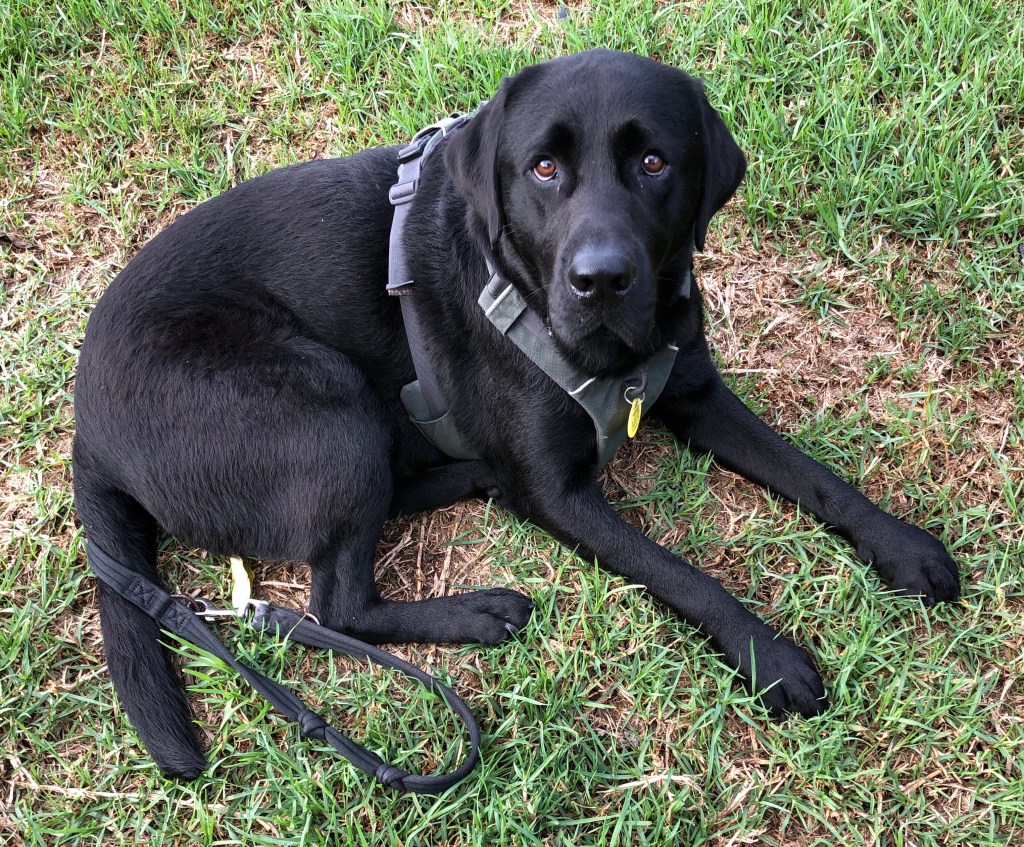
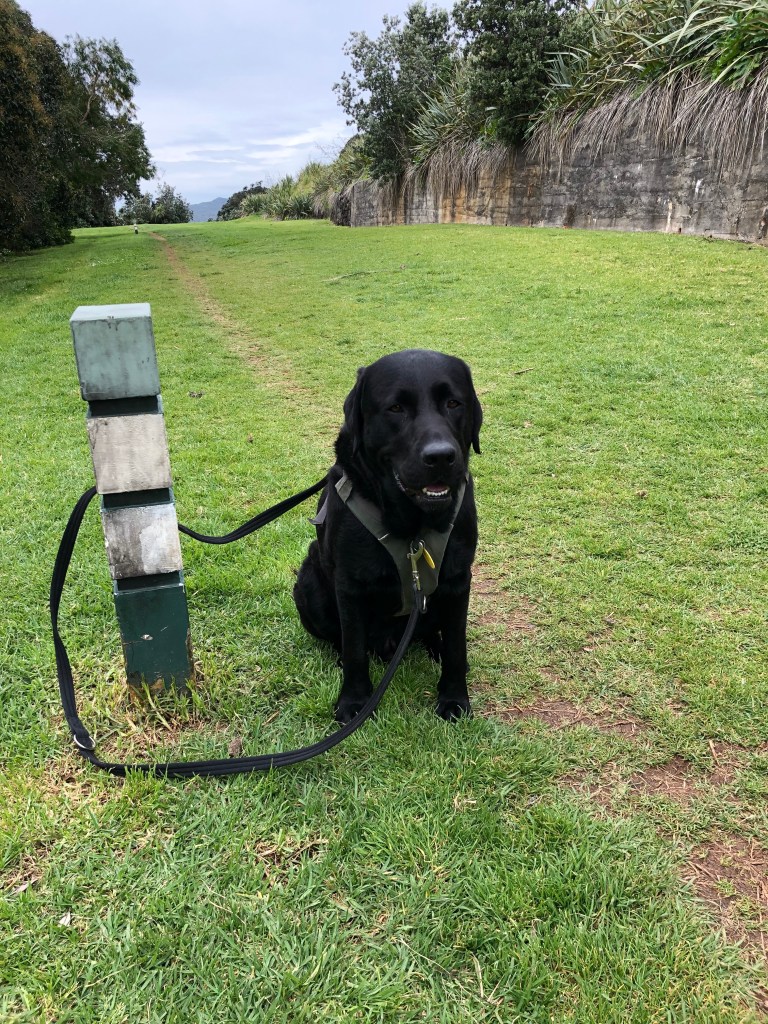
A group of dogs who were bred in Auckland’s Guide Dog Centre meet every week for a “play date” in one of our local parks. Most of them are Labradors, either black or yellow. They include puppies in training, working dogs both active and retired, and those who were withdrawn from the training programme and are living as family pets. I was introduced to this group through Ireland, a four-year-old black Lab in the “withdrawn” category, who is owned by a local family. I am his “dog-sharer” who walks him almost every afternoon, as described in a series of my recent blog posts.

Three of the long-term canine members of the group have died in recent months. Two of them were near the end of their natural lifespan, which for Labradors is 10-12 years. The third, who was a little younger, had developed heart failure. Today we gathered in a beach-side reserve to honour their memories. The weather pattern of sunshine and showers mirrored the bittersweet mood of the occasion. There were tears as each of the bereaved owners delivered a short eulogy to their dog, but there was pleasure in sharing food and drink with friends while watching the younger Labs chase each other round the grass and jump into the water. Like a human memorial service, it was a significant event.

When I lived in England I volunteered with the Society for Companion Animal Studies (SCAS) to provide telephone support to people who were distressed by the loss of a pet. Through that work, as well as through my personal experience, I learned that the death of a beloved companion animal can be no less devastating than a human bereavement. Those who do not love animals find it difficult to understand grief of such intensity, and may make hurtful remarks like “It was only a dog” or “Why don’t you just get a new one”. A lost pet cannot simply be replaced in the same way as a worn-out garment or an old car. Having said that, many owners will find comfort by bringing another animal into their homes when they feel ready to do so.

Ireland visits Mt Cambria (Devonport dog walks #4)

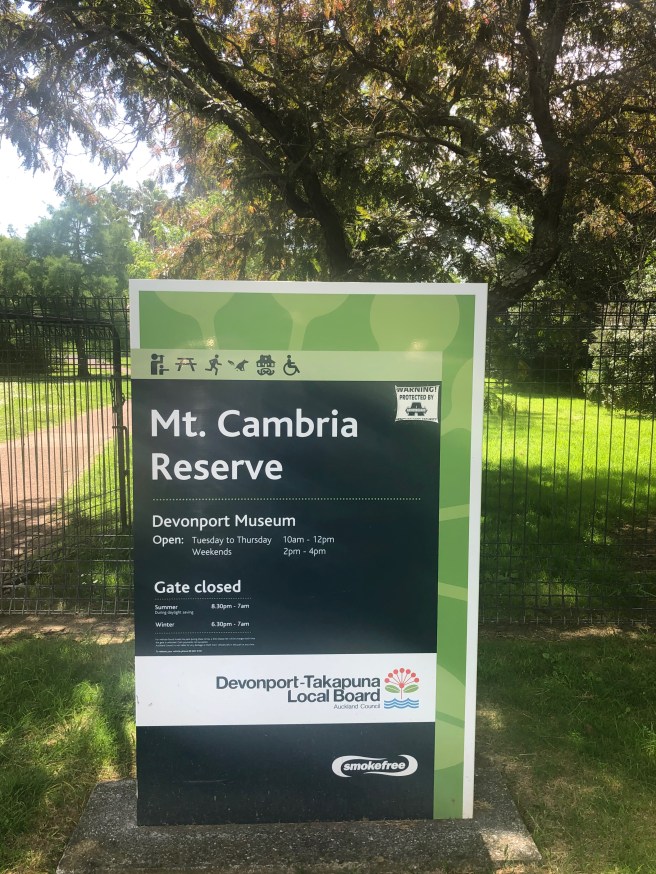
To quote from a local tourist website: “Mt Cambria Reserve is quiet retreat in the pretty seaside town of Devonport. The attractive landscaped garden sits in the remains of Mt Cambria volcano, which was a quarry for scoria rock between 1883 and 1985. Mt Cambria Reserve is situated behind Devonport Museum on 31a Vauxhall Road and is an ideal spot for walks and relaxing picnics.”

Ireland can smell a picnic

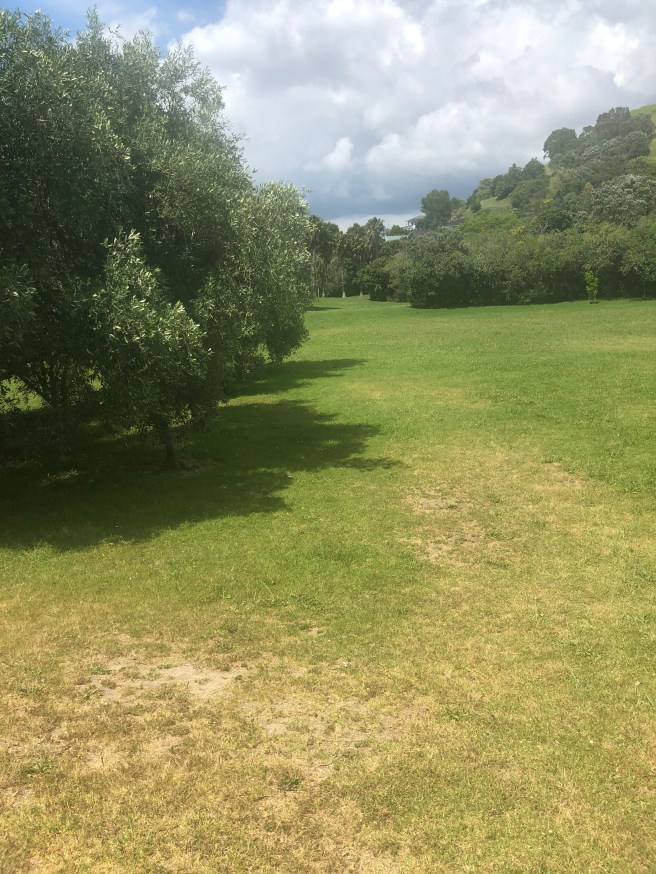
Ireland has to be kept on a tight lead when picnics are in progress – like most Labradors he has an insatiable craving for food. But provided there are no picnics, Mt Cambria is a lovely place for dogs to run free. It’s quite a small park, dotted with clumps of trees, and has a steep slope at the back.

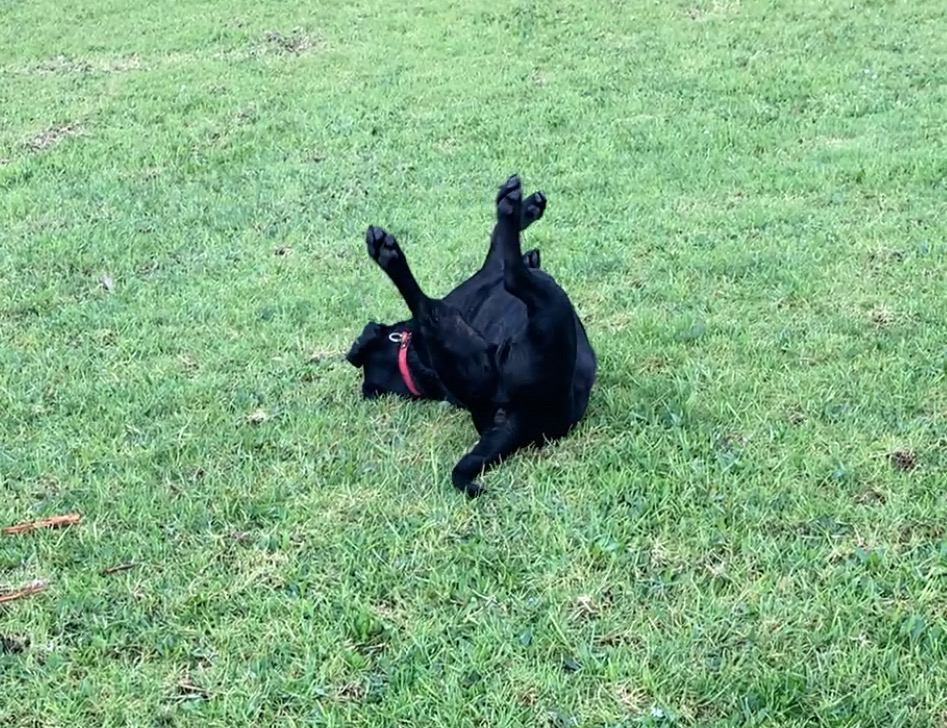
Ireland rolling down the grassy slope

From the top of the park is a view of Mt Victoria, another good place for dog walks as described in an earlier post.

A highlight of Ireland’s week is his “club day” when he spends an hour rushing around Mt Cambria with a group of his canine friends while their owners look on.

Writing as an Englishwoman in New Zealand

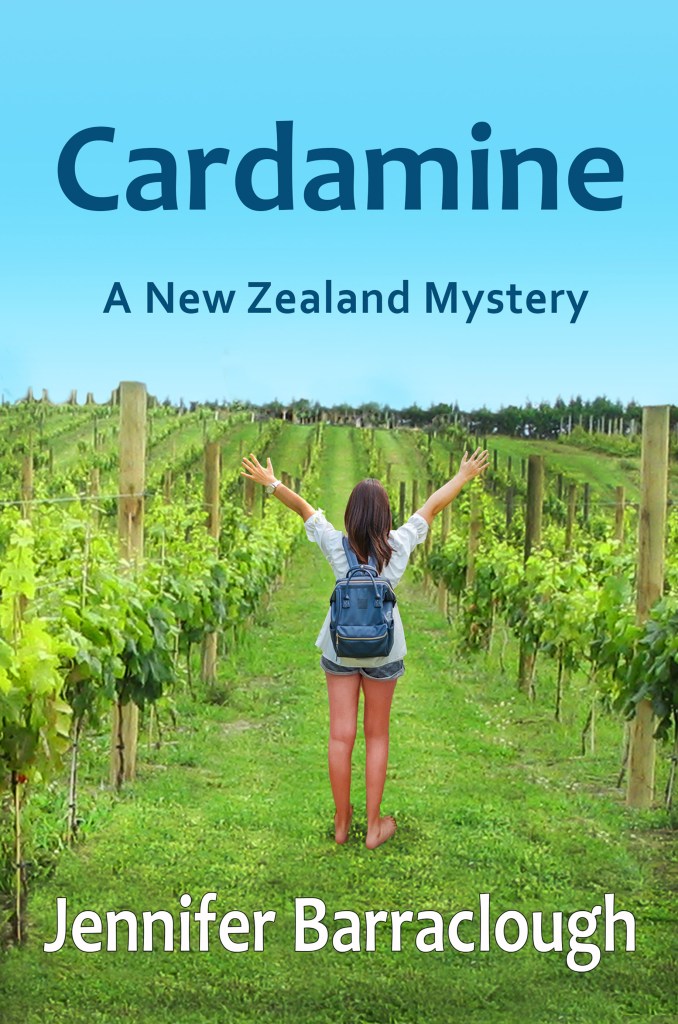
Here’s a little background to my new novel Cardamine: A New Zealand Mystery. Amazon links: US, UK, AU

Most novels contain elements of autobiography and the setting for this one was informed by my own memories of visiting New Zealand for the first time, discovering the beautiful beaches and countryside, the enticing vineyards and coffee shops. Several North Island locations – Waiheke, Browns Bay, Riverhead Forest, Muriwai – are featured in the book. There are also references to the confusion that can arise from subtle differences in culture and use of language between two English-speaking nations. My background in medicine and psychiatry had an influence on the plot, with speculation about how emotions, beliefs, personality factors and mental or physical illness can contribute to crime.

The main character, Kate, is in New Zealand on holiday on the eve of the Covid-19 pandemic. She is much younger and more adventurous than me but shares my liking for sea swimming and the local wines. After drinking rather too much of them during a vineyard tour, she loses the bag containing her valuables and so misses her night flight back to London. A rich and eccentric elderly man comes to her rescue and invites her to stay in his country house, called Cardamine after the flowers around the pond in the garden. His wife, a “mail order bride”, is mysteriously absent. Kate’s summer holiday had begun as an idyll of sunshine and swimming and budding romance, but she becomes aware that the country’s “clean green” image conceals a darker side involving racial prejudice, illegal drug use and unnatural death.

Cardamine is available in paperback or Kindle format from your local Amazon website: US, UK, AU. New Zealand residents can buy a print version directly from me – please write via my contact page if you’d like to order a copy.

Free speech?

“This may be offensive to your reader” warns Microsoft Word when it finds bitch in the text of my forthcoming novel. Considering that I was using the term to describe a female dog I find this quite amusing, but it makes me think about other less trivial ways that the use of language is becoming curtailed. One of my characters expresses racist views before being admonished by his wife, and I understand that a similar incident in one of Sally Rooney’s books led a journalist to accuse the author herself of racism. JK Rowling was “cancelled” for a comment that some interpreted as transphobic – fortunately my novel contains nothing about gender identity issues. It seems more acceptable to portray violence towards people and animals in fiction than to risk upsetting “woke” sensibilities.

Free speech is also limited in real life. Here in New Zealand, doctors who express valid concerns about the safety of Covid vaccination are being disciplined by the medical authorities. The rare but well authenticated cases of serious illness or death attributable to this vaccine are seldom reported in the media, and campaign materials designed to get everyone vaccinated make no mention of potential risks. I regard the vaccine as the lesser of two evils so have had my own two shots, but I respect the rights of those who have researched the pros and cons of this intervention and decided not to accept it.

Ireland visits Mt Vic (Devonport dog walks #3)

Ireland the Labrador loves walking up Mount Victoria/Takarunga, known by Devonport locals as Mt Vic. Of unknown age, it is the tallest volcanic cone on Auckland’s North Shore, though being only 87 metres high it is really a hill rather than a mountain. The wooded lower slopes are surrounded by old houses, churches and a primary school and there are several access points.

Mount Victoria viewed from Cambria Park

We usually approach the site through the historic cemetery, dating from the late 1800s, where the Maori warrior and peacemaker Patuone is buried alongside early white settlers.

Mount Victoria cemetery

Mt Vic was once a Maori pa (fortified settlement) and the remains of old terraces and kumara pits can be seen alongside the walking tracks that now encircle the site. Ireland seems fascinated by the place and sometimes, perhaps drawn by sights or smells or spirits of the past, he dashes up the steep grassy hillside and on one occasion took half an hour to return. At other times he freezes on the path as if hypnotised.

Ireland transfixed

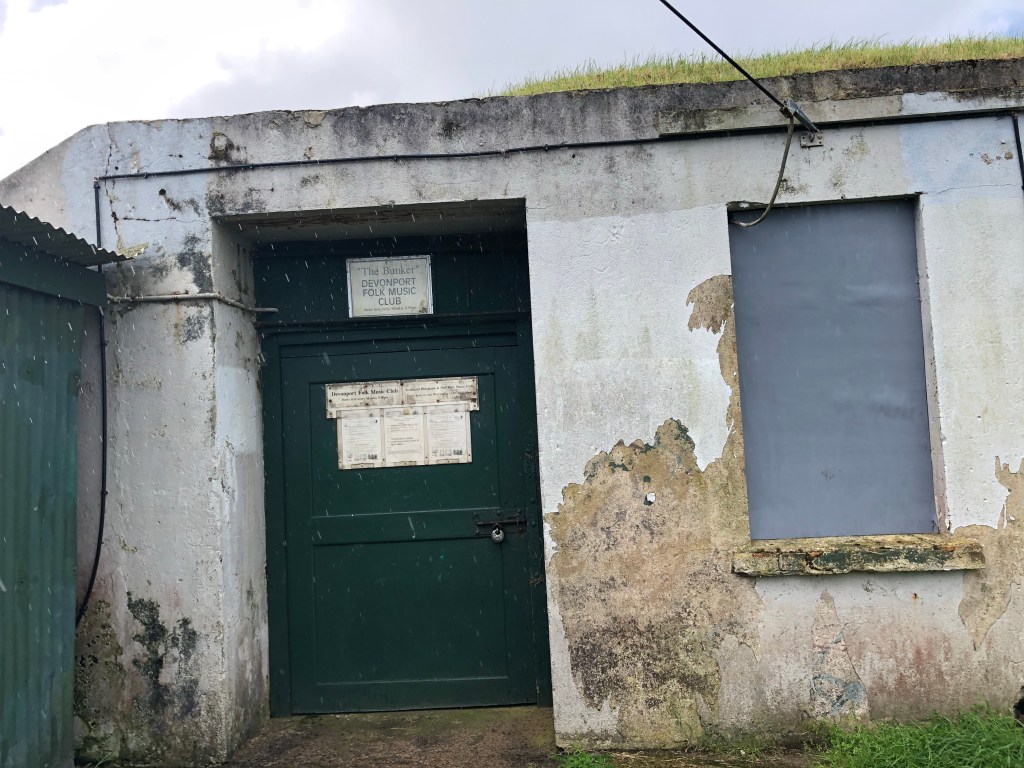
On the summit, with its panoramic views of Rangitoto, the Hauraki Gulf, Waitemata Harbour and Auckland’s CBD, are various modern structures: mushroom-shaped vents for an underground reservoir, a signal station for shipping, a disappearing gun. There are a few older military remains on Mt Vic and a delapidated army hut, known as the Bunker, is the venue for the local folk music club.

The Bunker

After completing the steepest part of the walk, Ireland and I stop for a rest and a snack.

Ireland hoping for another biscuit

Ireland visits a maze (Devonport dog walks #2)

Last week I wrote about taking Ireland, my dogshare Labrador, to North Head. Another of our favourite places to walk around Devonport is Ngataringa Park. Developed in the 1990s from an old landfill site, this is not a formal park but mostly consists of large fields which provide an ideal space for dogs to run and play and roll in the long grass.

Various local landmarks can be seen from the curved path that runs through the park. Auckland’s harbour bridge, viewed from across the tidal estuary with its mangrove swamps. Mount Victoria, or Takarunga – the highest volcanic cone on the North Shore – and another good place for a dog walk. The massive new retirement complex being built on a nearby hill overlooking the site. There is a skate park in one of the fields, and a piece of artwork, a pair of wooden statues called The Guardians.

At the far end of the path is a maze, intended to represent the interweaving between Maori and Celtic cultures. Beside it, a network of small circular paths bordered by stones is hidden in a group of trees. This is the halfway point of our walk, and while I have a rest on one of the rustic seats made of driftwood, Ireland eats a few biscuits and then waits patiently at my feet.

We can either go back the same way that we came, across the fields, or take the lower path which is shaded by an arch of trees.

Ireland visits North Head (Devonport dog walks #1)

As Auckland’s lockdown continues and we are told to stay within our own postcode area, the highlight of my daily routine is a walk with my dogshare Labrador, Ireland. There are several interesting places nearby and one of our favourites is the hill called North Head, or Maungauika, which forms a prominent landmark at the end of the Devonport peninsula.

Dogs are permitted here – on lead

The hill is encircled with a network of paths and from the higher ones there are spectacular views of Cheltenham beach to the north, Rangitoto and the islands of the Hauraki gulf to the east, the Waitemata harbour and Auckland’s CBD to the south. It was a wonderful location for watching the yacht races during last summer’s Americas Cup.

Cheltenham beach
Rangitoto

North Head was formed by a series of volcanic eruptions about 50,000 years ago. About 1,000 years ago it became occupied by a Maori tribe, then after European settlers arrived was put to use as a coastal defence site. During the late 19th century a number of large guns were installed to deter a feared Russian invasion. Fortifications including more guns, searchlights, tunnels and underground rooms were added, using prison labour, to cope with subsequent threats during the two world wars. The army left the site in the 1950s but a naval training school remained on the summit until 1996. The site is now managed by the Tupuna Maunga Authority and open to walkers and their dogs (on lead).

One of the many guns on North Head

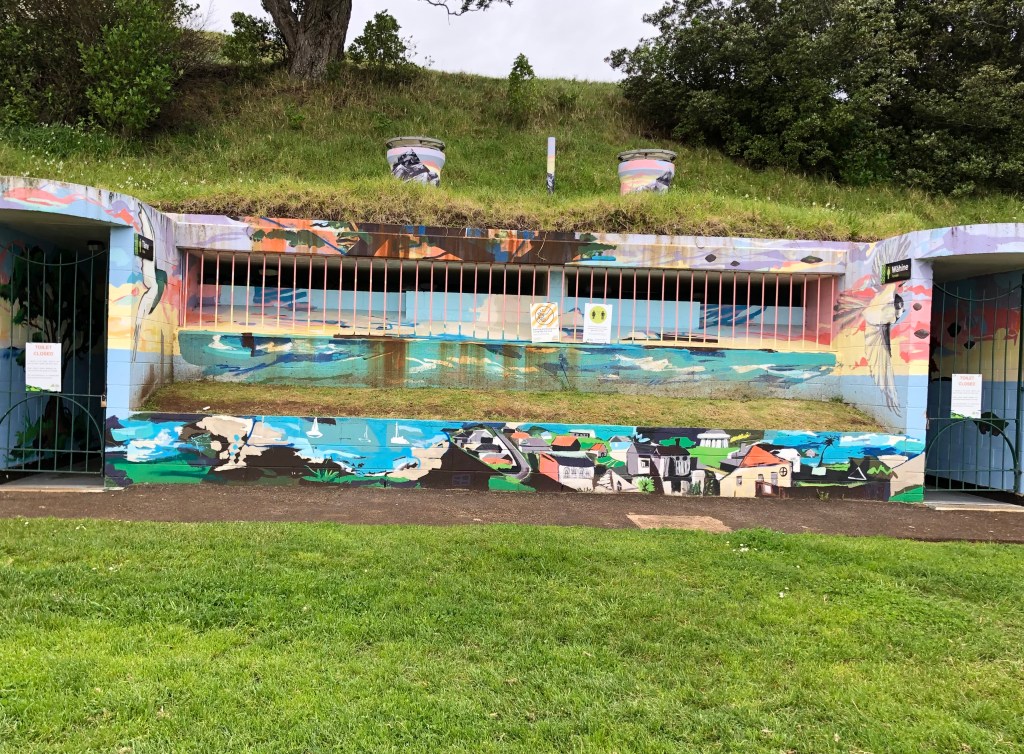
Remains of the old military installations can be seen around the site. Some of the tunnels are open to the public, others shrouded in mystery and rumoured to contain aircraft or military secrets. At present however all the tunnels are closed due to Covid restrictions, as is the colourful toilet bock.

Ireland denied access to tunnel
The toilet block

I find North Head a fascinating place which carries an air of mystique. It features in Carmen’s Roses, the first short novel I wrote after coming to live in Devonport.

Book review “Cured: the life-changing science of spontaneous healing” by Jeffrey Rediger

Cases of the phenomenon variously called “spontaneous healing” or “spontaneous remission” or “remarkable recovery” are sometimes reported in the medical literature, usually in relation to advanced cancer. They are probably not quite so rare as followup statistics suggest, either because sceptical doctors presume that the original diagnosis was wrong, or because the patients concerned have stopped attending hospital clinics. Jeffrey Rediger, a physician and psychiatrist who is on the faculty of Harvard Medical School, has spent fifteen years studying this topic by interviewing patients and visiting healing centres. In his book, case histories are interwoven with summaries of the latest research into the body’s defences against disease.

The library copy of Cured on which I based this review is subtitled “the life-changing science of spontaneous healing” by Jeffrey Rediger but the version on the Amazon page, presumably more recent, has “the power of our immune system and the mind-body connection” by Jeff Rediger. Although I don’t know why the subtitle was changed (or the author’s name shortened) it strikes me that the term “spontaneous” could be misleading. Most unexpected, apparently miraculous, recoveries from a disease that had been considered incurable do not happen out of the blue, but after the patients concerned have taken active steps to reclaim their health.

Early chapters focus mainly on physical aspects, with detailed discussion about how to optimise nutrition, and support the functioning of the immune and nervous systems. The later ones have a more obvious “mind-body” emphasis with topics such as the placebo response, faith healing and prayer, the power of love, and what he calls “healing your identity”.

This last aspect may be of crucial importance. It builds on the work of early researchers such as Lawrence Le Shan, whose book Cancer as a Turning Point influenced my own choice of psycho-oncology as a career, and echoes the message of more recent books such as Remarkable Recovery by Caryle Hirshberg and Marc Barasch. Many of the patients described in these books made a decision, consciously or not, to take control of their lives and “rewrite their stories”. This often involved leaving a toxic relationship or an unsatisfying job, reviving an undeveloped talent or ambition, and most importantly making “deep mental and spiritual changes”. An essential feature was being true to themselves rather than conforming to outside expectations, and following their own path. This might require courage and faith, and the discipline to “burn their boats” to prevent a lapse back to the previous way of life. Some became whole-heartedly committed to particular healing practices. These were very varied, ranging from a strict ketogenic diet to daily immersion in yoga or meditation, suggesting that faith in the chosen modality whatever it may be is the crucial factor in its effectiveness.

This psychological picture does not fit every case. Regression from cancer following an acute infection with high fever is well documented, and must have a biological basis rather than a psycho-spiritual one. Some cases of remarkable recovery do appear spontaneous, because no explanation at all can be found.

Dr Rediger provides plenty of information and guidance for those seeking to prevent disease, or to maximise their chances of recovery from an existing condition, and the case histories are inspiring. He rightly avoids recommending particular approaches, and he acknowledges that there are no guarantees. Plenty of patients “do all the right things” and still succumb to their disease; spontaneous healing remains to some extent a mystery. This is a valuable book, though perhaps rather too long and detailed to be easily digested by someone dealing with a serious illness. Future editions could be made more accessible by adding an index, and summaries at the end of each chapter.

***

Jennifer Barraclough, originally from England and now living in New Zealand, is a retired doctor and a writer of medical and fiction books. A list can be found on her author pages: https://www.amazon.com/Jennifer-Barraclough/e/B001HPXGZI (US) and https://www.amazon.co.uk/Jennifer-Barraclough/e/B001HPXGZI (UK).

Recovering from wrist fracture: six months on

Six months have passed since I broke my wrist. Having heard from various sources that recovery from this type of fracture should be largely complete by six months, I decided to write what will probably be my last update on the subject, and hope it may be useful for other people dealing with this common injury.

Six months is of course a ballpark figure based on an average of many cases. Healing is a gradual process and its rate varies greatly between individuals. My own recovery is not complete, but there has been a lot of progress. As well as all personal care and household tasks, I can now easily manage the main activities that are important to me: typing on the computer, driving the car and walking the dog. The exception is playing the piano, which continues to hurt. My wrist still looks misshapen and probably always will, but I hope the residual swelling will eventually subside.

At my recent outpatient review with Xray, the consultant orthopaedic surgeon said that the bones were “solidly healed” but that the alignment between radius and ulna was not quite right and therefore certain wrist movements are restricted. He offered an operation to correct the displacement but, considering that this would require another six weeks in plaster with consequent limitation of activity and loss of fitness, I decided not to accept it at present. Surgery can be reconsidered at a later stage, but I hope that my condition will continue to improve on its own.

Finding “silver linings” in an illness is not always easy. I hope this experience has made me more patient, more tolerant of others’ limitations and not in so much of a hurry myself. It has led indirectly to several positive changes: a new choir, a new GP, and attending Pilates and “Silver Swans” ballet classes each week to improve my strength and balance.

***

Jennifer Barraclough, originally from England and now living in New Zealand, is a retired doctor and a writer of medical and fiction books. A list can be found on her author pages: https://www.amazon.com/Jennifer-Barraclough/e/B001HPXGZI (US) and https://www.amazon.co.uk/Jennifer-Barraclough/e/B001HPXGZI (UK).