My husband’s heart Part 1: North Shore Hospital

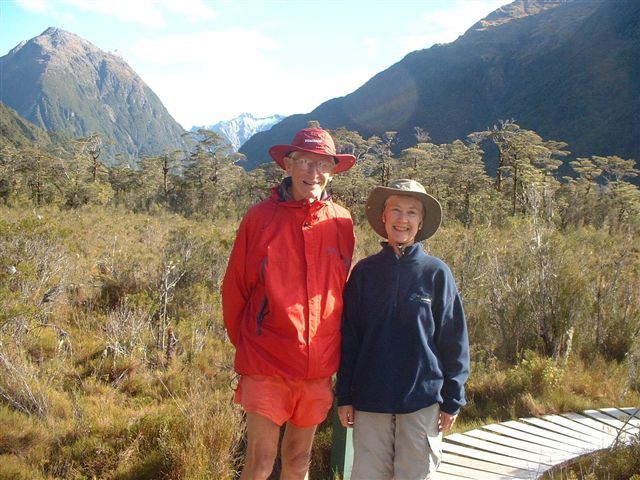
It is over thirty years since my husband Brian started feeling breathless after walking up long flights of stairs. He was found to have aortic stenosis and an aneurysm of the ascending aorta. As time went by, occasional repeat investigations showed this pathology gradually getting worse, and several specialists advised cardiac surgery to prevent the risks – including sudden death – associated with his condition. He declined, on the grounds that his symptoms were not too severe and that the operation itself could be fatal or cause some intellectual impairment. His diagnosis was one factor in our joint decision to leave our medical careers in the UK and go to live in Auckland, New Zealand, where Brian had been born and brought up. That was fifteen years ago and over most of this time Brian has continued in good shape – even walking the Milford Track.

on milford track

He continued adamant that he did not want surgery. He asked me and our family doctor not to send him to hospital if the aneurysm burst, but to give him morphine and let him die at home.

In July this year, soon after his 82nd birthday, Brian had a bad attack of flu and we attributed his continued lethargy and reduced exercise tolerance to the aftermath of that. He did seem to be getting better. Then on 4th September, on the way back from an enjoyable evening at the ballet, he said he did not feel well. He refused to let me call for help. Somehow I managed to support him on the walk home, but as soon as I opened our front door he collapsed in the hall. At that point I went against his wishes and rang 111. Time will tell whether I did the right thing.

A skilled ambulance crew arrived promptly, and did an ECG which showed atrial fibrillation with a pulse rate of 160-170 per minute. They started intravenous amiodarone and advised that Brian was likely to die unless he went to hospital. With a little persuasion he agreed to go. After many hours of investigation and treatment in the resuscitation unit of North Shore Hospital he was admitted to a ward and at 4 a.m. I took a taxi home.

The immediate cause of the collapse was not a ruptured aortic aneurysm, but a 70% blockage of the main stem of the left coronary artery. With excellent medical treatment and nursing care, Brian’s condition improved greatly over the next few days, but he was presented with a stark choice – go back home with probably just a few months to live, or undergo surgery which carried a 20% operative mortality but if successful could give him many more years of good quality life. Brian decided to “cooperate with the inevitable” and accept the operation that he had been refusing for so long.

He stayed three weeks attached to monitors in the cardiology centre, not allowed to leave the ward although he was feeling fairly well. Every day we anxiously awaited the news that a place had become available on the surgical unit at Auckland Hospital. On several occasions the proposed transfer nearly happened but was then cancelled – later we would come to understand all too clearly the reasons for this. Brian appeared to benefit from the long rest, and remained in good spirits. He spent much of his time exercising in the corridor, or with his laptop computer composing a self-written obituary for Munk’s Roll.

There is much more to the story, but to avoid making this post too long I will continue next time. Please sign up in the box if you would like to receive future episodes by email. I should add that I am publishing this with Brian’s full knowledge and consent.

Happy birthday Marco and Polo

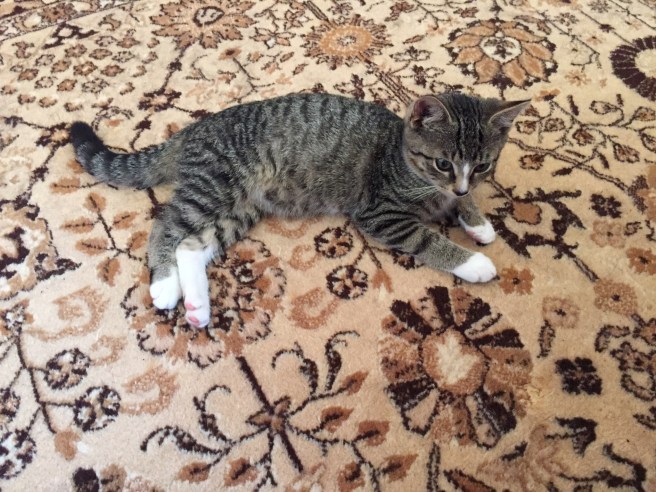
I had forgotten that today, 1st September, was the estimated date of birth of the two kittens I fostered last year. Here is a picture of them at about nine weeks old; the dark mackerel tabby is Marco (male), and Polo (female) is the tabby and white.

marco-polo-9-weeks-old


It was a lovely surprise this morning to receive birthday messages and photos from both their respective “forever homes”. I had been overwhelmed with applications to adopt them as soon as their details went up on the Lonely Miaow website, and it was up to me to select the most suitable ones – a big responsibility. Fortunately I chose well, for they quickly settled in with their new families and are greatly loved.

Fostering has both ups and downs. It was a lot of work looking after the two lively little kittens and they caused a fair amount of damage around the house. But we became very fond of them and could hardly bear to see them go. Fortunately I was able to keep in touch and visit them both now and then.


War and peace with Daisy

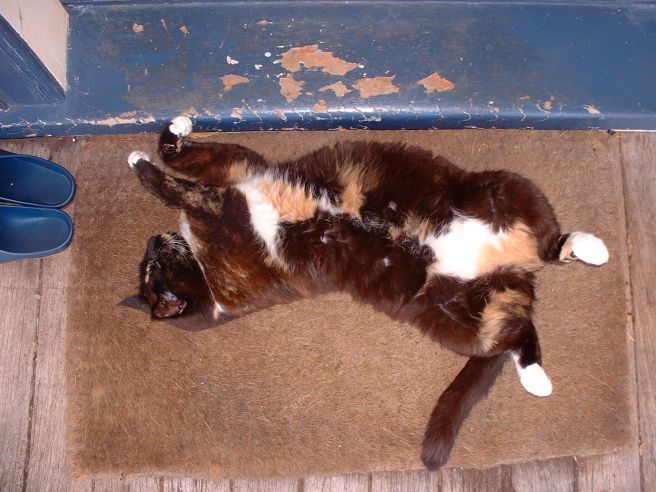
While kittens usually enjoy playing together, many adult cats shun the company of their own kind. Our Daisy, now aged about 13, does not like other cats at all. Although Felix was already well established in our household before Daisy arrived, she always resented his presence, and the two of them never became friends during all the years they lived together. Daisy prefers having contact with humans. She also enjoys lying on her back in the sun.

daisy-on-her-back


When I adopted Magic as a tiny rescue kitten, I had vague hopes that Daisy’s maternal instincts would be revived – after all, when Daisy first came to us, she had three tiny kittens of her own and was a most devoted mother. However, I was prepared for the likelihood that she would not welcome a new arrival, and this proved to be the case. I carefully followed the advice from SPCA Auckland about introducing a new cat – but with limited success. For several months, Daisy growled and spit whenever she saw Magic, and sometimes hit out in attack though never seriously hurt her. Daisy was equally hostile to Leo when he joined our household. This hostility continued as the kittens grew bigger. Fortunately neither of them seemed to mind it very much.

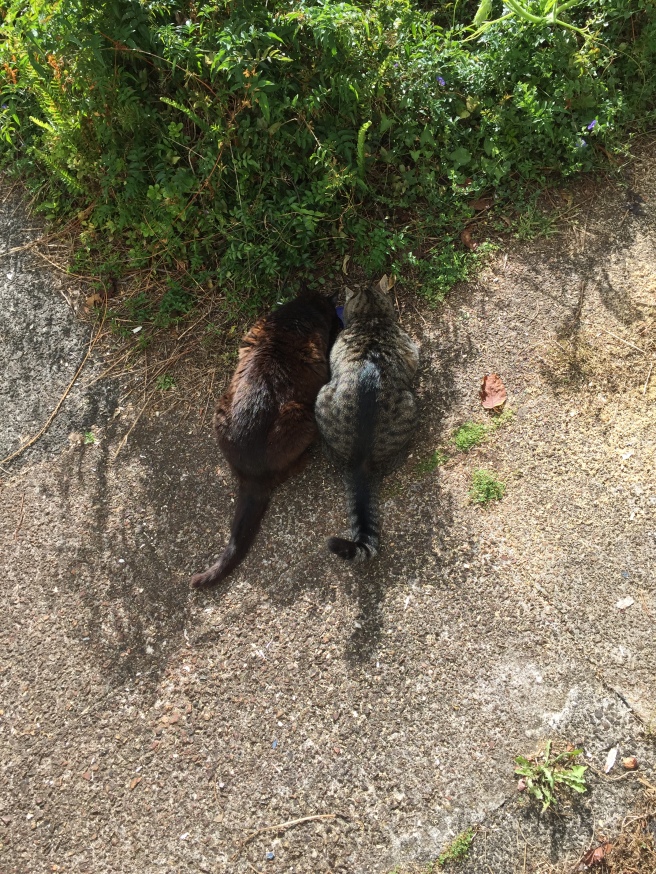
Last month I went to England on holiday (and took in a Thames cruise in aid of International Cat Care). All our three cats went into a boarding establishment while I was away – Magic and Leo were in shared accommodation but I invested in a private unit for Daisy. When I came to pick them up, the staff commented that Daisy had been an absolute delight. She had obviously relished the time in her own space with a view over the fields. And since they came back home, relations have been much more cordial. All three will now eat side by side, and even choose to sleep on (or in) the same bed.

Update January 2017

Daisy and Leo are now the best of friends as you can see.

daisy-leo-eating


The portrayal of illness in fiction

I spent most of my working life as a doctor, so it is not surprising that medical topics often find their way into my fiction writing. Looking back at my completed novels I recognise the themes which have arisen, sometimes more than once: conflicts between mainstream and alternative medicine, overlap between “organic disease” and “functional symptoms”, how serious illness can bring about changes in mood, attitudes and relationships for better or worse, the scope for weakness and corruption in the healthcare professions.

Books, films and television dramas with a medical theme have a widespread appeal. In addition to their entertainment value, when well researched and sensitively presented they serve an educational function, and help to reduce the fear and stigma associated with certain diagnoses whether physical or mental.

There is a risk that fiction with a medical content will distress some readers, especially those who suffer from the conditions in question themselves. Information which was accurate at the time the book was written may have become out of date later on. The use of labels and stereotypes, black humour, or gratuitous sordid detail which promotes morbid fascination with sickness and disability, may cause offence. If the characters are based on real people, or even if they are not, medical authors may be accused of breaching patients’ confidentiality, or of libelling their colleagues.

I don’t know how far I have managed to avoid these pitfalls in my own novels. Most of the illnesses mentioned are ones which I felt entitled to write about because I have experienced them through family, friends or patients, or in myself.

Writing as therapy

Anyone who ever kept a secret diary as a teenager, or indeed in later life, can attest to the cathartic and healing effects of putting distress into words. Research studies have shown that “expressive writing”, as described below, can be of benefit to patients with a wide range of medical and psychiatric conditions.

Most published autobiographies include some account of the more upsetting aspects of their subjects’ lives. The authors of so-called “misery memoirs” carry this to an extreme, taking the adversity they have suffered – for example being abused by parents or partners, suffering illness or injury, or born into a disadvantaged minority group – as their main theme. Some books in this class are authentic and moving, have an educational function and even help to bring about social change. Some are so full of self-pity as to make their readers cringe, and might have been better left unpublished. Some distort the truth for dramatic effect, and a few have been exposed as entirely fraudulent.

Many writers of fiction draw on the more challenging aspects of their own life experience for their plots and themes – whether directly or indirectly, and whether consciously or not. This is certainly true of myself though I hope that readers of my latest novel Overdose – a tragicomedy about the misadventures of a lovesick psychiatrist – will not take it as literally autobiographical.

Besides including fictionalised versions of real events, novelists may use writing as a means of expressing their “shadow side” – perhaps this would explain why so many highly respectable middle-aged women are good at writing murder mysteries.

For the record, here is a brief description of the usual methodology for the expressive writing research. Patients in the study group are asked to write either by hand or on a computer every day for 3 – 5 days, for 15-20 minutes per session, about the most traumatic experience or emotional issue that has affected their lives. This does not have to be directly related to the medical or psychiatric condition they are suffering from. They are advised to write as freely as possible, without regard for spelling or grammar. Patients in the control group are asked to write for the same amount of time, but about some factual objective topic. The material is confidential and need not be shown to the researchers. Some subjects choose to destroy what they have written.

Like any other therapy, this technique does not suit everyone, and responses vary widely. In the main, studies report that those who did the expressive writing, compared to the controls, became more distressed immediately afterwards and that their physical symptoms sometimes temporarily worsened. But in the longer term they reported improved health, mood, and social function. Many of them said that the expressive writing, though upsetting at the time, had been valuable and meaningful.

Remembering Khymer


“What breed is he?” People often asked when they saw Khymer out with my mother and me on Takapuna beach. Suggestions included blue heeler, collie, German Shepherd, Staffordshire terrier, and even Dutch barge dog. But we never knew the details of his ancestry, exactly how old he was, or how he got his name. A member of our New Zealand family had rescued him from an abusive situation when he was young. He grew up into a fine dog; friendly, strong and handsome.

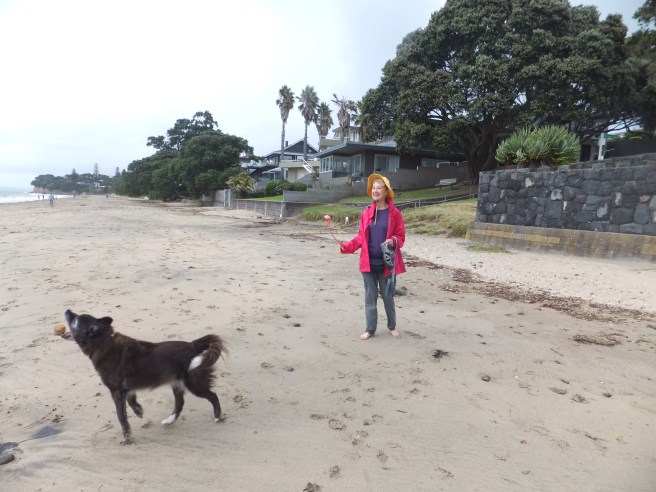
I had the privilege of walking Khymer almost every week since I met him nine years ago. He loved these walks, whatever the weather. He would bark at the top of his voice when I arrived to pick him up, pull me along the road at top speed until we got to the beach, then bark again until I started throwing the ball for him to retrieve. His favourite trick was swimming out to sea, dropping the ball, and waiting for me to wade in waist-deep and get it, so I had to wear special clothing when going out with Khymer.


We had many adventures in our early years together, but he gradually became more sedate. His eyesight and hearing were not so good, and he developed arthritis. He stopped swimming in the sea. But he loved his walks as much as always, even up to last week when I had to bring him home early because he seemed so tired. As if suspecting what was to come, I took a photo of him before I left.


A few days later I got the message – he had been bleeding from the bowel, was weak and in pain, and the decision to euthanise him that morning had been made. Given his age – at least sixteen, maybe more – everyone agreed that it would be pointless and unkind to do anything else. I arrived at the house just in time to join the tearful family gathered round his bed. When he saw me he barked and wagged his tail. I did not go with him to the vet, but have been told that his last minutes were very peaceful. Though thankful that his suffering is over, I shall miss our weekly walks so much. This is how I will remember Khymer:

khymer-catching-ball


When cats go missing


This is Magic looking wary and subdued after being rescued from 48 hours’ imprisonment in a neighbour’s basement.

magic-aged-9-months


And here is “little Leo” pictured three months ago as a new rescue foster kitten. He disappeared for several hours on his second day here, prompting a frantic search of the house and neighbourhood until he was found still in his own room – hiding up the chimney.

little-leo

Wellbeing for Writers

I’m pleased to announce that my little ebook Wellbeing for Writers is now available from Amazon Kindle, Smashwords and other online sites.

Born out of my long experience as a part-time author alongside former careers in psychological medicine, life coaching and Bach flower therapy, this is a guide about how to maximise the satisfactions and minimise the frustrations which often arise while writing, publishing and marketing a book. Topics include structuring the process, finding inspiration, maintaining physical and mental health, coping with criticism, aligning personal values with writing, and more.

While mainly focused on the psychology of authorship, it also includes plenty of tips about the basic practicalities.

Most of the content is available for free on this blog … but for a nominal cost you can read it combined in one volume, rearranged in a logical order, and revised and updated throughout.

Please have a look on Amazon or Smashwords, and forward this to any of the aspiring authors among your circle of contacts.

cover-w4w


Lost and found: how to search for a missing cat

Magic and Leo both went outside last Saturday evening. When I called them back at bedtime, Leo came in but Magic did not. I lay awake most of the night, listening for any sound of her presence, and getting up several times to look around the garden and the street without success. There followed two days of intensive searching. Although I did not have the same intuitive feeling which told me that Felix had died, after a second night had passed I had to face the fact that I might never see her again or know what had happened. Many friends and neighbours gave practical help and sent messages of support. And then came a phone call telling me she had been found locked up in the basement of a nearby house! She is now safely home – very hungry, in good shape physically, but emotionally less confident and more clingy than before. Leo was delighted to see her.

I think I did most of the right things, but I’ve now drawn up a checklist for what to do if a cat goes missing:

1. Be prepared in advance. Have your cat microchipped (yes, I’d done that) – consider a collar with a name tag (I’m thinking about that one) – take a series of photos of her from different angles, and update them as she grows up (this is very important, but I realised I had not taken any recent photos of Magic on her own since she was a young kitten).

2. Check your own property thoroughly, both inside and out – cats can easily get shut into cupboards or outbuildings – and check surrounding streets.

3. Contact your immediate neighbours to ask if the cat is trapped somewhere on their property – this is a very common scenario, as in Magic’s case.

4. Make up a flyer which includes the best photo, your address and phone number, a description of the cat and the date she was lost. Display copies outside your own house and in nearby streets, and at your local veterinary clinic, and consider a mailbox drop.

5. Alert all your other neighbours by text or email, including the photo, or calling at their houses. Ask them to look in their garages or sheds.

6. Post an online appeal: Facebook, local animal registers (here in New Zealand Petsonthenet), neighbourhood websites.

7. Phone local agencies: SPCA, Animal Control, veterinary clinics.

8. Worry won’t help so do your best to keep calm and look after yourself. Visualise your cat being well looked after somewhere and coming back home in good shape.

9. If and when your cat returns or you discover what has happened to her, remember to take down the flyers, inform all the above agencies and individuals what the outcome has been, and thank the people who have helped in the search.

Cats, eyesight and ageing

I recently read the report of a study suggesting that cat owners, in contrast to dog owners, have a raised risk of developing glaucoma due to an autoimmune response triggered by their pets. I don’t think this should cause too much alarm, because the study was only a preliminary one and the effect was small. But it was of some concern to me because a few years ago I was diagnosed with high intra-ocular pressure, which can progress to glaucoma.

My immediate reaction to reading it was “I’m not going to give up my cats.” My husband challenged me “Are you saying that you would rather go blind?” Logically the answer should have been obvious, because going blind is among the worst fates I can imagine. Yet I did not know what to say, which made me wonder if I care too much about the cats.

Concern for companion animals can affect many of the decisions which may have to be made in the case of their owners’ declining health or advancing age. After adopting Magic and Leo it was a bit of a shock to realise that I should probably not get any more kittens in case I die before they do, even though I belong to Auckland SPCA’s “Circle” program which provides for this eventuality. I wouldn’t want to move into an apartment without a safe outdoor space for cats to play, or enter a retirement home where cats were not allowed. And though I sometimes wonder about returning to live in England for my declining years, I wouldn’t want to put my cats through the stress of relocation – even though when we once brought two other cats from England to New Zealand they did not seem too upset by the long flight.
Maybe it is misguided to let cat-related considerations carry too much weight when making major life choices. And I can’t predict how I would actually feel if and when one of these situations arises in future. Meanwhile I am happy to be still fit and well, and living in a house with a large garden which is ideal for cats.