On turning 70

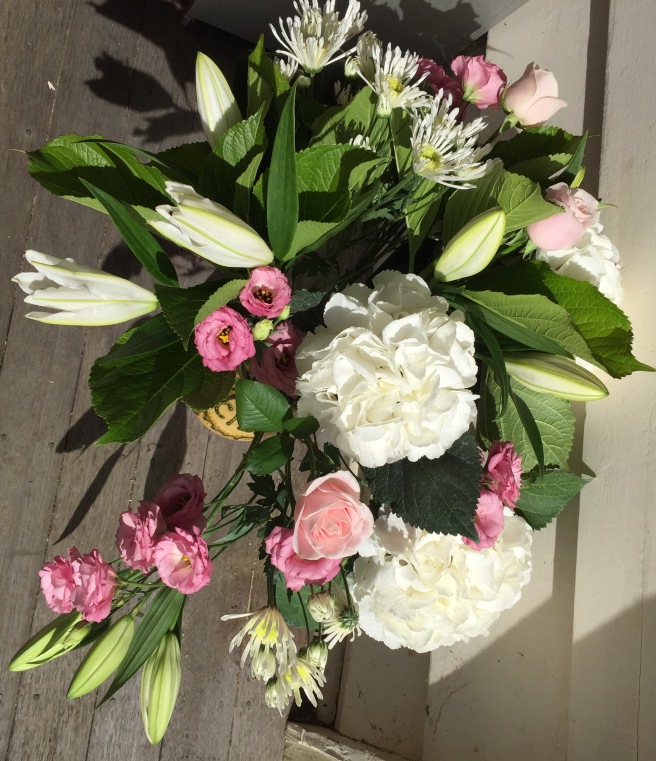
Today was my 70th birthday. I had been dreading this particular milestone, despite telling myself that it is pointless to feel defined on the basis of age, and that I know plenty of people who are still going strong not only over 70, but over 80 or 90 or even 100. Despite my misgivings I don’t feel any older than usual this evening, and I had a lovely day including lunch with friends at a seaside restaurant in the glorious sunshine of our New Zealand summer, and a big bouquet from husband Brian.

file-4-02-17-10-22-45-am

Ageing has many negative aspects, but also some positive ones. Ideally, it is said to be a time of contentment, enhanced wisdom and spirituality, liberation from old constraints and perhaps a chance to start something new. I’ve ordered a book called 70 things to do when you turn 70, no doubt full of inspirational ideas along these lines. For myself I have few ambitions at present, though having just finished the memoir that will be described in my next post, I do hope to write more books. And in my next life I would like to learn to fly. Meanwhile I appreciate being in happy circumstances and good health – having finally grown out of the severe migraine attacks that blighted most of my adult life is a huge bonus. It is a relief to be free of the responsibilities of paid work, and seldom having to do anything unless I want to, although I still feel an obligation to spend my time on something “useful” and am not comfortable with a life of pure leisure. The free travel pass is very nice too.

Soldier’s heart, shellshock and lack of moral fibre

When I was unwell last year, my husband Brian explained my symptoms in military terms: “You’ve been in the front line, and now you’ve got shell shock.” Brian had researched this condition while editing A Physician in Spite of Himself, the autobiography of DW Carmalt Jones who was in charge of a shell shock hospital during World War 1.

Stressed and exhausted by dealing with a series of medical and surgical emergencies in the family, I had developed a variety of symptoms. Repeated attacks of rapid irregular heart beat and breathlessness accompanied by high blood pressure, on two occasions so severe that I was taken to hospital by ambulance. Separate episodes of feeling very cold, or very hot, shaking all over, or suddenly feeling drained of energy and having to lie down. Loss of appetite and weight. Insomnia. The symptoms were  mainly of a physical nature, but various medical tests did not indicate a definite diagnosis. As a former psychiatrist I knew they might be due to anxiety and depression, but a trial of antidepressant drugs made me worse.

Syndromes of this kind can be triggered by any sort of traumatic experience, especially when there seems no scope for controlling the situation or escaping from it. Most of the early descriptions were carried out on servicemen exposed to great physical and emotional stress in wartime. In the American Civil War, men who complained of palpitations, chest pain, shortness of breath and fatigue but had no signs of organic heart disease were said to have “soldier’s heart”. Other terms included da Costa’s syndrome, cardiac neurosis, and neurasthenia. In World War 1, the condition of “shell shock” could include symptoms in many different bodily systems, for example headache, tremor, confusion, nightmares, loss of balance, impaired sight and hearing, as well as the cardiovascular symptoms listed above. Some sufferers received no sympathy or understanding, being accused of cowardice or malingering and punished by firing squad. Others were sent to field hospitals for a brief period of sleep, food and graded exercise before being returned to duty. In World War 2, British airmen who refused to fly on bombing missions were labelled as “lacking moral fibre” (LMF) and usually demoted to menial jobs. Some of these men would have been suffering from the type of illness described above, others just could not bring themselves to take part in the killing of civilians. LMF was highly stigmatised, and concealed as far as possible, so that when I came to write something about it in my novel Blue Moon for Bombers I found little published information. In more recent conflicts, notably the Vietnam war, attitudes were more sympathetic and it became more acceptable to talk about the psychological side of these conditions. The concept of “post-traumatic stress disorder” (PTSD) was born, and continues to generate a great deal of interest and research.

Body and mind are interconnected, and patients with stress-related illness usually have some combination of physical and mental symptoms. For this reason the orthodox medical system, in which the different specialties are separated, may not be well placed to meet their needs. Patients who present with mainly mental symptoms would often be diagnosed as having PTSD and referred to psychiatrists or psychologists, perhaps without having a medical evaluation to exclude the organic pathology that will in fact be present in some cases. Patients for whom physical symptoms predominate might find their way to cardiac, respiratory, neurological or other specialist clinics, and if no organic disease is found the psychological aspect may not be taken seriously if it is recognised at all. The plethora of terms that have been used for such conditions over the years – psychosomatic, functional, medically unexplained, somatoform, and many more – suggests the difficulty of understanding and managing them. Many patients turn to alternative therapies for a more holistic approach.

There is no specific treatment although different medications, psychological therapies and natural remedies prove helpful for individual patients. Sometimes the illness becomes chronic so I was fortunate that my own symptoms recovered within a year, with support from kind relatives and friends, orthodox and alternative healthcare professionals, and an improvement in my life situation.

Only a minority of people who are exposed to severe stress will develop a stress-related illness. Those who do may well feel ashamed about being over-sensitive and lacking in resilience, as I did myself, even though I have chosen to go public by writing about it in this blog and in a memoir called Across a Sea of Troubles.

The domestic arts

When Brian and I were first married back in England I aspired to be a good housewife. I knitted jumpers for us both, with matching patterns. I made our own breads, cakes and ice creams. I grew vegetables, and turned the fruit from our garden into marmalades and jams, or stewed and froze it for later use. I quite enjoyed these practical activities, but was never much good at them and the results did not always come up to expectations.

As the years passed, more of my time and energy became channelled into writing, and I gradually gave up any attempt to be a domestic goddess. The range of clothing and foodstuffs available in the shops had improved so much that there seemed little point in making my own. We could afford to eat out a couple of times a week. I almost gave up entertaining people for dinner, being unable to complete with the many excellent cooks among my women friends here in New Zealand. I never did any ironing, and despite periodic attempts at organising and decluttering, the state of my wardrobe and cupboards left much to be desired.

But there are signs the tide is turning. I have been doing more home baking lately, though tending to stick to foolproof recipes for boiled fruit cakes. And I sorted out a bag of wools and knitting needles that had lain untouched for about thirty years. Having watched a YouTube video to remind me how to cast on and off, I have started making small blankets for the foster kittens at Auckland SPCA. This simple form of craftwork is very easy, and surprisingly relaxing. There is in fact research evidence that knitting, being a quiet repetitive activity akin to meditation, can relieve stress and improve cognitive function. Carried out in moderation, knitting can improve manual dexterity for people with arthritis. Because knitting keeps the hands occupied, it may help those wanting to cut down smoking or drinking. And, unlike meditation, knitting has a tangible end product. Even Brian has expressed an interest in taking it up.

If anyone else would like to knit or crochet blankets for the kittens, the required size is approximately 40 x 40 cm and if you need more details please contact me.

img_1089

Books I’ve enjoyed #1

My reading for 2016 once again included mostly mysteries and psychological thrillers set in the UK, a few novels in other genres, and a few non-fiction works on medical and metaphysical topics. Here are the ones I enjoyed most. It was too hard to choose only a top ten, or to rank them in order of preference, so I have included twelve books and listed the titles in alphabetical order. The links refer to the pages on Goodreads.com.

A Dictionary of Mutual Understanding by Jackie Copleton: an original and brilliant novel about the aftermath of the Nagasaki bombing.

After the Crash by Michel Bussi: translated from the French, a mystery novel about the sole survivor of an air disaster.

Black Widow by Chris Brookmyre: a woman surgeon, nicknamed “bitchblade”, is on trial in Scotland for murdering her husband …

Do No Harm by Henry Marsh: reflections of a British neurosurgeon, with numerous case histories.

Exposure by Helen Dunmore: London 1960, the Cold War at its height and a secret file goes missing …

One Mind by Larry Dossey: evidence for the Jungian concept of the collective unconscious.

Spare me the Truth by CJ Carver: a man recovering from a breakdown is challenged to remember the circumstances of his son’s death.

The Light between Oceans by ML Stedman: set in Australia after World War 1, a rather harrowing novel about a lighthouse keeper and his wife.

The Widow by Fiona Barton: should a woman remain loyal to a husband accused of child abduction?

You are the Placebo by Joe Dispenza: neuroscience and self-help are combined in this book about the mind-body connection.

You Belong to Me by Samantha Hayes: a psychological thriller about a woman and her stalker.

When I was Invisible by Dorothy Koomson: two girls, once best friends in ballet class, have become estranged as adults due to a secret from their past.

I hope you enjoy some of these recommendations.

Family and friends: an appreciation

This short post is really about people rather than cats, but I couldn’t resist including a photo to show the friendship between Daisy (the tortoiseshell one) and Leo (the tabby).

daisy-and-leo-on-steps

I am in the final stages of editing my short memoir about the traumas of 2015 – 6: my husband’s collapse and heart operation, my mother’s death following abdominal surgery and a stroke, and my own stress-related illness. The positive theme that shines through amid these painful topics is the huge value of support from family, friends and neighbours during times of sickness and loss. I will always be grateful to the local people who took time to listen when I described my troubles, brought meals to the house when I was too unwell to shop or cook, and gave lifts to the hospital when I was too unwell to drive. I could not have coped without them.

Many of our closest friends and relatives live in the UK so were not able to give practical help, but their emails and phone calls were a great support. Most of them had also known my mother and several months after she had died, when Brian and I were well enough to travel, a return visit provided the opportunity to revive some family connections and make some new ones too.

Research consistently shows the importance of “good social support” in buffering the adverse effects of stressful life events, but not everyone has a network of people to call on in times of need. Loneliness is a significant predictor of poor health and reduced life expectancy, and it is endemic among many sections of modern society especially for older people who live alone. Companion animals can help; I remember when Brian was in hospital, and I was alone in the house, I appreciated more than ever the comforting presence of my three cats.

I am very fortunate to have so many good relatives and friends. Today, New Year’s Eve 2016 – the first anniversary of my mother’s death – I send my thanks to you all, with best wishes for 2017.

A Christmas Cat-Fest Part 3: Daisy the pianist

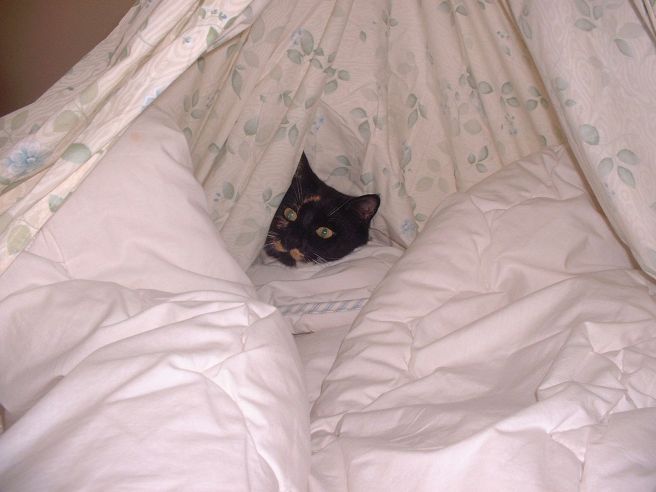
daisy-in-bedDaisy (aged fifteen) is our most musical cat. Of the many cats I have known, she is the only one to be fascinated by the piano. Whenever I attempt to practice she jumps onto the keyboard and marches up and down on it, taking particular satisfaction from playing the bass part. She is also a keen vocalist, expressing her desires for food or attention with raucous cries at all hours of day or night. When Daisy was about a year old, she and her three kittens came to us for fostering from the local veterinary surgery, where she had been left by her previous owners. We soon found homes for the kittens, but I nearly always end up keeping my fosters and so Daisy stayed on. Confident of her position as the senior cat in the household, over the course of her long life she has reluctantly tolerated the comings and goings of feline companions Felix, HomerMagic and Leo.

This is the end of my mini-series about cats, and I expect to return to posting on more serious topics in the New Year. Happy Christmas, and thank you for visiting my blog.

A Christmas Cat-Fest Part 2: Leo the lounger

  • leo-curled-up

Leo (aged two years) is our most laid-back cat. He is also the most affectionate, purring whenever I pick him up or stroke him or even just look in his direction. Leo is a solidly built cat who has a hearty appetite and spends most of his time relaxing around the house and garden. However he occasionally shows other sides of his character by chasing other cats off the property, and by running away from human strangers. Although he was a rescue kitten, he must have come from quite a kind background because he was so friendly and plump from the start. I fostered him for the Lonely Miaow Association but ended up adopting him myself because he got on so well with Magic.


A Christmas Cat-Fest Part 1: Magic the huntress

magic-on-cyclamen-bed  Magic (aged two years) is the most adventurous of our cats, sometimes to be found roaming far from home up on the mountain behind our house. She is also the only serious hunter in our feline family, being capable of catching large rats despite her delicate build. Magic’s small size is perhaps the legacy of a difficult start in life; she was brought into Auckland SPCA as a kitten, having been found cold and starving under a hedge beside her dead litter mates, and soon afterwards she became sick with cat flu and an eye infection. But she survived these traumas and has grown into a strong and healthy cat, with a ravenous appetite and a passion for raw chicken necks.

The challenges and rewards of volunteering

After I retired from paid employment I thought it would be a good idea to do some voluntary work. Having spent some years with other organisations I found my niche with Auckland SPCA, a charity which protects thousands of animals from neglect and abuse each year, and offers a variety of roles for volunteers.

The most important reason for volunteering is the altruistic one of contributing towards a worthwhile cause. Personal satisfaction comes secondary, however there are also benefits for the volunteers themselves: an enhanced sense of purpose, more social contact, taking more exercise and learning new skills can bring improvements in both mental and physical health.

Volunteering does not always work out well, and unsuitable people can be a hindrance rather than a help to the organisation they are meant to be serving. Those who have taken it up as occupational therapy for themselves can tend skimp on the more boring or arduous duties which are usually involved. Conversely, those who are carrying on from a sense of duty but not enjoying it can grow to feel martyred and burnt out. Retired people who volunteer for work related to their former profession can feel frustrated in a subordinate role where their knowledge and skills cannot be used to the full, whereas those who choose a new field can be daunted by the adaptation required.

Nowadays most organisations require aspiring volunteers to provide references, agree to police checks, attend training courses, and observe health and safety regulations. Becoming a volunteer is a formal process and a serious commitment, and helping out on a casual basis is seldom an option.

Based on my own experience in different settings, my advice to aspiring volunteers would be: Choose a cause that is truly important to  you, keep the big picture in mind if the day to day work seems tedious, and persevere long enough to understand how the organisation works and get to know some of its employees. I currently volunteer once a week in the fostering department of the Animal Village, and also take some part in fundraising activities, having previously worked in the cat ward, adoption cattery and on reception. Rather than cuddling sweet kittens, volunteers in the feline areas are mainly occupied in such tasks as setting up cages, cleaning bowls and litter trays, and replenishing stocks of food; these may be mundane, but are essential to the over-arching aim of saving animals’ lives. The paid staff members value and respect the volunteers, and have been tolerant of my slowness in learning practical procedures and my clumsiness in letting a cat escape from her cage. They remain cheerful and friendly despite having to deal with some heartbreaking cases of animals in distress. A high proportion of these animals can be successfully rehabilitated and rehomed and one of them, my own cat Magic, will be featured in my next post.