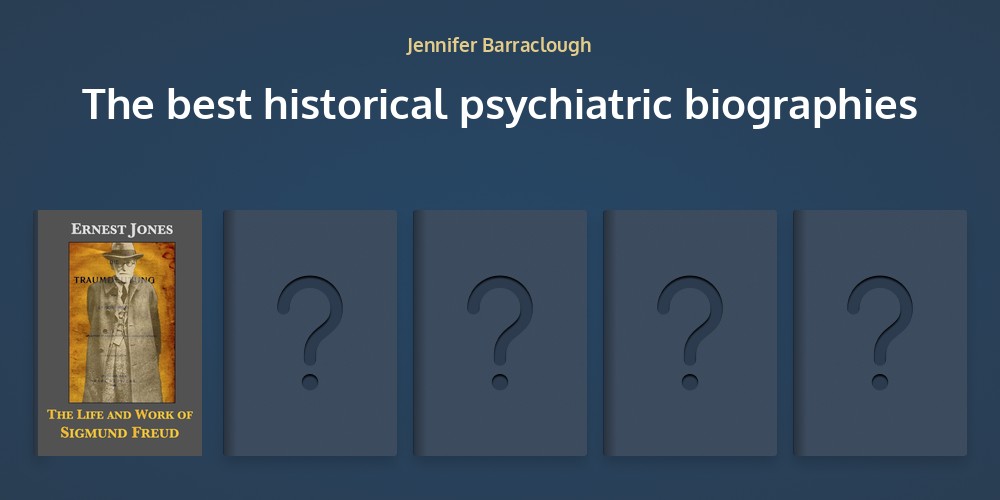
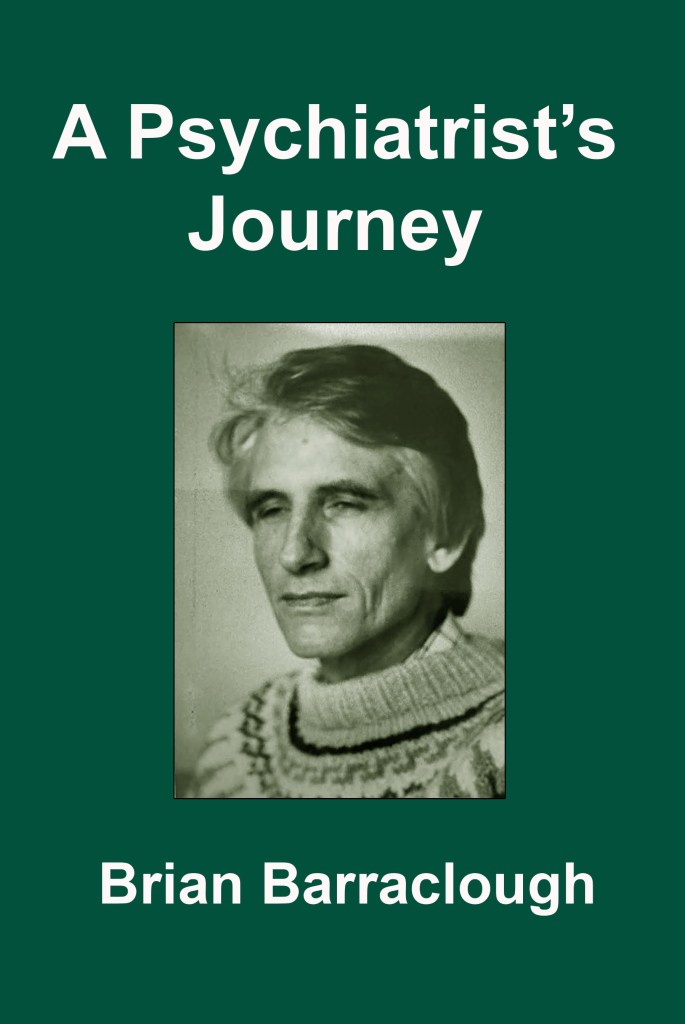
To accompany my husband’s recently published autobiography A Psychiatrist’s Journey, I’ve posted a list of loosely related books on the website formerly known as Shepherd, now called BookDNA.
Of course I had to include the classic biography of Sigmund Freud by Ernest Jones. This is an admirable work but so long that neither Brian or I ever got through it. In the section of his autobiography that describes his sea voyage from New Zealand to England, where he was to begin psychiatric training at the Maudsley Hospital in London, Brian wrote: “I took Ernest Jones’ three volume biography of Freud, thinking it an appropriate introduction to psychoanalysis. I started to read it several times but could not get far before I started to yawn.”
To see the other books I selected – all of which I did read and enjoy, though they might not be ones that Brian would have chosen – please click here:
I’ve written this post in the form of an advice column, in the light of my experience following the death of my husband Brian. Nothing can take away the anguish of losing a beloved partner, but things can be done over the preceding months and years to make it easier to cope when the time comes. Some of this advice may sound very obvious but is often neglected.
Don’t put off talking with your partner about what will happen after one of you dies, upsetting though such conversations may be. It can be easy to avoid the topic when you are young and fit and assume you will live for years to come. But if you wait too long it may be too late for meaningful discussion because of illness, deafness, confusion or extreme old age.
Keep your finances and online presence in order. Besides making a will, write more detailed document(s) including such things as your wishes for end of life care, funeral arrangements, a list of your accounts with official bodies and social media platforms even if you don’t want to reveal full access, and any other information that will make it easier to settle your estate. These documents can be stored securely with a lawyer and/or family member. Update them every few years.
Be prepared to take over each other’s roles. There are still some traditional marriages in which the man never learned to cook and the woman never learned to drive. I was already dealing with the everyday running of our own household and its finances, but am not mechanically minded and have needed help with some quite simple practical tasks that I used to leave to Brian.
Declutter from time to time. A burdensome aspect of dealing with Brian’s estate, also with my mother’s estate ten years earlier, was going through multiple boxes containing papers like old bank statements, and personal documents which were not meant for me to read. It felt disloyal to throw such things away, but few of them needed to be kept and I disposed of the majority by hiring a large “secure document destruction bin”.
Keep some selected physical items such as items of clothing, letters, cards, photos and videos. Looking back at photos of Brian, and of the two of us together, continues to be tremendously important to me and I have printed out some of the digital ones to keep in a special album. Electronic records are not a substitute for tangible keepsakes, and they can be lost.
However close the relationship, maintain some friendships and interests that can be carried out independently of your partner. Brian didn’t join me in choral singing or dog walking, but I have continued these activities and the social contact has been very helpful in coping with bereavement. In contrast some of the things we used to do together, like going to Waiheke Island for lunch, are not much fun on either my own or with someone else.
Don’t leave important things said or questions unasked. Even if the intense early romance has passed, keep telling your partner that you love them.
Following the death of my husband Brian, the task of editing the memoir that he had asked me to complete has been a bittersweet experience. His book has now been published under the title A Psychiatrist’s Journey and is available in ebook or print versions from many online retailers: https://books2read.com/u/4NzOJN.
A long detailed account of Brian’s varied and productive life, it’s not intended for a wide commercial market but should appeal to people with an interest in the history of medicine and psychiatry, those who grew up in 1930s Auckland, and those who knew him personally. Taking over this project, which was so important to Brian, has been a big responsibility and I hope I’ve done it justice.
I left the wording almost exactly unchanged, resisting any temptation to add things in or take things out, except where clarification was needed or information was repeated. My main change involved reorganising the document into shorter sections, adding headings to make it easier to read and to navigate. It needed many minor copy edits such as standardising the use of capital letters and the format of abbreviations. I made some use of tools like “search and replace”, but they can introduce errors and anyway it was a labour of love which I preferred to do myself by hand. I did employ help with the layout and illustrations from a colleague who has worked with me on previous books. I didn’t use AI.
A short blurb:
“A candid memoir by Brian Barraclough (1933-2025), best known for his research on psychiatric and social aspects of suicide. His book covers growing up in New Zealand, having tuberculosis aged 17, training as a doctor at the University of Otago, practising general medicine in Christchurch and psychiatry in Dunedin before sailing to England as a ship’s surgeon. He worked at the Maudsley Hospital in London, the Medical Research Council unit in Chichester, and the University of Southampton before retiring back to Auckland. His book describes many memorable patients and colleagues and his wide leisure interests including art, European travel, and medical history.”
The first time I received an unsolicited email containing fulsome praise for my recently published novel, and a proposed marketing plan, I felt quite flattered and impressed. I replied explaining that due to personal circumstances I didn’t want to proceed at present but would be interested at a later date. Almost at once another email came, this time including a detailed script for a YouTube trailer about my book. It seemed too good to be true, and my suspicion grew when I googled the sender and found nothing about a book promotion service under their name. Even so, in my naivety it took me a while to realise that my correspondent was an AI.
Since then I’ve received many other emails offering to market either my latest book or a previous one. They lavished compliments on my writing: “the work of someone who deeply understands human relationships, subtle suspense and the power of memory and place” “the story breathes psychological nuance, clarity and compassion” “you illuminate the hidden layers of human conflict, emotion and resilience”.
Some of them did appear to come from a real person, although it was hard to tell, and maybe would have led to a genuine marketing campaign if I had taken them up. But I suspect others were from scammers who might take my payment and never contact me again, or even hijack my financial details for illegal purposes. I will never find out, because I am getting tired of the growing influx of such emails, and have started deleting them unread.
Brian was 14 years older than me and had a history of heart disease, so we knew it was likely that he would die first. I tried to prepare myself for the event but it was impossible to predict when and how it would happen, or how I would feel afterwards. Much has been written about coping with spousal bereavement but everyone is different and there is no right way to respond to this monumental life experience.
There have been many practical and administrative matters to deal with during these first few weeks. I have had wonderful support from family, friends and former colleagues, being showered with flowers and food and invitations to meals, cards and letters expressing condolences for me and appreciation for Brian. Although my grief is profound I have not been overwhelmed by it, but have managed everything efficiently and kept in good health. Christmas preparations and festivities are underway too, so I have been very busy. I don’t know whether that is a good thing. I’m afraid that after Christmas, when all the activity and attention has wound down, the loneliness and boredom of being without Brian is really going to sink in.
Brian and I had a wonderful life together until the last few months when the nature of his illness prevented any meaningful conversation between us, and made it unsafe for him to be nursed at home where he longed to be. He had very good care in the hospital, and I did all I could to support him there, but his distress could not be relieved and he wanted to die. Thankfully his last 24 hours were peaceful.
I have a few regrets. I wish that when he was still well we had talked more about planning the future, done some decluttering and possibly downsized. And, although it is comforting to look through all my photos of Brian, I wish I had taken more videos of him.
My beloved husband Brian died from respiratory failure last week.
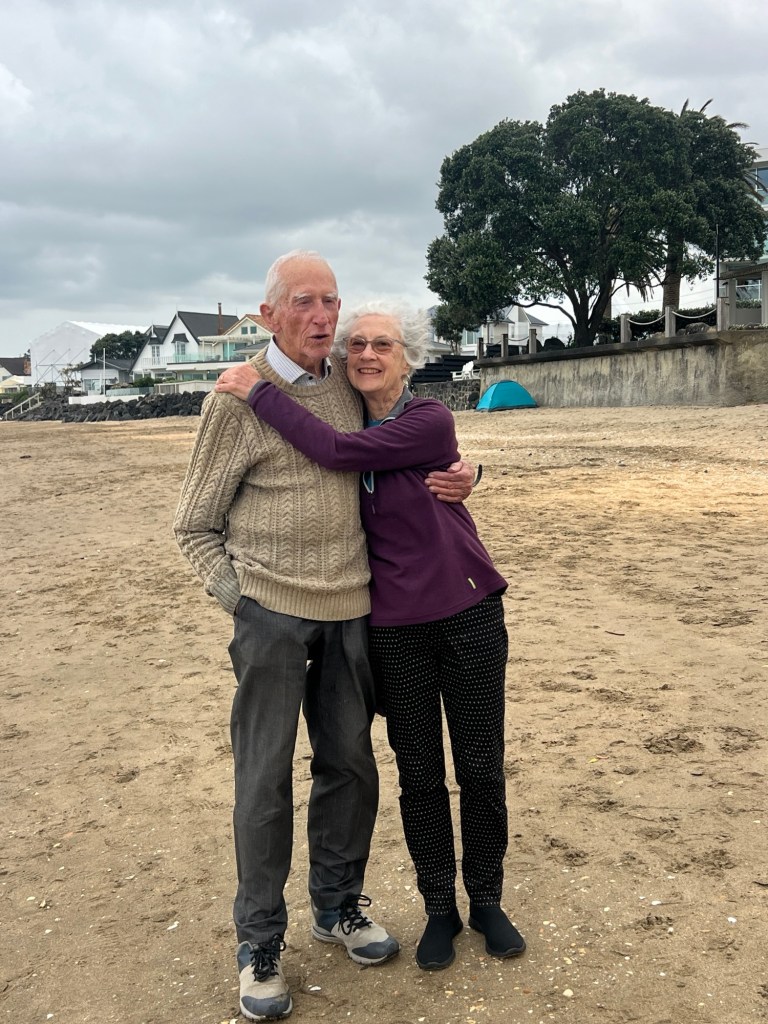
He was 92 years old and in recent months had endured a gruelling decline of both body and mind, due to cardiac and cerebrovascular disease. He was ready to leave this world and while it is a blessing that his suffering is over, his death is a great loss for me. During the 47 years we were together my role had gradually evolved through different stages – mistress, wife, nurse and now widow. Of course there were challenges, but not too many. We had a wonderful marriage.
There is much else to be thankful for. Brian had excellent care from the staff of North Shore Hospital in Auckland. I am receiving a huge amount of support, especially from Brian’s three nieces, and from friends and relatives in both New Zealand and the UK. My cats are being especially affectionate at night.
We will have a small private funeral service, then I expect there will be a difficult few months ahead, sorting out Brian’s affairs and possessions, adjusting to life without him, and doing my best to develop a happy future for myself.
Brian had not quite finished writing his extended autobiography. Due to his incredibly vivid and detailed memory, the document contains a lot of valuable information not only about his own life but about the history of psychiatry in both NZ and the UK. I aim to complete the editing process and publish it next year.
My husband Brian is in hospital. Over recent months he’s been developing a complex, fluctuating mix of physical and mental symptoms. He has been very ill and spent about two weeks on a medical ward before being transferred to a unit for older people, where he is improving, and benefiting from activities – both of us took part in a bowling match (!) and have taken trips to the beach.
My days have taken on a new pattern – in between spending long hours with Brian at the hospital dealing with the house and garden, the cats, my own healthcare appointments, responding to emails and texts. I’ve continued my exercise classes and choir practice, but otherwise am not doing much. There’s no time for socialising and I lack the concentration for any serious reading, writing or other constructive activity. But I am coping better than I did during the similar stressful period ten years ago when Brian had major cardiac surgery and I developed a range of stress-related problems (I described that experience on this blog and in a short book).
We hear a lot of complaints about New Zealand’s hospitals in the media, but Brian has had excellent treatment. The kindness and patience of the staff, including especially the health care assistants, has been wonderful. I hope Brian will be well enough to come back home soon, so we can pick up the threads of our previous life, and it will be important to complete and publish his new book about his long medical career.
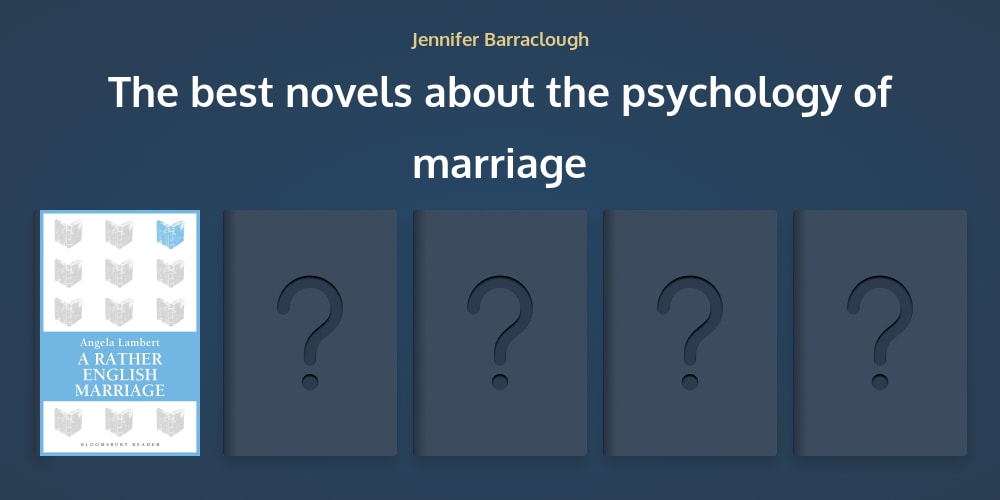
Here’s my list of “The best novels about the psychology of marriage” on BookDNA.com (formerly Shepherd.com). It includes five books on a theme loosely related to that of my own new novel. Most of the plots involve some kind of marital conflict, or touch on the related topics of adultery, widowhood and divorce, but have (reasonably) happy endings.
This is the third list I’ve published with Shepherd. The process of compiling them encourages me to read more widely and reflectively, as well as providing a stress-free method of publicising my own books.
I dislike promoting my own work. I sometimes feel physically sick when writing emails to friends and acquaintances to tell them about my latest book. I’ve had little success with paid adverts and promotions in the past, so I don’t do them any more. When I was younger I enjoyed giving talks, even to large audiences, but not any more. All the same, with around three million books now being published each year in the US alone, indie authors like myself have to do some marketing if they are going to achieve more than a handful of sales.
So, in the hope that you’ll have a look at No Good Deed, here is a comment emailed to me by one reader:
“My goodness your new book is incredibly powerful, backed up by strong writing. I couldn’t put it down and it affected me emotionally as well … I thought the climax was stunning.”
No Good Deed is available in print and ebook versions from major online retailers through this link.
Is a strong Christian faith essential for writing, performing or appreciating sacred church music? And how much does the music contribute to the spiritual experience of a church service?
I’ve been thinking about these questions since a recent visit to the cathedral which I used to attend regularly as a member of the choir. We sang mainly traditional classical pieces in four voice parts with organ accompaniment. On the day I returned, the organ was not being played and “my” old choir had been replaced by a youth group singing loud upbeat music. They were obviously well trained and enthusiastic and I expect many members of the congregation liked their modern style. But I found the sound more intrusive than uplifting. This confirmed that, for me, music is a vital part of a service.
The British composer John Rutter (born in 1945) would probably agree about this. He has spoken and written in some detail about his attitudes to religion and spirituality. He describes himself as an agnostic, who values the traditions of the Church of England but does not accept all of its doctrines. In one interview he spoke of understanding the universe in terms of a lottery governed by mathematics, rather than by an all-powerful deity. He said he believed in a more general sense of spirituality which can be accessed through the beauty of nature or art as well as through music.
I was curious to find out something about the beliefs of other men (they have all been men) whose choral sacred music I have enjoyed singing. According to the information I found online, some of the greatest classical composers – Bach, Mozart, Handel, Haydn – were devout practising Christians. In contrast, there were others who had been brought up in the Christian faith but had doubts in later life, leading them to explore wider concepts of spirituality. Beethoven was one of these, and more recent examples include Berlioz, Faure, Elgar and Vaughan Williams.
Whether or not they held a conventional religious faith, it seems that many of these men believed in an intangible realm beyond the material world as being the source of music. Having the ability to access this source is a wonderful gift, though inspiration is not enough on its own. The process of composing works that can be performed by other people requires a thorough knowledge of the technicalities of music, and a great deal of hard work.
A few quotes:
Beethoven: Music is the mediator between the spiritual and the sensual life.
Bach: I play the notes as they are written, but it is God who makes the music.
Vaughan Williams: There is no reason why an atheist could not write a good Mass.
Elgar: My idea is that there is music in the air, music all around us; the world is full of it, and you simply take as much as you require.
Haydn: When I think of my God, my heart dances within me for joy, and then my music has to dance too.
P.S. Since drafting this post I have visited London and heard glorious singing during a Latin Mass at St James, Spanish Place.
While in England this summer I visited Chartwell, the home of Winston Churchill and his wife Clementine. I had wanted to go there for years but the house, situated deep in the Kent countryside, seemed too difficult to access without a car. Then I discovered that a bus from South Bromley goes there on Sundays.
Chartwell: Photo by Charlie Seaman on Unsplash
The house contains many displays of Churchill memorabilia, and is furnished in a simple but elegant style reflecting Clementine’s taste. I especially liked her bedroom, painted in her favourite shade of duck-egg blue. Winston’s bedroom was not open to the public.
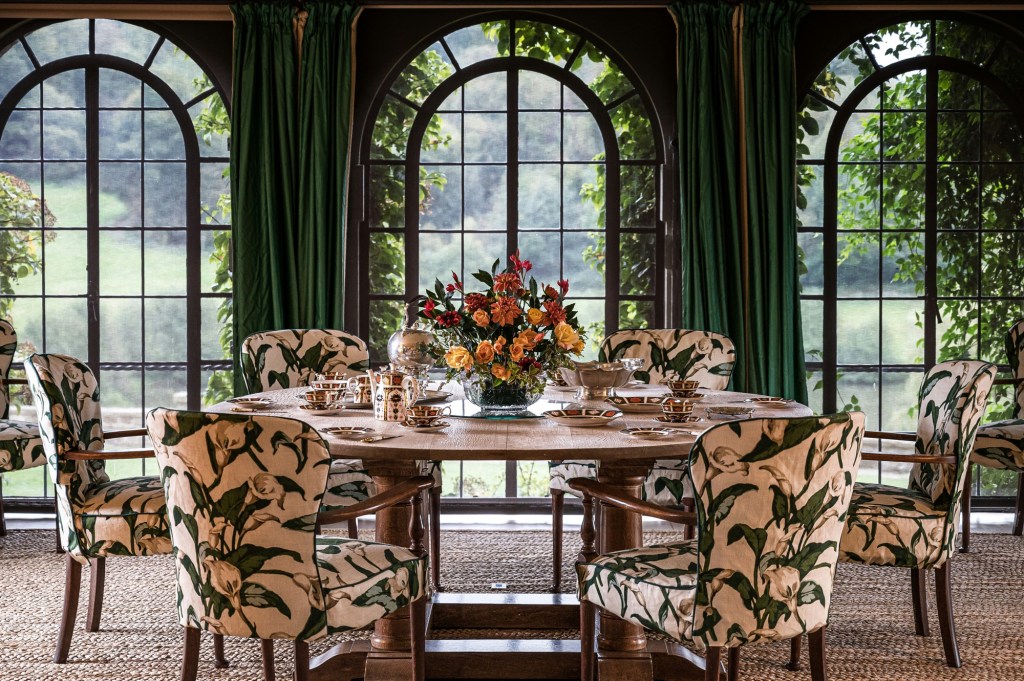
Lady Churchill’s room: Photo from National TrustDining room: Photo by Jez Timms on Unsplash
The extensive grounds include walled flower and vegetable gardens, ponds and woodlands. I didn’t find Churchill’s painting studio, but had seen many of his art works inside the house. Nor did I see Jock, the latest of the marmalade cats that have always been kept at Chartwell. All the same it was a very worthwhile visit.
One of the ponds at Chartwell
Another place I’ve long wanted to see is the RAF museum at Biggin Hill, so it was a very nice surprise to find that the bus route went past it. I went in and was shown round the beautifully kept memorial chapel dedicated to the airmen who lost their lives in WW2. There was a separate display honouring the women who served as ferry pilots and in numerous ground roles.
From an adjacent site, it is possible (for a hefty price tag) to take a flight in a Spitfire. This is something else I’d love to do. Maybe next year …