While in England this summer I visited Chartwell, the home of Winston Churchill and his wife Clementine. I had wanted to go there for years but the house, situated deep in the Kent countryside, seemed too difficult to access without a car. Then I discovered that a bus from South Bromley goes there on Sundays.
Chartwell: Photo by Charlie Seaman on Unsplash
The house contains many displays of Churchill memorabilia, and is furnished in a simple but elegant style reflecting Clementine’s taste. I especially liked her bedroom, painted in her favourite shade of duck-egg blue. Winston’s bedroom was not open to the public.
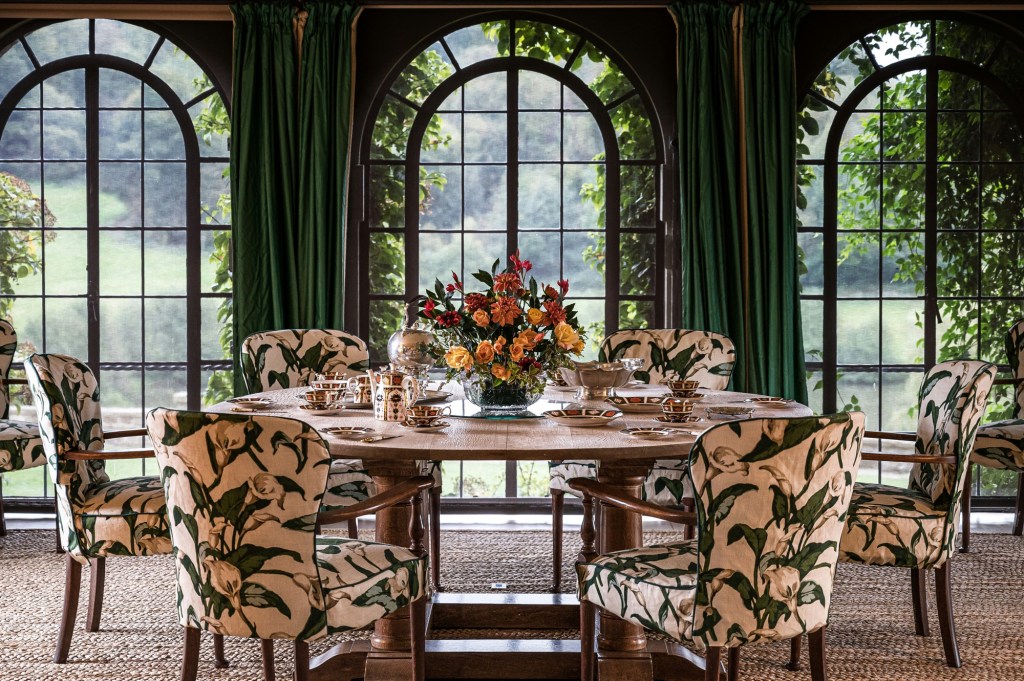
Lady Churchill’s room: Photo from National TrustDining room: Photo by Jez Timms on Unsplash
The extensive grounds include walled flower and vegetable gardens, ponds and woodlands. I didn’t find Churchill’s painting studio, but had seen many of his art works inside the house. Nor did I see Jock, the latest of the marmalade cats that have always been kept at Chartwell. All the same it was a very worthwhile visit.
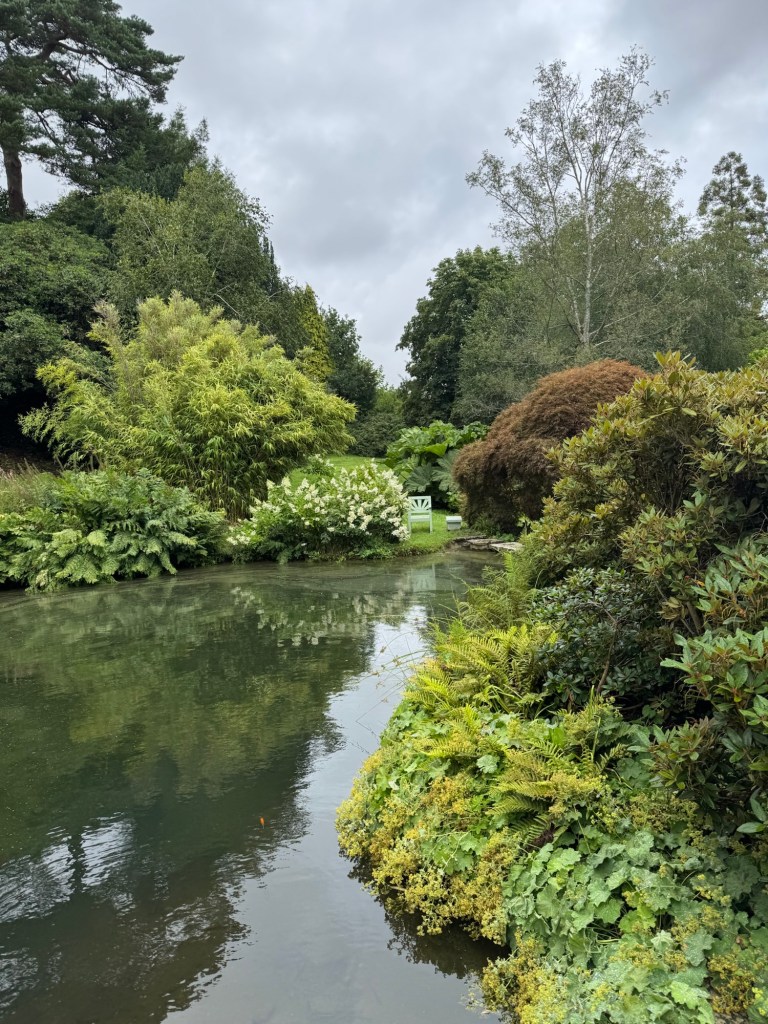
One of the ponds at Chartwell
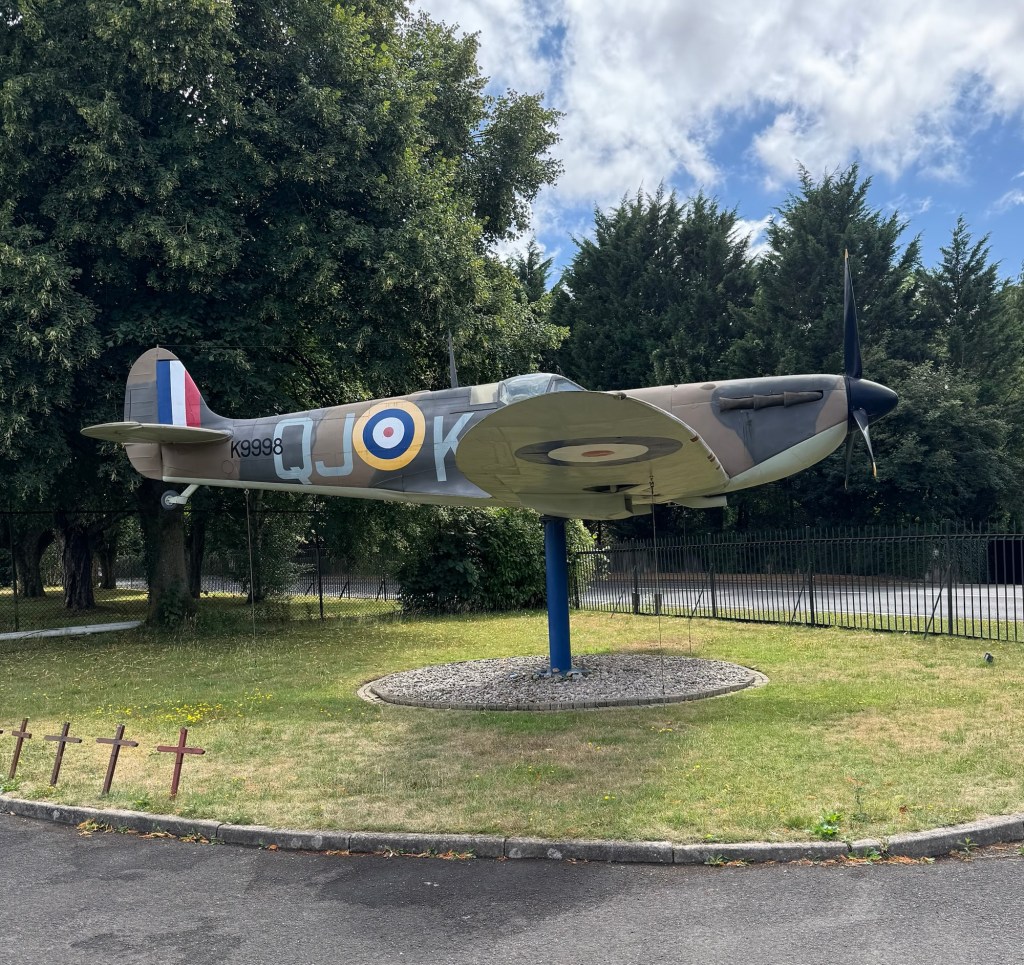
Another place I’ve long wanted to see is the RAF museum at Biggin Hill, so it was a very nice surprise to find that the bus route went past it. I went in and was shown round the beautifully kept memorial chapel dedicated to the airmen who lost their lives in WW2. There was a separate display honouring the women who served as ferry pilots and in numerous ground roles.
From an adjacent site, it is possible (for a hefty price tag) to take a flight in a Spitfire. This is something else I’d love to do. Maybe next year …
Twenty-four years after moving to New Zealand, I am very fortunate to still have many friends and relatives in England and still be able to go back and see them. A consecutive Britrail pass provides the freedom to travel around the country on any train at any time, to visit people and places that played an important part in my earlier life and to take some pictures to remember them by.
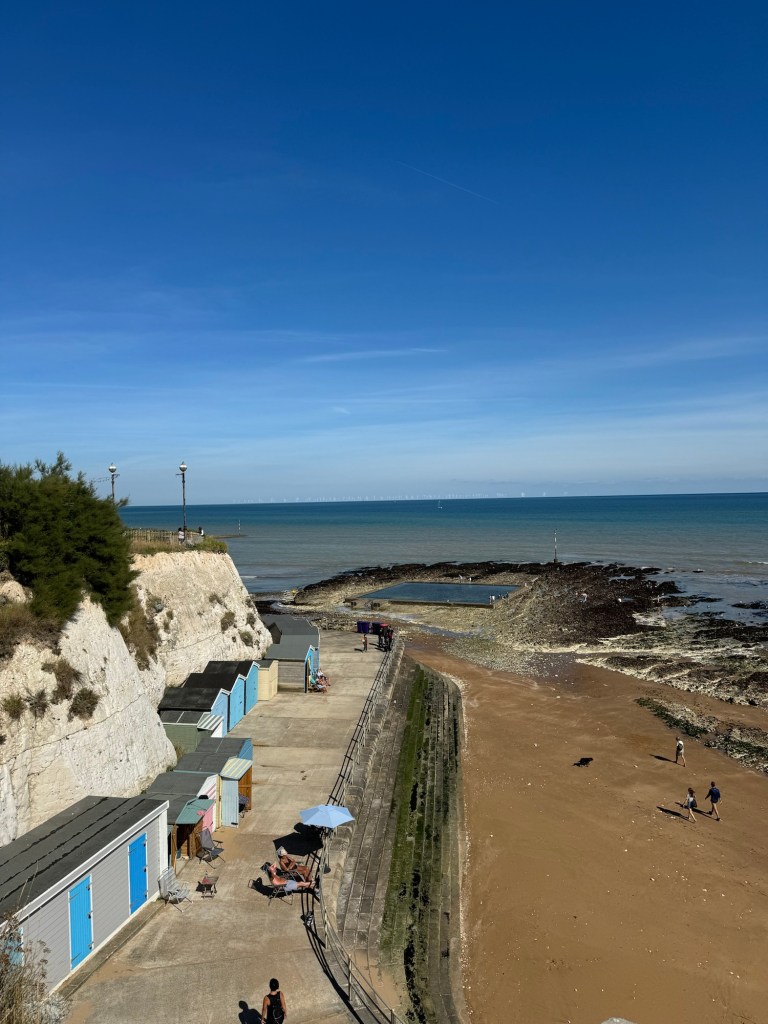
My mother was brought up in Ramsgate and Margate, and during my own childhood we often visited these and other seaside towns in Kent.
Broadstairs in the sunshineFolkestone harbour on a dull day
My own childhood was spent in Gravesend. Returning there recently I found the town so changed that I hardly recognised it, and didn’t take any photos other than one of the house where I grew up.
Our old family home on The Overcliff
Besides the outings to the seaside we often visited other parts of Kent.
North Kent marshes – where I set one of my novelsCutty Sark – now in Greenwich but was lying on the Greenhithe shore during my childhood
My teenage years were spent in Yorkshire. I don’t often go back there now, but I took this picture during a delightful stay with an old school friend who lives in Wharfedale.
A stream near Leathley
Oxford, where I attended medical school and spent most of my subsequent career, still feels like home. The city centre has deteriorated but walking by the river is lovely as ever.
River Thames in Grandpont Nature Park
And a favourite place full of memories – the College of Healing course, the Elgar museum, the walks on the hills – is Great Malvern.
The Malvern Hills – I think this one is called the SugarloafWalking on the Malvern Hills
A highlight of my time in London was a lunch party for 24 of the friends who have given me hospitality over the years.
One of three tables set for lunch
As we all get older, and the state of the world gets more precarious, I know I may not see some of these people and places again. But I hope there will be more visits to England still to come.
On a lovely sunny autumn day Brian and I visited Rangitoto, the volcanic island a short ferry ride from our home.
Disembarking from the wharf
We walked up the steep track towards the summit.
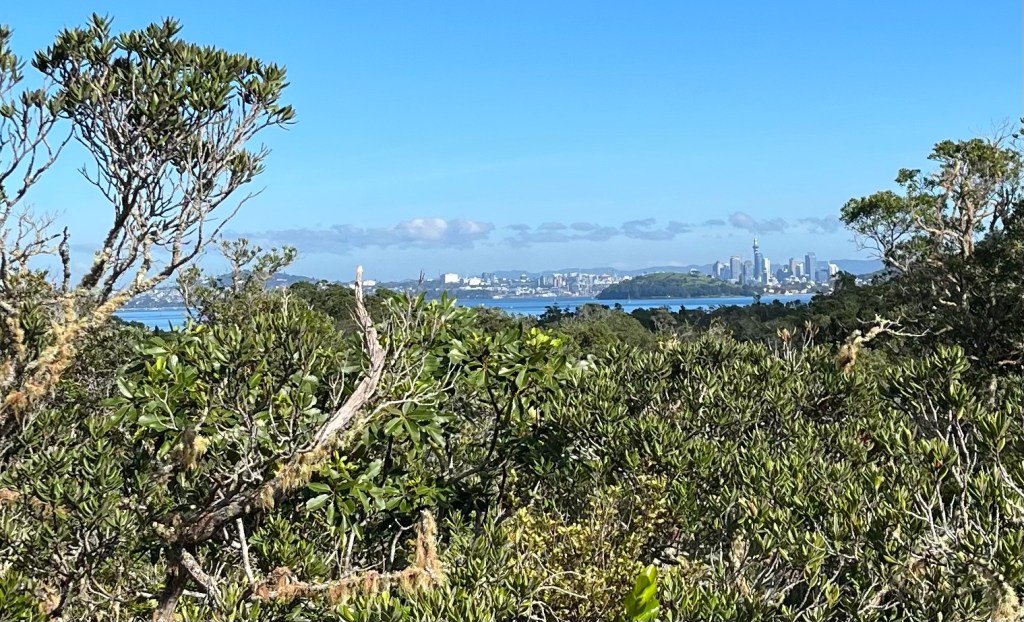
Lava beside the trackAuckland’s CBD in the distance
When we last visited some years ago we made it to the top, but not this time. Not only do we have less stamina nowadays, but the upper parts of the track are quite hazardous after the recent floods. So we went back down and sat in the sun to eat our packed lunch (there are no cafes on the island). Afterwards we walked along the coastal path towards Islington Bay.
On the coastal path
I was going to write a short description of Rangitoto, but thought AI might do it better. The following text was generated in a few seconds by ChatGBT.
Rangitoto Island is a volcanic island located in the Hauraki Gulf near Auckland, New Zealand. It is one of Auckland’s most iconic landmarks and a popular destination for tourists and locals alike.
Geology: Rangitoto Island is a volcanic cone that emerged from the sea around 600 years ago, making it one of the youngest islands in the Hauraki Gulf. It is part of the Auckland volcanic field, which consists of around 50 volcanic cones and craters scattered across the Auckland region. Rangitoto’s distinct symmetrical shape and its dark volcanic rock create a striking visual contrast against the blue waters of the gulf.
Natural Environment: The island is predominantly covered in dense vegetation, including native New Zealand flora such as pohutukawa trees, ferns, and shrubs. The pohutukawa trees, with their vibrant red flowers during the summer months, have earned Rangitoto the nickname “the Red Tree Island.” The island’s rugged landscapes and scenic trails provide opportunities for hiking and exploration, allowing visitors to experience its natural beauty up close.
Recreational Activities: Rangitoto Island offers various recreational activities for visitors. The island is accessible by a short ferry ride from downtown Auckland, making it a convenient day trip destination. Upon arrival, visitors can embark on walking tracks that lead to the summit of the volcano, offering panoramic views of Auckland’s skyline, the Hauraki Gulf, and the surrounding islands. Exploring the lava caves formed by ancient volcanic activity is another popular activity on the island.
Cultural Significance: Rangitoto holds cultural significance for the local Māori people, who consider it a sacred site. The island’s name, “Rangitoto,” translates to “Bloody Sky” in Māori, which is believed to originate from a historic battle that took place there. The island is home to archaeological sites, including Māori pa (fortified village) remains, which reflect its historical importance.
Conservation and Protection: Rangitoto Island is part of the Hauraki Gulf Marine Park and is managed by the Department of Conservation (DOC) in New Zealand. The DOC focuses on preserving the island’s natural environment, protecting its wildlife, and maintaining the integrity of its volcanic landscapes. Visitors are encouraged to respect the island’s fragile ecosystem by following designated tracks and leaving no trace behind.
Overall, Rangitoto Island offers a unique blend of natural beauty, volcanic history, and cultural significance. Its accessibility, diverse flora and fauna, and recreational activities make it an attractive destination for nature lovers, hikers, and those seeking a memorable experience in the Auckland region.
With New Zealand’s borders open again I have been able to make another trip to my home country of England, after a gap of over three years. Being in London when the Queen died, and during the subsequent period of national mourning, was a truly remarkable experience.
Sadly there wasn’t enough time to see all of my relatives and friends living in various parts of the kingdom, but I did visit a lot of places, too many to list here. I stayed several days in Oxford, where I did my medical training and spent much of my career, meeting some old colleagues and exploring the riverside and surrounding water meadows.
Grandpont, Oxford
One day I took the train to Malvern, with its memories of Elgar’s music and my time at the College of Healing. The town features in my novel “The Windflower Vibration”. I walked up the hills and had tea at St Anne’s Well.
On the Malvern Hills
Another highlight was staying with an old school friend who lives in a converted farmhouse in Wharfedale, Yorkshire. We walked the dogs by the river, and ate fruit from the orchard where 250 apple varieties are grown.
Washburn riverApple orchard
For the first few years after I moved to New Zealand in 2000 it seemed easy enough to make frequent return trips to the UK. But international flying has become much more complicated and expensive since the pandemic, and attracts increasing criticism for its impact on the environment. Also, having reached a later stage of life, I wonder how much longer I will be fit to travel. So although I hope this latest visit to England won’t be my last, I am aware that it might be.
Knowing this I do sometimes feel torn between my two countries. But my present life in Auckland is a very happy one, and over the years I have enjoyed the best of both worlds.
Although I’m including this post in the Devonport walks series, it actually relates to a different part of Auckland. This is because Ireland, the dogshare Labrador I’d been walking most afternoons for four years, has moved out of the city with his owners’ family. Contact is less frequent now, but our bond continues unbroken, and Ireland greeted me ecstatically when we met halfway for a visit to the Normanton Reserve in the Wairau Valley suburb.
I had driven around there many times in the past for business purposes, not for pleasure because it is a rather unattractive industrial area prone to traffic congestion. I had no idea there was a peaceful green reserve close by, hidden away at the end of a cul de sac.
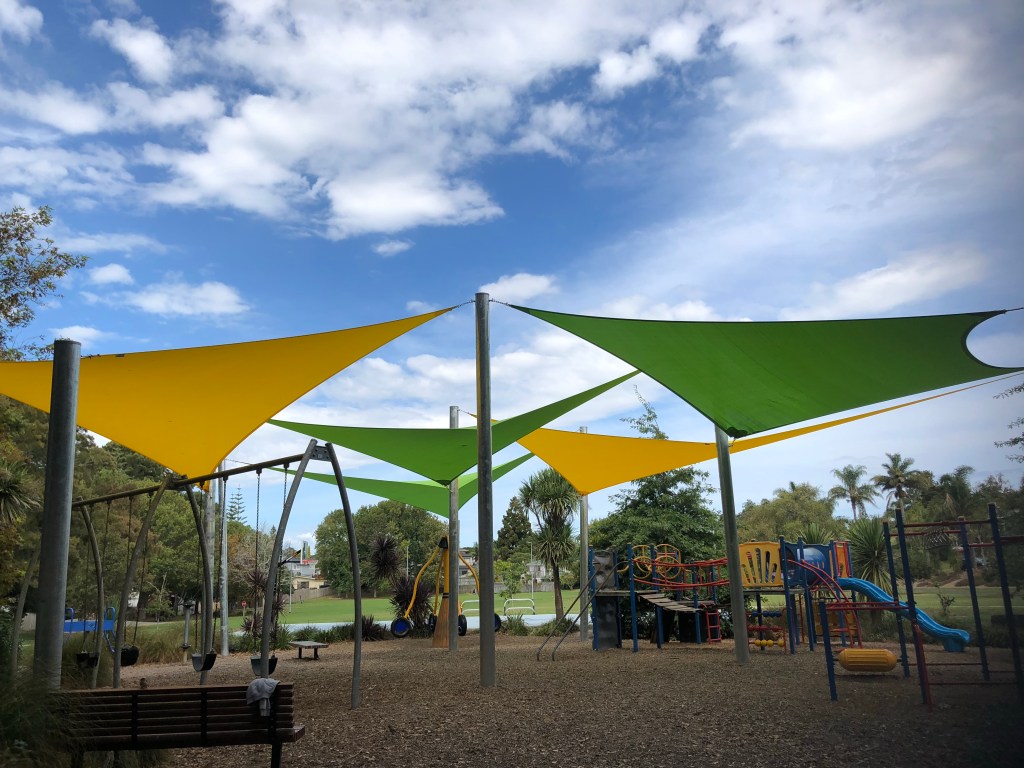
Lower fieldPlayground
The large flat grassed field on the lower level of Normanton Park offers activities for both adults and children. On the path that encircles the perimeter there are a series of exercise machines – I did not try these. There is a playground, a small basketball court and a small skateboarding park, a picnic area and toilet block, all clean and well maintained.
On an upper level, reached by a short flight of steps, is a large field in a more natural state with plenty of room for a dog to run free.
Upper field
Ireland’s departure has been a loss but I will certainly keep in touch with him and meanwhile, with other local dogshare opportunities on the cards, have had the gaps in our garden hedge sealed off …
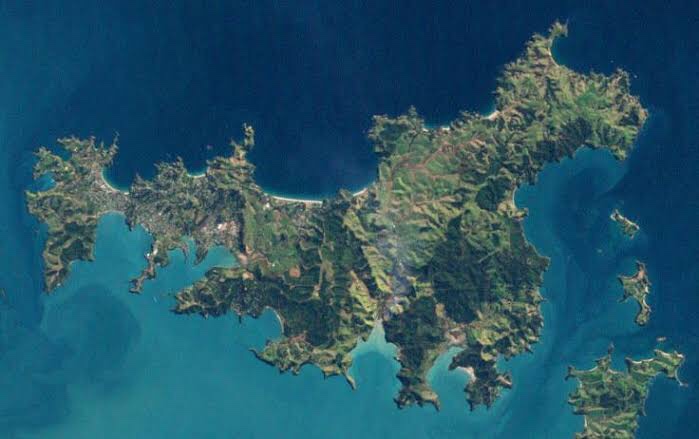
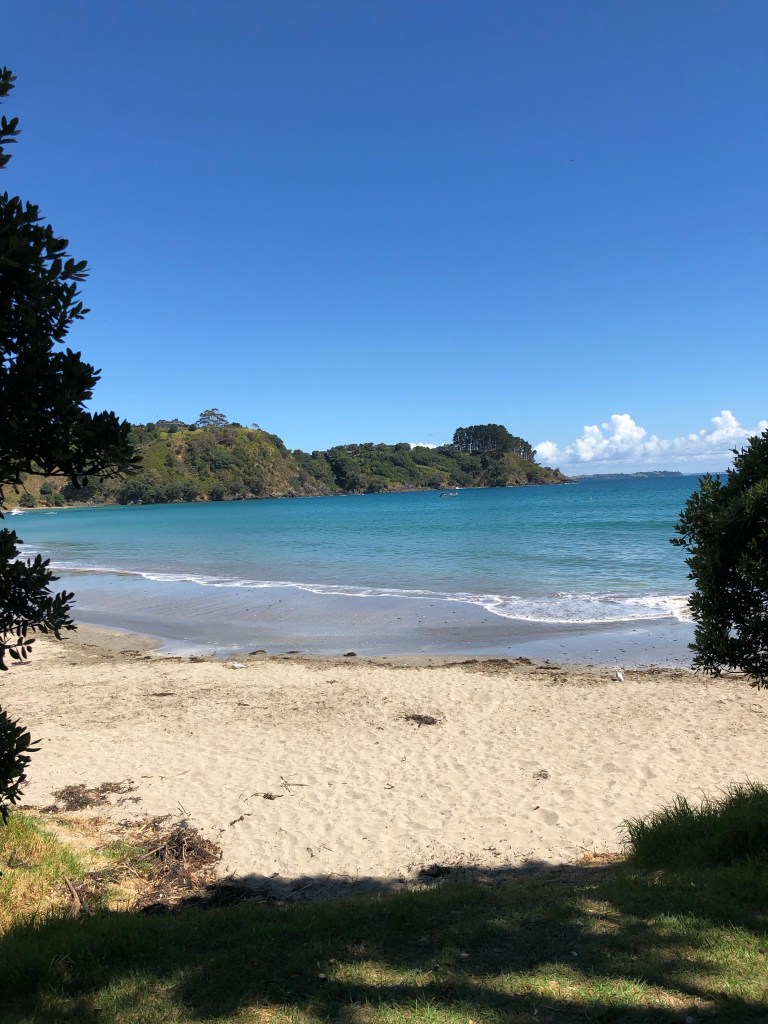
Brian and I spent two days on Waiheke Island, staying in a comfortable and spacious holiday home surrounded by native bush and overlooking the sea. Though New Zealand’s summer is nearly over, the weather was sunny and hot. Waiheke has a semitropical climate, lush vegetation, sandy beaches, boutique vineyards and olive groves, a friendly and somewhat bohemian vibe, and feels a world away from the mainland.
Huruhi Bay viewed from the balcony
Except during Auckland’s lockdown periods we have often made day trips to Waiheke. The 40-minute ferry ride from the city centre, across a calm blue sea flanked by other small islands, always induces a sense of relaxation. Parts of my novel Cardamine are set on Waiheke and this extract contains some references to the history and geography of the island.
Waiheke Island. Source: Wikipedia
Waiheke holds many memories for me, some bittersweet. Stonyridge Vineyard has been our usual venue for birthday and anniversary lunches. Our group of local Bach flower remedy practitioners, now depleted by the loss of key members, has held weekend gatherings in more modest settings such as the Quaker meeting house. The sad story of my first rescue cat, Orange Roughy, had a happy ending when he was successfully rehomed on the wild far reaches of the island.
During this recent short holiday we went swimming at Palm Beach, climbed up and down a steep track for coffee and galettes in Bisou cafe at Surfdale, dined at Vino Vino and The Courtyard in Oneroa.
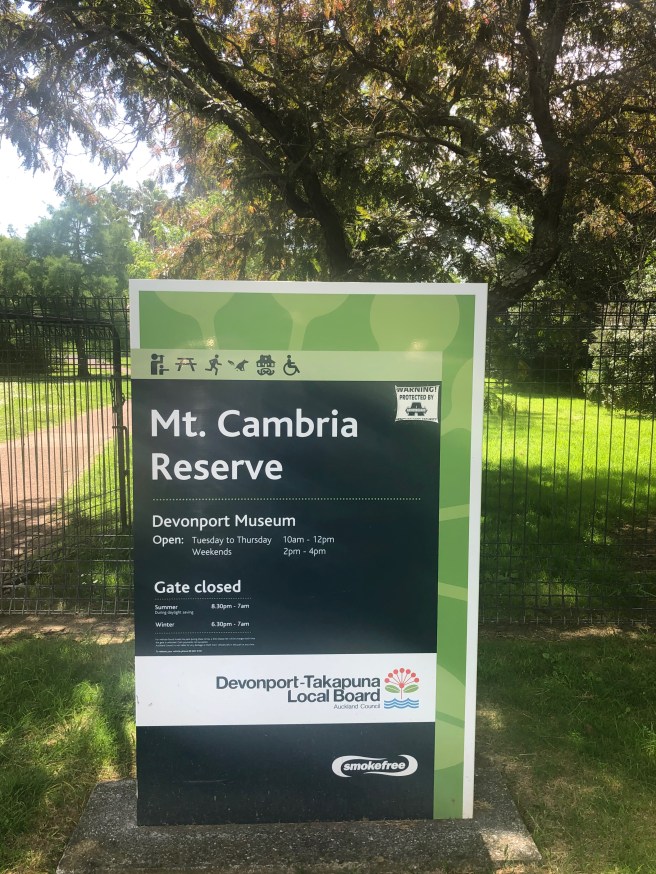
To quote from a local tourist website: “Mt Cambria Reserve is quiet retreat in the pretty seaside town of Devonport. The attractive landscaped garden sits in the remains of Mt Cambria volcano, which was a quarry for scoria rock between 1883 and 1985. Mt Cambria Reserve is situated behind Devonport Museum on 31a Vauxhall Road and is an ideal spot for walks and relaxing picnics.”
Ireland can smell a picnic
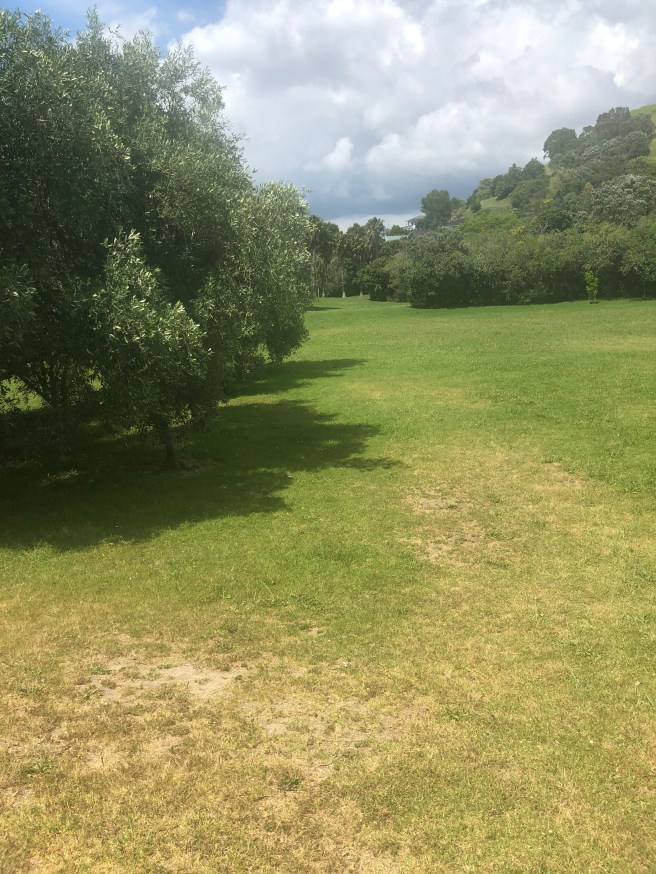
Ireland has to be kept on a tight lead when picnics are in progress – like most Labradors he has an insatiable craving for food. But provided there are no picnics, Mt Cambria is a lovely place for dogs to run free. It’s quite a small park, dotted with clumps of trees, and has a steep slope at the back.
Ireland rolling down the grassy slope
From the top of the park is a view of Mt Victoria, another good place for dog walks as described in an earlier post.
A highlight of Ireland’s week is his “club day” when he spends an hour rushing around Mt Cambria with a group of his canine friends while their owners look on.
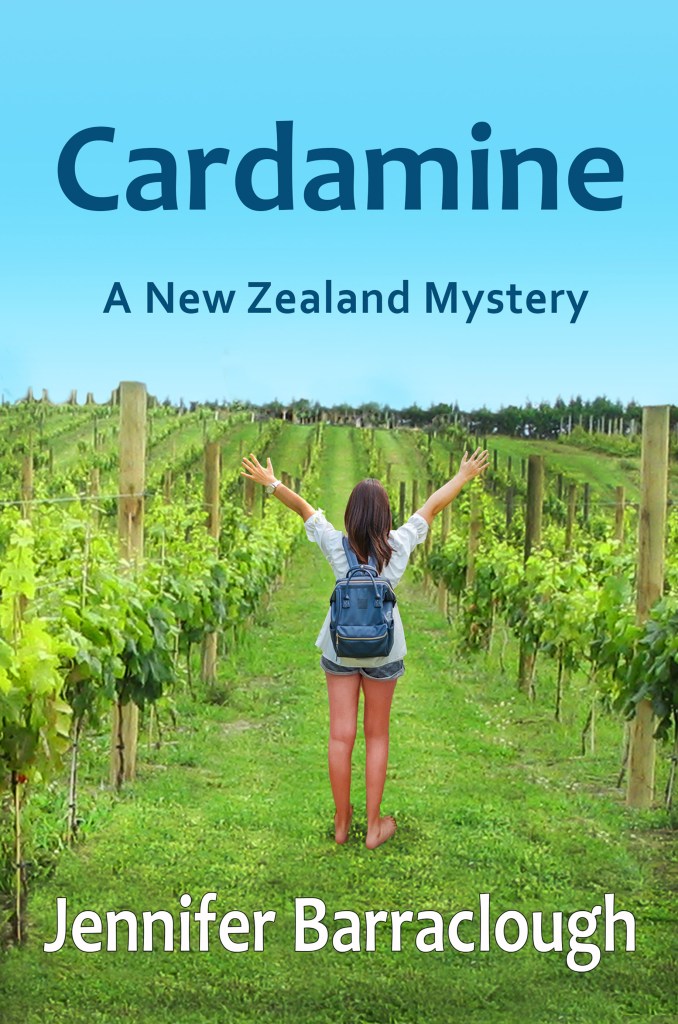
Here’s a little background to my new novel Cardamine: A New Zealand Mystery. Amazon links: US, UK, AU
Most novels contain elements of autobiography and the setting for this one was informed by my own memories of visiting New Zealand for the first time, discovering the beautiful beaches and countryside, the enticing vineyards and coffee shops. Several North Island locations – Waiheke, Browns Bay, Riverhead Forest, Muriwai – are featured in the book. There are also references to the confusion that can arise from subtle differences in culture and use of language between two English-speaking nations. My background in medicine and psychiatry had an influence on the plot, with speculation about how emotions, beliefs, personality factors and mental or physical illness can contribute to crime.
The main character, Kate, is in New Zealand on holiday on the eve of the Covid-19 pandemic. She is much younger and more adventurous than me but shares my liking for sea swimming and the local wines. After drinking rather too much of them during a vineyard tour, she loses the bag containing her valuables and so misses her night flight back to London. A rich and eccentric elderly man comes to her rescue and invites her to stay in his country house, called Cardamine after the flowers around the pond in the garden. His wife, a “mail order bride”, is mysteriously absent. Kate’s summer holiday had begun as an idyll of sunshine and swimming and budding romance, but she becomes aware that the country’s “clean green” image conceals a darker side involving racial prejudice, illegal drug use and unnatural death.
Cardamine is available in paperback or Kindle format from your local Amazon website: US, UK, AU. New Zealand residents can buy a print version directly from me – please write via my contact page if you’d like to order a copy.
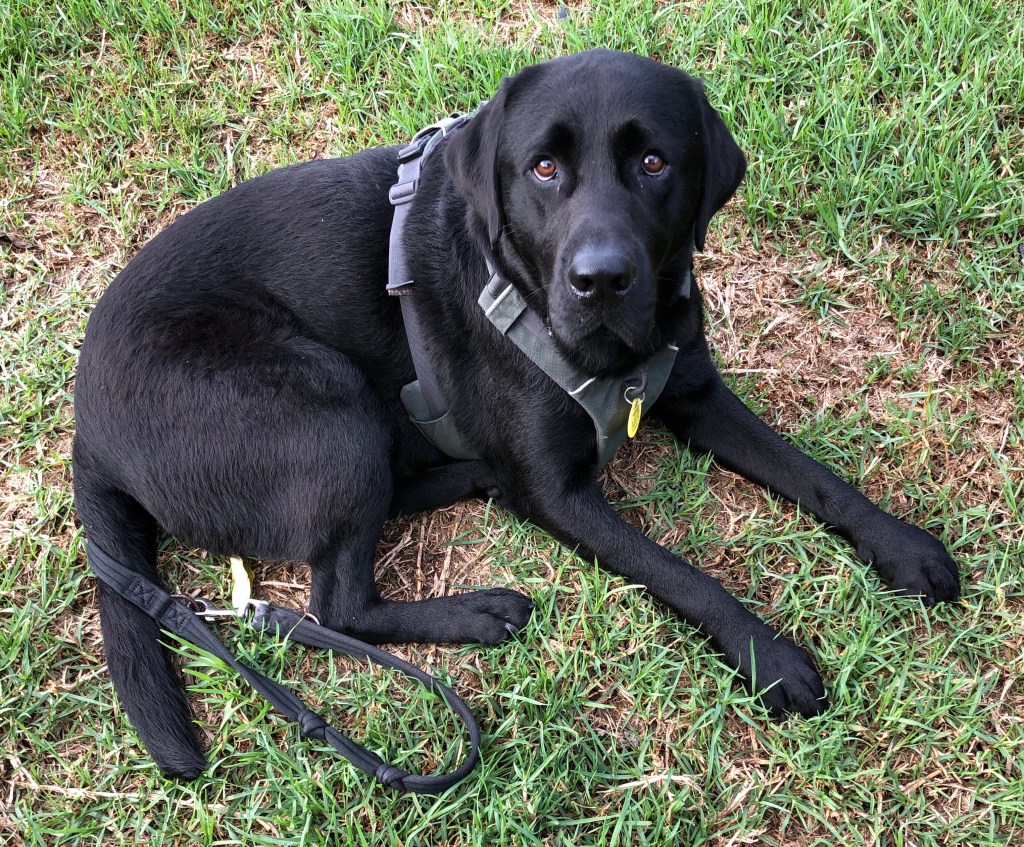
Ireland the Labrador loves walking up Mount Victoria/Takarunga, known by Devonport locals as Mt Vic. Of unknown age, it is the tallest volcanic cone on Auckland’s North Shore, though being only 87 metres high it is really a hill rather than a mountain. The wooded lower slopes are surrounded by old houses, churches and a primary school and there are several access points.
Mount Victoria viewed from Cambria Park
We usually approach the site through the historic cemetery, dating from the late 1800s, where the Maori warrior and peacemaker Patuone is buried alongside early white settlers.
Mount Victoria cemetery
Mt Vic was once a Maori pa (fortified settlement) and the remains of old terraces and kumara pits can be seen alongside the walking tracks that now encircle the site. Ireland seems fascinated by the place and sometimes, perhaps drawn by sights or smells or spirits of the past, he dashes up the steep grassy hillside and on one occasion took half an hour to return. At other times he freezes on the path as if hypnotised.
Ireland transfixed
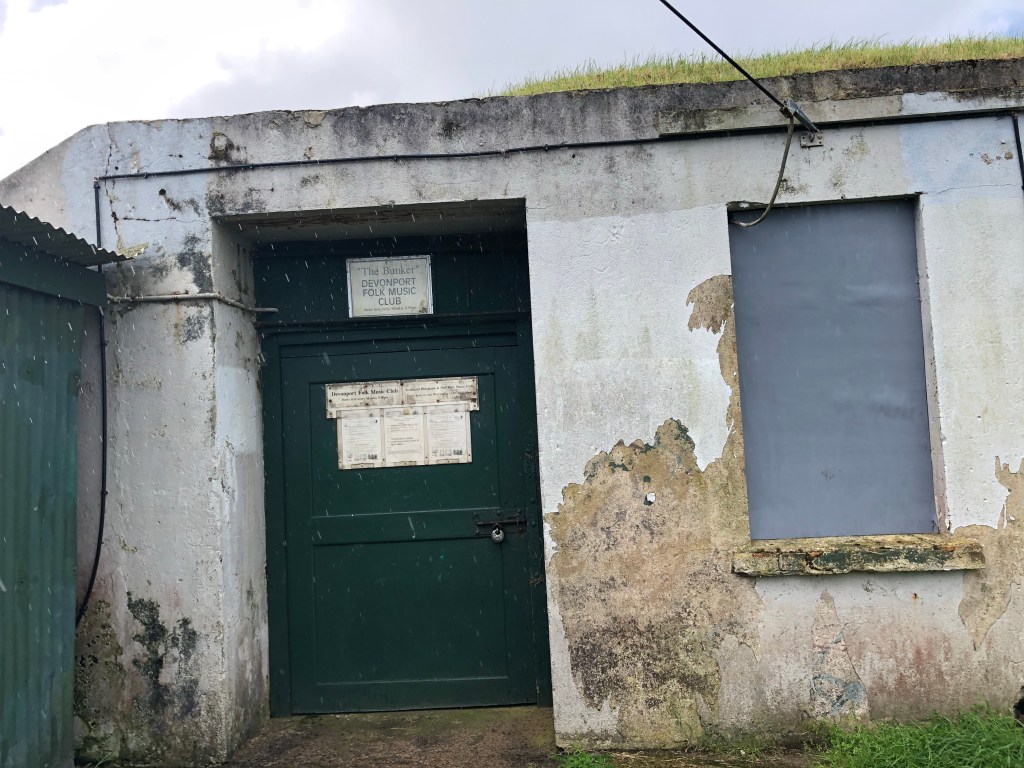
On the summit, with its panoramic views of Rangitoto, the Hauraki Gulf, Waitemata Harbour and Auckland’s CBD, are various modern structures: mushroom-shaped vents for an underground reservoir, a signal station for shipping, a disappearing gun. There are a few older military remains on Mt Vic and a delapidated army hut, known as the Bunker, is the venue for the local folk music club.
The Bunker
After completing the steepest part of the walk, Ireland and I stop for a rest and a snack.
Last week I wrote about taking Ireland, my dogshare Labrador, to North Head. Another of our favourite places to walk around Devonport is Ngataringa Park. Developed in the 1990s from an old landfill site, this is not a formal park but mostly consists of large fields which provide an ideal space for dogs to run and play and roll in the long grass.
Various local landmarks can be seen from the curved path that runs through the park. Auckland’s harbour bridge, viewed from across the tidal estuary with its mangrove swamps. Mount Victoria, or Takarunga – the highest volcanic cone on the North Shore – and another good place for a dog walk. The massive new retirement complex being built on a nearby hill overlooking the site. There is a skate park in one of the fields, and a piece of artwork, a pair of wooden statues called The Guardians.
At the far end of the path is a maze, intended to represent the interweaving between Maori and Celtic cultures. Beside it, a network of small circular paths bordered by stones is hidden in a group of trees. This is the halfway point of our walk, and while I have a rest on one of the rustic seats made of driftwood, Ireland eats a few biscuits and then waits patiently at my feet.
We can either go back the same way that we came, across the fields, or take the lower path which is shaded by an arch of trees.






















 Jennifer Barraclough