My first weeks of widowhood

Brian was 14 years older than me and had a history of heart disease, so we knew it was likely that he would die first. I tried to prepare myself for the event but it was impossible to predict when and how it would happen, or how I would feel afterwards. Much has been written about coping with spousal bereavement but everyone is different and there is no right way to respond to this monumental life experience.

There have been many practical and administrative matters to deal with during these first few weeks. I have had wonderful support from family, friends and former colleagues, being showered with flowers and food and invitations to meals, cards and letters expressing condolences for me and appreciation for Brian. Although my grief is profound I have not been overwhelmed by it, but have managed everything efficiently and kept in good health. Christmas preparations and festivities are underway too, so I have been very busy. I don’t know whether that is a good thing. I’m afraid that after Christmas, when all the activity and attention has wound down, the loneliness and boredom of being without Brian is really going to sink in.

Brian and I had a wonderful life together until the last few months when the nature of his illness prevented any meaningful conversation between us, and made it unsafe for him to be nursed at home where he longed to be. He had very good care in the hospital, and I did all I could to support him there, but his distress could not be relieved and he wanted to die. Thankfully his last 24 hours were peaceful.

I have a few regrets. I wish that when he was still well we had talked more about planning the future, done some decluttering and possibly downsized. And, although it is comforting to look through all my photos of Brian, I wish I had taken more videos of him.

Cold showers, cemeteries and nomophobia

I’ve been exploring Modern Stoicism for a while now. Reading about the theory is easier than putting the ideas into practice, so this January I decided to subscribe to the New Year Challenge course run by dailystoic.com. It involves a series of assignments sent by email every day for 21 days. Most of them are not just one-off tasks, but are designed to introduce new habits to be continued long term. Some are practical, for example taking cold showers, doing pressups, and keeping to a regular bedtime. Others are more psychological, for example visiting a cemetery to aid the practice of memento mori, resuming a project that has been abandoned, and choosing a word to focus on all year – my word is PATIENCE.

Now half way through the course, I find some of the assignments easy because I am doing them already. But the challenge that I haven’t even tried to attempt is spending 24 hours without my iPhone. I do have some excuse, because I genuinely need it to deal with important messages throughout the day. But I have to admit to being quite addicted, and was absolutely devastated on the recent occasion when I thought it was lost (I found it some hours later under the duvet). I plan to compromise by spending a day without online games or social media, and even that will demand great self discipline. I obviously have symptoms of the condition popularly called “nomophobia” – fear of having no mobile.

Migraine: stigma and misunderstanding

Although medical topics are more openly discussed nowadays, some diagnoses seem more socially acceptable than others. People are quite happy to talk loudly in cafes about their heart attacks and hip replacements, but not about conditions likely to evoke fear, disgust, disapproval – or disbelief, in cases of “invisible” illnesses that are not clearly defined or understood.

When I have been injured in falls caused by my own recklessness while playing with exuberant dogs or running on slippery rocks, other people have always been helpful and sympathetic. Such a contrast to the negative reactions I have sometimes received in relation to migraine, and I know that my experience is not unique. People who have never had an attack themselves may assume migraine to be “just a headache”, or “all in the mind”, a trivial indisposition being exaggerated to gain sympathy or avoid unwanted obligations, and brought on through the sufferer’s own fault. 

Research over recent years has identified some of the genes which predispose to migraine, and some of the physiological changes that take place during attacks, and migraine is now classed as a neurological disease. But its validity is not always recognised because it is a complex condition that can present in a wide variety of ways and follow a variable course, and there is no diagnostic test. Other conditions which have a consistent symptom pattern accompanied by specific abnormalities of biochemistry, pathology or Xray, are more likely to be taken seriously. 

Someone in the throes of a severe attack, prostrated by pain and vomiting, is clearly very unwell. But in between attacks they may look and feel quite healthy, so that observers cannot believe there is anything wrong with them, and do not understand why they may be trying to control their condition by lifestyle measures. For example, while it would be accepted that someone with diabetes needs to follow certain rules about diet, a migraineur wanting to avoid “trigger foods” when out for a meal risks being considered rude and fussy. 

Some of the stigma around migraine may be blamed on lingering sexist attitudes within the medical profession. Historically, certain doctors labelled their female migraine patients as neurotic, hypochondriacal and frigid, while describing their male ones as responsible, ambitious high achievers. Psychoanalysts have claimed, usually without any evidence, that the attacks represent sexual conflicts or the outburst of suppressed emotions such as anger or disgust. Such theories are less fashionable now that the biological basis of migraine is established, but have not entirely disappeared. 

Lastly, though I am reluctant to admit it, I believe that migraineurs themselves can play a part in perpetuating stigma. My husband has told me that my personality appears to change during attacks, and not in a good way. If this is true for me and others, maybe we unknowingly give off “vibes” that confuse and alienate people. A projection of the guilt or shame we ourselves may be feeling at these times? If we were better able to retain our self-respect, and not try to hide the attacks nor apologise for them, we might get fewer hurtful responses. 

Migraine and Me: A Doctor’s Experience of Understanding and Coping with Migraine by Jennifer Barraclough is available in e-book or print versions from Amazon and other online retailers.

When is it time to stop?

Watching Joe Biden’s determination to cling on to power despite his obvious physical and mental decline has made me think again about a question that keeps arising as I get older: Is it better to stop doing things while the going is good, or to carry on till it is clear you are not coping?

I am a few years younger than Biden. I feel fit and well, in fact better than before since my sleep pattern has improved and I have grown out of the migraines that plagued my earlier life. And yet, looking back over the last few years I realise what a lot of my former activities I have given up. This has sometimes been because of external factors outside my control, such as family illnesses and transport difficulties and lockdown effects, but also reflects the gradual loss of energy and confidence that comes with aging.

Not all the changes are bad. My life is quieter, and more locally based. I still enjoy driving but no longer fancy long trips, which must reduce my environmental footprint. I have resigned from my previous choir over in Auckland city, but joined another which is nearer and requires less time commitment. I don’t do sessions at the animal rescue centre any more, but help to look after two dogs as well as my own two cats. I closed my Bach flower client practice some time ago, but still make up remedies for friends. Instead of the film society in the city, I go to the local cinema or watch DVDs at home. I have joined a book group, dance and TRX exercise classes in the village where I live, and made a few new friends there. I still love writing and would hate to give that up, yet I don’t write as fluently as I used to, nor do I have so many new ideas. I don’t want to be like well-known authors such as Agatha Christie and PD James, whose later novels were so inferior to their early ones. Perhaps my latest book Migraine and Me will be my last.

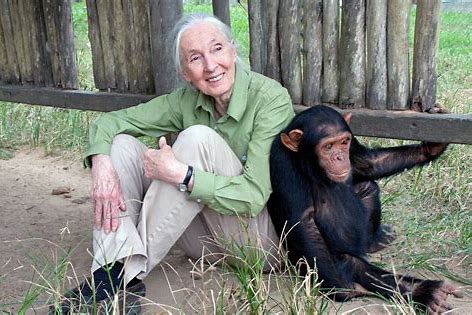
There may come a time when someone wanting to continue as an active and productive member of society becomes a nuisance, an embarrassment or worse. But this is not inevitable. Older people can have much to contribute due to their long experience of life, and it is a mistake to underestimate them on grounds of age. The English environmentalist and chimpanzee expert Jane Goodall recently undertook a lecture tour around the world at the age of 90, and I’m told that her presentation in Auckland was inspiring.

Jane Goodall with a chimpanzee

Thoughts on later life

“…we believe a full life is one that gets richer with age … rediscovering lost passions and plunging headfirst into new ones … embracing new experiences … bringing joy and meaning to every moment.” This is a shortened version of the text on the website of Ryman Healthcare. Is it realistic to expect old age, whether or not in a Ryman retirement village, to be so idyllic? Or is it more likely to be dominated by adversities such as loss of health and vitality both mental and physical, lack of occupation, reduced income, bereavement, loss of status, social isolation, and the prospect of death whether feared or welcomed? I expect it depends a lot on individual attitude.

Quite a number of my own contemporaries have died before reaching old age, having for no apparent reason developed some fatal disease, usually cancer. Others are still alive and during my recent holiday in England I had the pleasure of renewing friendships with some of those I have known for a long time – from high school, medical school, or hospital jobs in Southampton and Oxford. Since coming back home I have also met up with my New Zealand friends. Our conversations often touched on the question of how to adjust to retirement.

Almost all of us, in our 70s or 80s, have the good fortune to be living in comfortable circumstances with reasonably good health, family connections and ample money, allowing plenty of choice about how to spend our free time after leaving paid employment. My friends described a wide range of activities including charity work, looking after grandchildren or animals, gardening, travel, socialising, entertainments, reading, writing, cooking, painting, crafts, sports, fitness classes, music, academic study, spiritual practice.

Everyone seemed fairly content, especially those who were pursuing some compelling interest, or simply enjoying the freedom to relax and do just what they liked. Others, more introspective, found their lifestyle pleasant enough but questioned whether they were making the best use of whatever time might remain. Some were missing former jobs which had involved contributing to society and being recognised for it. They had not been able to find a type of voluntary work which made full use of their abilities and experience.

One woman who is highly artistic stated that the most vital thing was to express creativity, if only for oneself. I agreed that creativity is very important but felt that the resulting products should be shared with others. There is an example of these differing views at home, where my husband and I both spend a lot of time writing. He does it primarily for his own satisfaction and does not care much whether anyone else ever sees it. In contrast, I like to publish my work in the hope that some readers will benefit from my medical books or enjoy my novels – while trying not to be too flattered by good reviews or too upset by bad ones, for the Stoic philosophers advised against seeking appreciation. They said that the best way to live – at any age – is by striving to be a good person, and focusing only on things you control.

“No good deed goes unpunished”

Actions intended to benefit other people sometimes backfire. They may be perceived as interfering and controlling, or even have tragic results.

I’ve been thinking about this since watching a brilliant performance of Verdi’s Il Trovatore by NZOpera and the Auckland Philharmonia Orchestra. In the melodramatic plot, set in fifteenth century Spain, Count di Luna is obsessed with the heroine Leonora. But she is in love with Manrico the troubadour, and spurns Luna’s advances. There is bitter rivalry between the two men and eventually Luna gets Manrico imprisoned and condemned to death. Leonora, in what she sees as a noble sacrifice, offers herself to Luna if he will spare Manrico’s life. But when Manrico learns of Leonora’s plan, instead of being grateful he is disgusted and appalled, and denounces her. Meanwhile, rather than give her body to Luna, she has taken poison. Manrico is executed, and Leonora dies.

The old adage “No good deed goes unpunished” often applies in real life. During 2020 and 2021, the New Zealand government responded to the pandemic by imposing a strict system of lockdowns, mandates and border closures to protect the health of the population. These well-intentioned policies did limit illness and death from Covid in the short term, and gained admiration from around the world. But were they justified when weighed against the long term costs? Businesses failed, unvaccinated workers lost their jobs, other diseases went undiagnosed and untreated, old people were confined indoors and prevented from seeing their relatives even when they were dying. Despite continual exhortations to “be kind”, ugly rifts developed between those who supported the restrictions, and those who resented losing the freedom to direct their own lives.

On a more everyday level, think of the dinner guest who volunteers to do the washing up, only to put things away in the wrong place and break the host’s favourite mug.

My conclusion? It’s good to offer help to other people – but only if it’s done with unselfish motives and if they want to be helped.

Book review “Happy: why more or less everything is absolutely fine” by Derren Brown

My rating: 4 of 5 stars

I have been an admirer of British illusionist Derren Brown since watching his brilliant and controversial TV shows such as “Miracle” and “Sacrifice”. He is also a writer and when I learned that he shared my interest in Stoicism, and that this informed his book Happy: Why more or less everything is absolutely fine, I was keen to read what he had to say. It’s a big book, ambitious and sometimes provocative, spanning a wide range of topics. The style is fluent and engaging, though tends to ramble at times.

I very much enjoyed the potted history of philosophy and psychology, the critical appraisal of the self-help industry, and the practical guidance on modern applications of Stoicism in Parts One and Two. I would have given 5 stars if the book had ended there but was less impressed with Part Three, in which Derren presents his views about death and dying and argues against the existence of an afterlife. Reference to the work of the many thinkers and researchers who have studied these fields, and to others’ contrasting experiences and beliefs, would have made these chapters more balanced and helpful.

Reservations aside, this is an original and stimulating book that can be recommended for serious readers seeking a fulfilling life.


View all my reviews

Stoic perspectives on death and bereavement

New Year’s Eve 2020 was the fifth anniversary of my mother’s death. I have finally destroyed her personal papers (see my earlier post) but the memories, both happy and sad, remain. Many other relatives and friends of my husband and myself have also died in recent years, and we are getting old ourselves. I had a lot of professional exposure to death and bereavement during my medical career, but the personal experience is very different. I’ve been exploring what the ancient Stoic philosophers had to say about this subject, hoping it may prove helpful for coping in future. The Stoics believed in facing up to death as a natural process which is nothing to be afraid of.

A central tenet of Stoicism is that only our own judgments and voluntary actions are “up to us”. Other aspects of life are not, and although some of these “externals” are to be preferred over others, they are best regarded with indifference. Death, an external that is inevitable for all living things, is only bad if we consider it to be so and sometimes may be welcome.

Epictetus: Death is a release from and an end of all pains: beyond it our sufferings cannot extend: it restores us to the peaceful rest in which we lay before we were born.

The Stoics believed that the timing and manner of death, random and cruel as it may seem, is determined by fate and not up to us. This is less true now that advances in medical science have enabled more control over health and longevity than was available to the ancient Greeks and Romans, but much unpredictability remains. We and those close to us are all going to die one day – maybe tomorrow. Frequent contemplation of this prospect (the Stoic practice of memento mori), is not intended to promote morbid obsession, but to emphasise the importance of making the most of the “festival of life” every day, not wasting time, and appreciating our loved ones while they are still here.

When a loved one dies there will inevitably be distressing reactions such as shock, grief and anger. While negative emotions in the short term are natural, the Stoics advised aiming to move on as soon as possible towards a calm acceptance of the person’s death; continuing to remember them often, but with love and appreciation rather than with sorrow.

Seneca: Thinking of departed friends is to me something sweet and mellow. For when I had them with me it was with the feeling that I was going to lose them, and now that I have lost them I keep the feeling that I have them with me still.

This approach will appeal to some people, while striking others as unrealistic or heartless. It is rather different from today’s prevailing view of mourning as a gradual process of working through the “stages of grief” over many months, perhaps with the aid of bereavement counselling. Everyone is different, and the best way of coping depends on individual personality and circumstances. One idea I have found helpful myself is to think of the deceased as having been “reclaimed by nature”, as all living things will be one day, rather than “lost”.

Epictetus: Is your child dead? It has been given back. Is your wife dead? She has been returned.

What about the soul or spirit, and the question of an afterlife? As I understand it the Stoics believed that death is probably followed by the same oblivion that existed before birth, and that individual immortality is unlikely.

Marcus Aurelius: Just as on earth, with the passage of time, decaying and transmogrified corpses make way for the newly dead, so souls released into the heavens, after a season of flight, begin to break up, burn, and be absorbed back into the womb of reason, leaving room for souls just beginning to fly. This is the answer for those who believe that souls survive death.

***

Jennifer Barraclough, originally from England and now living in New Zealand, is a retired doctor and a writer of medical and fiction books. A list can be found on her author pages: https://www.amazon.com/Jennifer-Barraclough/e/B001HPXGZI (US) and https://www.amazon.co.uk/Jennifer-Barraclough/e/B001HPXGZI (UK).
Stoicism for writers and healers

I’ve been reading some basic books about Stoic philosophy, which originated in Ancient Greece and Rome, and describes a path to a good and happy life lived in harmony with others and with nature. It has much in common with other systems and many of the ideas were already familiar to me from Buddhism, Christianity and modern psychological therapies, but it is refreshing to have them presented in clear practical terms. Here are a few thoughts from a novice student of Stoicism.

One of the principles stated by Epictetus (50-135 AD) resonates strongly with me. He wrote that “some things are up to us and some things are not up to us”, so it follows that we are well advised to focus only on what is within our control – which includes very little except our own judgements and behaviours. This may sound simple and obvious (and the “serenity prayer” of St Francis, which I have heard so many times, says something similar) and yet I am certainly not alone in having wasted much futile effort and distress over things which I have no power to change. Applying this principle would avoid many of the hassles of daily life, such as frustration in a traffic jam or irritation with an untidy workmate. It is also relevant to both the two fields – writing and medicine – in which I have spent my career.

As a writer it is up to me to make my books “the best they can be”, to choose whether to submit them to traditional publishers or to publish independently, and decide how much time and money to spend on marketing. But whether people want to buy my books, and whether readers like them, is not up to me. So there is no point in getting upset over rejection letters, lack of sales or negative reviews – in theory. In practice, overcoming the desire for external validation and becoming more tolerant of criticism requires mental discipline and training.

Turning to the medical field, again there is a dichotomy between what is “up to us” and what is not in relation to physical health. We can make choices about many aspects of our lifestyle and behaviour, such as diet and exercise, in the hope of preventing or recovering from disease. But there is no guarantee that our efforts will be successful, and nor can we change some of the other factors such as our genetic susceptibilities, exposure to pathogens in the environment, the inevitable deterioration of our bodies as they age. The dichotomy between what we can or cannot control is not always acknowledged. Some put all their faith in external treatments with drugs and surgery, and ignore what patients can do to help themselves. Others advocate total personal responsibility for health, and risk making patients feel guilty for being ill. Both extremes are potentially dangerous.

There is of course much more to Stoic philosophy than this and, having enrolled in the annual online event Stoic Week which is about to start, perhaps I will write more blog post(s) on this subject.

The fascination of crime fiction

clint-mckoy-5gJKQhkzO2g-unsplash

Foxglove: one of the poisonous plants featured in Agatha Christie’s novels. Photo by Clint McKoy on Unsplash

Crime and mystery novels rank among the most popular of fiction genres today. The many subdivisions – the traditional, police procedural, psychological thriller, cosy mystery, historical crime – almost always have murder as central to the plot. Why do so many people, most of them pleasant and law-abiding in real life, enjoy writing or reading about this gruesome topic? Whereas cruelty towards animals in books and films is widely considered unacceptable, and rightly so, cruelty towards humans is seen as fair fodder for entertainment.

An obvious reason, though perhaps not the most important one, for the appeal of crime fiction is the intellectual challenge of solving a puzzle. This is clearly so for the old-style “whodunnit” which often involves the discovery of a dead body in a closed setting, such as a country house hotel, where each of the people present is found to have a motive for murdering the victim. One or more other deaths may follow. A detective, amateur or professional, eventually nails the culprit – usually the most unlikely suspect – with the aid of clues which have been scattered through the text, along with a few “red herrings”. The solution must not be too obvious but, in theory, a clever reader should have been able to work it out. The story will have a neat resolution, with the truth being revealed and justice restored.

Variations on this basic formula are still used by some modern crime writers but the trend is for longer books with more subtly and complexity . In psychological thrillers, the interest lies not so much in solving a mystery as in exploring the criminal’s character and motivation. Sometimes the murderer’s identity is obvious from the start, though there will usually be a surprise twist at the end.

Crime fiction appeals on the emotional level well as the intellectual one. Perhaps it offers an acceptable channel for expressing feelings that in civilised society are usually suppressed – for example jealousy, greed, hatred, desire for revenge, obsession with evil and death. PD James said that all the motives for murder are covered by four Ls: Love, Lust, Lucre and Loathing. Whereas in real life the majority of crimes are committed by men, it is notable that many writers and readers of crime fiction are female, including some highly respectable mature women. Maybe crime fiction offers them a “safe space” to express the shadow side of their personalities.

Is crime fiction just harmless entertainment, or does it influence readers’ attitudes towards murder, whether acting as a deterrent or even encouraging the occasional person to commit one themselves? Novels at the lighter end of the spectrum, by presenting a sanitised picture of unnatural death and treating its investigation like a game, tend to trivialise the topic. More serious ones, which provide graphic forensic detail and authentic descriptions of police and court procedures, might help anyone who is planning a crime to select a method and escape detection. Similar concerns apply to crime movies and TV shows, which reach a wider and less discriminating audience than most novels do. But leaving such concerns aside, I continue to enjoy reading, writing and watching stories about crime.

Jennifer Barraclough is a retired doctor, originally from England but now living in New Zealand, who writes medical and fiction books available from Amazon.com, Amazon.co.uk and other online retailers, or from bookshops and libraries.