“Across a Sea of Troubles”

Following on from my previous post about Writing a medical memoir, here is a short extract from my new book Across a Sea of Troubles.

***

“I don’t feel very well,” said my husband Brian, and slumped down on a nearby chair. His eyes were rolling upwards so that the whites were showing, and his face was very pale.

I said “I’ll call the ambulance.”

“No.”

It was a fine spring night and we were on Devonport Wharf, having just got off a late ferry from downtown Auckland. We had been attending a ballet performance of A Midsummer Night’s Dream with my mother, Clare, in celebration of her recent 91st birthday. It had been a pleasant relaxing evening and Brian had seemed perfectly alright at the theatre, but now he looked very ill indeed.

Again I proposed the ambulance, and again Brian refused, insisting that he wanted to go home. I looked around for assistance but we were alone on the wharf, my mother having gone on ahead to her own house with some neighbours we had met on the ferry.

I helped Brian onto the bus which took us halfway home, and while we slowly walked the rest of the way, I supported him as he swayed from side to side and had to keep stopping to rest.

At last we reached our house. I turned the key in the front door. As it swung open, Brian fell against it and collapsed unconscious in the hall.

I rang 111. The operator asked me a few questions and told me to check the pulse in Brian’s neck; it was around 200 beats per minute and irregular. She said that help was on its way. Meanwhile Brian had woken up and I sat beside him on the floor until the St John ambulance arrived.

The two ambulance officers helped Brian to move onto a couch, inserted a venous cannula into his arm, and ran an ECG which showed fast atrial fibrillation with left bundle branch block and ischemic changes. After making a telephone call they put up a drip and started an infusion of amiodarone, a drug that slows the heart rate and is used for the control of cardiac arrhythmias.

Brian, having a medical background, was apparently taking a detached interest in the proceedings. But when it became clear that preparations to take him to hospital were underway, he said “I’m not going.”

The senior ambulance man told him “You’re probably going to die if you don’t, mate.”

Brian continued to refuse, until I kneeled at his side and begged him to accept any treatment which might save his life. Then he suddenly said “Oh, alright.” Afterwards, he told me that he had not felt any pain or distress and would not have minded dying.

The local fire brigade came to help carry Brian down the garden steps and into the ambulance, and we set off on the first of the six urgent visits to North Shore Hospital that I was to make over the next few months.

***

Links to book: Smashwords, Amazon US, Amazon UK.

ast-smashwords-cover

Sugar


Guidelines for “healthy eating” come and go. At one time we were advised to avoid fat, now it is said that certain fats are extremely valuable. There are conflicting views about whether such foods as meat, dairy and legumes are good to eat. But one thing on which most of today’s experts do agree is that sugar is extremely bad for the health, and contributes to diverse forms of chronic disease.

Many authorities are now telling us to give up refined sugar completely, although a moderate intake of naturally occurring sugars such as fructose in fruit is okay. I don’t presume to question their advice, which is based on good evidence from large population studies. But there are always individual exceptions to general rules – consider for example the case of my friend Jenks.

Jenks is about to celebrate his 104th birthday. A widower, he lives alone and independently in his own house in England. Every year he flies, on his own, to New Zealand to visit his daughter. He cannot walk very well, but otherwise he is in good physical health and is not overweight. His mental faculties are intact and he uses the internet to keep in touch with the outside world. He has a calm and cheerful temperament.

Jenks has a hearty appetite and has loved sweet foods all his life. In England, besides the main meal of the “meat and two veg” variety which is delivered to his home each day, he eats plenty of processed cereals, biscuits and cakes, fruit juice, fruit tinned in syrup, milk chocolate, cakes and sweets. He takes sugar in coffee and tea. He also enjoys cheese and wine.

His daughter has been keeping a record of his diet while he is staying with her in New Zealand, and here is a typical day’s entry:

Breakfast: Apple juice, Muesli type cereal with milk, Toast and jam, Coffee with 1 sugar, Nectarine

 Mid-morning: Coffee with 1 sugar, 2 sweet biscuits

 Lunch: Bread, crackers & cheese

 Afternoon: Tea with 1 sugar, Cake, Biscuit

 Dinner: Fish & chips, Passion fruit, Chocolate, 2 glasses wine.

In between meals he will have eaten nibbles of sweets, dried fruits and nuts. He has a secret stash and tucks in on demand. 

Most people who ate like this every day without taking any exercise might be expected to become obese and diabetic and die from heart disease long before the age of 104. But not Jenks. Perhaps, as my late mother-in-law was fond of saying, “It’s all in the genes”.

Soldier’s heart, shellshock and lack of moral fibre

When I was unwell last year, my husband Brian explained my symptoms in military terms: “You’ve been in the front line, and now you’ve got shell shock.” Brian had researched this condition while editing A Physician in Spite of Himself, the autobiography of DW Carmalt Jones who was in charge of a shell shock hospital during World War 1.

Stressed and exhausted by dealing with a series of medical and surgical emergencies in the family, I had developed a variety of symptoms. Repeated attacks of rapid irregular heart beat and breathlessness accompanied by high blood pressure, on two occasions so severe that I was taken to hospital by ambulance. Separate episodes of feeling very cold, or very hot, shaking all over, or suddenly feeling drained of energy and having to lie down. Loss of appetite and weight. Insomnia. The symptoms were  mainly of a physical nature, but various medical tests did not indicate a definite diagnosis. As a former psychiatrist I knew they might be due to anxiety and depression, but a trial of antidepressant drugs made me worse.

Syndromes of this kind can be triggered by any sort of traumatic experience, especially when there seems no scope for controlling the situation or escaping from it. Most of the early descriptions were carried out on servicemen exposed to great physical and emotional stress in wartime. In the American Civil War, men who complained of palpitations, chest pain, shortness of breath and fatigue but had no signs of organic heart disease were said to have “soldier’s heart”. Other terms included da Costa’s syndrome, cardiac neurosis, and neurasthenia. In World War 1, the condition of “shell shock” could include symptoms in many different bodily systems, for example headache, tremor, confusion, nightmares, loss of balance, impaired sight and hearing, as well as the cardiovascular symptoms listed above. Some sufferers received no sympathy or understanding, being accused of cowardice or malingering and punished by firing squad. Others were sent to field hospitals for a brief period of sleep, food and graded exercise before being returned to duty. In World War 2, British airmen who refused to fly on bombing missions were labelled as “lacking moral fibre” (LMF) and usually demoted to menial jobs. Some of these men would have been suffering from the type of illness described above, others just could not bring themselves to take part in the killing of civilians. LMF was highly stigmatised, and concealed as far as possible, so that when I came to write something about it in my novel Blue Moon for Bombers I found little published information. In more recent conflicts, notably the Vietnam war, attitudes were more sympathetic and it became more acceptable to talk about the psychological side of these conditions. The concept of “post-traumatic stress disorder” (PTSD) was born, and continues to generate a great deal of interest and research.

Body and mind are interconnected, and patients with stress-related illness usually have some combination of physical and mental symptoms. For this reason the orthodox medical system, in which the different specialties are separated, may not be well placed to meet their needs. Patients who present with mainly mental symptoms would often be diagnosed as having PTSD and referred to psychiatrists or psychologists, perhaps without having a medical evaluation to exclude the organic pathology that will in fact be present in some cases. Patients for whom physical symptoms predominate might find their way to cardiac, respiratory, neurological or other specialist clinics, and if no organic disease is found the psychological aspect may not be taken seriously if it is recognised at all. The plethora of terms that have been used for such conditions over the years – psychosomatic, functional, medically unexplained, somatoform, and many more – suggests the difficulty of understanding and managing them. Many patients turn to alternative therapies for a more holistic approach.

There is no specific treatment although different medications, psychological therapies and natural remedies prove helpful for individual patients. Sometimes the illness becomes chronic so I was fortunate that my own symptoms recovered within a year, with support from kind relatives and friends, orthodox and alternative healthcare professionals, and an improvement in my life situation.

Only a minority of people who are exposed to severe stress will develop a stress-related illness. Those who do may well feel ashamed about being over-sensitive and lacking in resilience, as I did myself, even though I have chosen to go public by writing about it in this blog and in a memoir called Across a Sea of Troubles.

Reflections about caring

This post is an extract from a work in progress, a memoir about the traumatic events that affected my family last year. If you have suggestions about how to make it more readable or relevant, please leave a comment below.

I found that looking after my husband following his heart surgery, and my mother during her last illness, was highly stressful even though it only lasted a few months and involved very little heavy hands-on work. The carers of patients who are disabled or demented must have far more arduous and prolonged ordeals to endure. The experience certainly made me appreciate the challenges of the caring role, with its somewhat uneasy combination of duty and privilege.

Studies from the cancer care setting indicate that levels of emotional distress among patients’ partners are similar, in both frequency and severity, to those for patients themselves. This is not surprising, considering that besides feeling sad and anxious about their loved ones, partners are often physically exhausted by providing practical care and running the household on their own.

There is a sensitive balance between attending to the sick person and meeting one’s own needs. Self-help authorities often say “Look after yourself first, or you will have nothing to give to other people”, usually quoting the airline safety message about putting on your own oxygen mask before assisting anyone else. This is sensible advice, but it can be difficult even to find the time for basic self-care, let alone take a break to enjoy something purely for fun or pleasure. One afternoon when Brian was in hospital, I found myself with half an hour to spare between appointments in the city, and impulsively decided to get a manicure. This frivolity gave a short boost to my morale, even though when I visited Brian in the evening he remarked that my bright pink nails made me look like a whore.

When my mother’s health was failing I discovered what a fine balance there can be between providing help and support that is appropriate to the patient’s needs, and seeming to be interfering with their independence and autonomy. Ideally it is best to check what the patient wants, rather than assuming you know what is good for them. But this does not always work, for sick people can make irrational choices, keep changing their minds, or be incapable of expressing their wishes, in which case the carers can only try to be tolerant.

While attention is focused on the patient, the carer’s vulnerability is not always appreciated, and I felt this a couple of times. A friend of the family sent two beautiful hand-painted cards, one for Brian and one for Clare, but did not send one to me nor mention my name on the messages inside. I did not blame her for leaving me out – I might well have done the same in the past – but, being at a very low ebb at the time, could not help feeling a twinge of self-pity. On another occasion, I phoned the hospital about 11 p.m. and asked to be put through to the ward where my mother was dying. The ward nurses had told me I could ring at any time, but the telephonist was reluctant to make the transfer, and sharply reprimanded me for calling after visiting hours.

Leaving these minor incidents aside, my relatives, friends and healthcare professionals were tremendously helpful to me both on practical and emotional levels. Research consistently shows that good social support is an important factor in buffering the adverse effects of life events, and my experience showed me that this is very true. I will always be grateful to those who took time to listen while I confided my troubles, brought meals to the house when I was too unwell to shop or cook, gave lifts to the hospital when I was too unwell to drive, or sent supportive emails from overseas.

My main confidant and support was Brian himself, and though we were close before his illness we have become even closer since. Finally, as an animal lover, I must also mention the comfort provided by the presence of our three cats.

Earthing; or, A virtual dog walk

Today I walked the length of Takapuna Beach without my shoes on. The sun was out, the tide was low, the sand was smooth and firm. Being near to such beautiful beaches is one of the best things about living in Auckland.

 Walking barefoot on grass or sand is a natural way of “earthing“. Apparently this practice causes a transfer of electrons into the body, thereby helping to neutralise free radicals and reduce inflammation, so bringing about improvements in physiology. Research is still in its early stages but there is some evidence that earthing can help with numerous conditions including pain, insomnia, hypertension, cardiac arrhythmias and autoimmune disease. Certainly I feel in better health when I walk on the beach regularly, and often get new ideas for writing while there.
For eight years I used to take this same walk once a week, rain or shine, accompanied by my mother and a dog called Khymer. Then Khymer and my mother both died, my husband and I were both ill, and I gave up doing it regularly. Now I am determined to resume the routine. Having Khymer with me only in spirit does have one advantage; I no longer have to start early in the morning to comply with local regulations about the times when dogs are allowed on the beach.

Stress and the heart

Although I used to work as a general hospital psychiatrist, I doubt if I fully appreciated the power of the mind-body connection till I became ill myself. Last year, during a prolonged period of anxiety and exhaustion due to my husband’s heart attack and cardiac surgery followed by my mother’s bowel obstruction and fatal stroke, I started to experience alarming episodes of fast irregular heartbeat, faintness and tightness in the chest, accompanied by high blood pressure. Other symptoms around this time included weight loss, insomnia, spells of fatigue, hot flushes and cold chills. Medical investigations showed a few minor abnormalities which were not regarded as very significant.

The episodes of tachycardia and hypertension continued to happen after everything else had settled down, as if they had taken on a life of their own. My husband, who has now made an excellent recovery himself, believes that being in the “front line” of so many traumatic events caused me to develop a variant of the condition described in the First World War as “shell shock” or “soldier’s heart”. Many other diagnostic labels were suggested from various sources: “broken heart syndrome” “post-traumatic stress disorder” “atypical depression” “autonomic neuropathy”. The diagnosis from a recent specialist consultation was “paroxysmal hypertension” also known as “pseudopheochromocytoma” and preventive treatment with beta-blocking and alpha-blocking drugs has been successful so far. From being barely able to cope with daily activities a few months ago I am now almost back to my usual self, but with an increased awareness of the fragility of life and health and the unpredictability of the future.

While the type of stress-related syndrome described above is not life-threatening, there are more serious cardiovascular conditions that can be partly attributed to stress. I am not an expert in “psychocardiology”, but my experiences led me to look through the research literature and I found some well-established links. These probably stem from a complex interplay between biological and lifestyle factors: over-secretion of stress hormones such as adrenaline and cortisol, and lifestyle habits such as smoking, drinking too much alcohol, lack of exercise, lack of sleep, and general neglect of self-care. For example: Coronary heart disease, building up gradually over the years, is associated not only with the well-known physical risk factors such as hypertension and high cholesterol but with psychosocial ones: long term difficulties such as being unemployed, lonely, unhappy in marriage or at work, suffering from anxiety or depression and according to some studies the personality characteristics of impatience, competitiveness, hostility and suppression of emotion. Acute traumatic events, such as experiencing the death of a loved one or being involved in an accident, can precipitate angina, arrhythmias or heart attacks (myocardial infarction caused by coronary artery blockage) in predisposed people. The risk of death from heart disease  is increased during the first year of widow(er)hood. Those who survive a heart attack, and become anxious and depressed afterwards, have a worse medical prognosis than patients whose mental health is not so affected.

Mind-body connections, though widely accepted in theory, do not always have much impact on clinical practice. It is perhaps inevitable that, in the highly specialised world of hospital medicine and surgery, there tends to be a narrow focus on the diseased part rather than a more holistic view. Staff who are expert in technological procedures may not have the time or skill to deal with the lifestyle and psychological aspects of illness, for example many cases of depression and anxiety on cardiology wards are not recognised or treated.

Most cultures regard the heart as the seat of emotion, and in the energy medicine traditions of the East the “heart chakra” is associated with love, compassion, empathy and forgiveness. Can cultivating such qualities protect against heart disease? Not only are they difficult to measure, but most studies in medicine and psychology focus on negative factors rather than positive ones. However, there is evidence that life satisfaction, optimism, and happiness lower the risk. Owning a dog, which besides encouraging regular exercise provides a reliable source of unconditional love, is also conducive to heart health. Cats apparently have less cardioprotective effect, but they do know how to demonstrate the art of relaxation.

Homer supine


Frequent attenders

As a former doctor, I know that people who frequent medical settings are often regarded as a burden on the health service, and often attract negative labels such as “fat file patients” or “heartsink patients”. Now, after many years of being reasonably well and not taking any regular medication, I fear we are in danger of entering this category ourselves. As Brian remarked today, our lives have come to resemble a medical soap opera.

The latest episode began last Wednesday. My appointment in gynaecology outpatients at North Shore Hospital finished in time for me to go over to Auckland City for the evening’s choir practice. But just as we were about to start singing, Brian called my mobile phone. He had fallen over in the garden and hurt his leg. What would otherwise have been a fairly minor injury was potentially serious for someone on the anticoagulant drug warfarin, and his thigh was gradually swelling up. A kind neighbour drove him to North Shore Hospital and I set off at top speed to meet him there.

I have become very familiar with the hospital’s car parking system and bus services, and with the layout of the emergency department. The doctor who had seen me during my episode of hypertension and tachycardia last month greeted me warmly. I also recognised the doctor who had examined my mother prior to her emergency surgery for bowel prolapse.

Brian was assessed by a highly competent nurse specialist who, having discussed his case with the consultant on call, cleaned and bandaged his leg wound and recommended an overnight stay, with two-hourly neurological observations just in case there were any signs of bleeding into the brain. Luckily there weren’t.

After another largely sleepless night for us both, I drove back to the hospital to bring Brian home. For the rest of that day he could hardly walk and was in considerable pain, but since then has been gradually recovering from this latest setback. After review with his GP, we agreed that he could now stop taking warfarin, so that is one less drug for the twice-daily medication round.

We have many more outpatient visits coming up in the next fortnight: pacemaker clinic and ECHO cardiology (Brian), abdominal CT and surgical review (my mother), hypertension clinic (me). I have also booked a session of energy healing for myself. I hope I can keep the morning free for that appointment and that it will help with my episodes of fluctuating blood pressure, heart rate and body temperature which are presumably stress-induced. Meanwhile lying on the grass with one of the cats, in this case Leo, is the best way to relax.

IMG_0661

The long and winding road to recovery

Today is a Sunday, and also All Saints Day. After many weeks of absence, I’d been looking forward to returning to St Patrick’s Cathedral to sing in the choir at 11 a.m. Mass, always an uplifting experience. But I didn’t make it. With our various family health issues still ongoing, dealing with domestic practicalities and medical appointments leaves little time or energy for anything else.

Although life is still not easy, there are plenty of good things to be thankful for. Brian is making a splendid recovery from his cardiac surgery five weeks ago – though an atheist, he talks of a “miracle”. He can go for long walks on the beach; climb up and down the steep hills around our house; and do some work in the garden. The limiting factor is that he cannot yet lift heavy weights, because it will be three months before his divided sternum will be fully healed. Nor, because of the pacemaker insertion, can he raise his left arm above shoulder level. His mood is cheerful, and there is no sign of the cognitive impairment which he feared might follow such a massive operation. Having reached the age of 82 without being on any regular medication, he is now on five different drugs, which are presumably necessary at present though we hope some of them can be discontinued in future.

Meanwhile, the health of my 91-year-old mother has become the main focus of care and concern. Now home from hospital following emergency abdominal surgery, she is making a good recovery from the operation itself, and striving with great determination to cope with independent life again. But there are problems with managing her ileostomy and I only hope a satisfactory system can be worked out, and that it will be possible to reverse the procedure in a few months time.

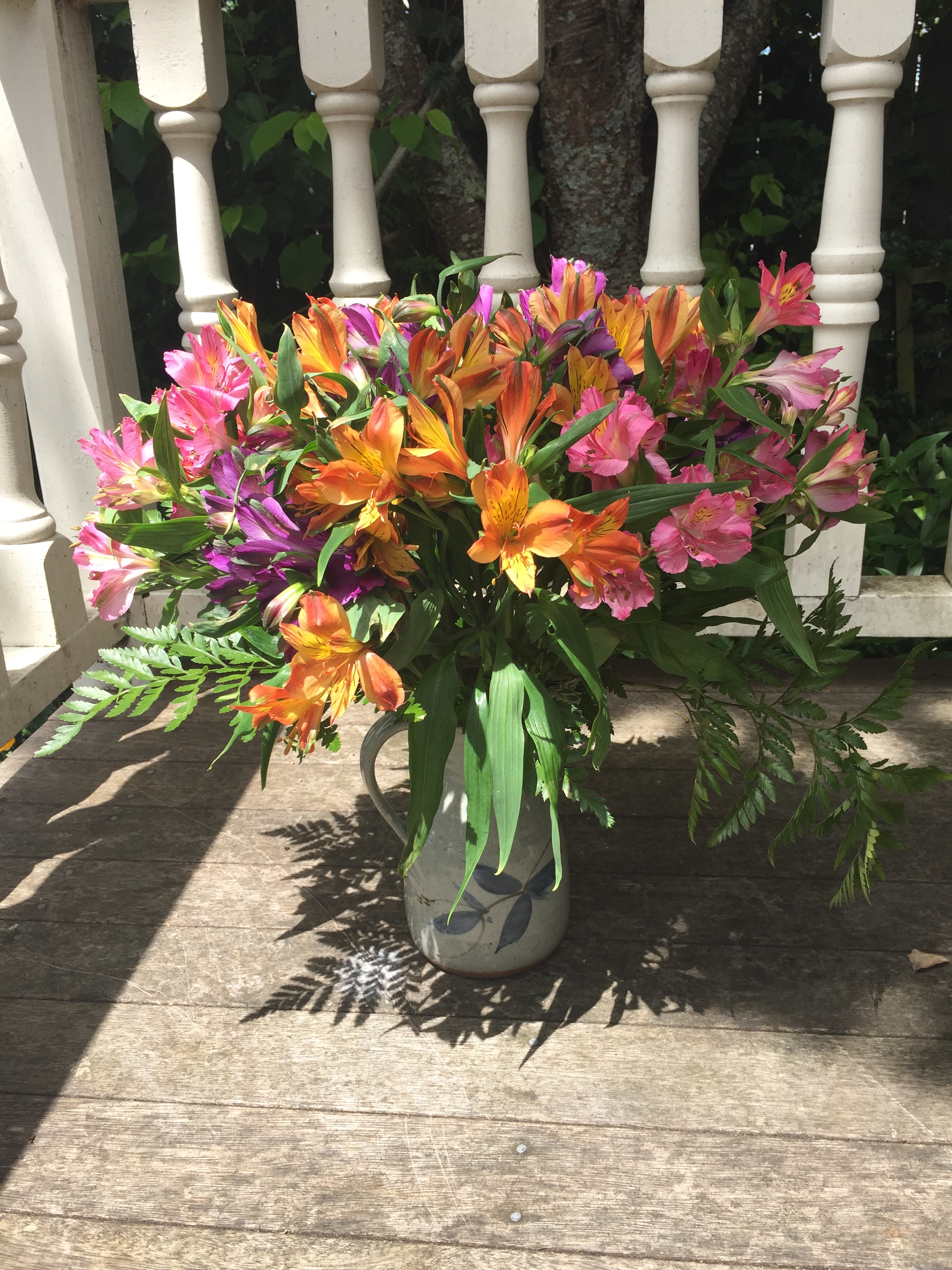
My own symptoms continue on and off, and while further investigations are in progress I try not to worry about them too much. Friends and family continue to be wonderfully supportive and we have greatly appreciated all the messages of support, the lifts to hospitals, and the gifts of food and flowers including this lovely bouquet from the Cathedral Choir.

Flowers from choir

Why troubles never come singly

Just as our lives were beginning to settle down, with Brian recovering from his heart surgery and its subsequent complications, our household was hit by another health crisis. A few days ago Clare, my 91-year old mother who lives next door, developed acute abdominal symptoms. For the third time in recent weeks I called the emergency ambulance, and for the third time spent most of the night helplessly keeping watch by the hospital bedside of a desperately ill relative. The surgeons were doubtful whether Clare could withstand the operation which would be necessary to save her life. I pressed them to try, for the alternative would be an agonising and undignified death, but they were reluctant to attempt such a major procedure in the middle of the night. Meanwhile repeated large doses of morphine and other drugs were failing to control Clare’s pain, nausea and distress, though eventually the anaesthetists performed an epidural which brought her some relief.

There was better news next morning. The surgeons did decide to operate, and Clare survived the removal of large sections of necrotic bowel. So far – though it is very early days – she is making good progress in hospital.

It seems incredible that our lives, so contented and well-ordered for the last few years, have been suddenly disturbed by this sequence of traumas. Sayings such as “troubles never come singly” “it never rains but it pours” and “bad things come in threes” suggest that negative events do have a tendency to cluster in time. I noticed this when I carried out my own research study to investigate “Life events and breast cancer prognosis” which involved repeated interviews with over 200 women over a three year followup. While some of these women reported very few happenings during the study period, there were others who experienced a whole series of disasters. Sometimes it was possible to identify a chain of events leading on from one another. Sometimes all the events seemed to stem from one single cause, which in some cases appeared to involve the personality and behaviour of the person concerned. Few of the events could be considered totally independent from those who experienced them.

Were the recent misfortunes of our own family linked, part of a cascade of events beginning with Brian’s heart attack? I have always tended to be sceptical of the theory that most illness is due to “stress” (the results of my own study, cited above, gave no support to the popular notion that stressful life events promote the growth of breast cancer). But there is no doubt that psychological stress can lead directly to imbalances of the body’s neurological, endocrine and immune systems, as well as to impaired self care due to missed meals and lack of sleep. I have no doubt that anxiety, overwork and exhaustion since Brian became ill have contributed to my own recent health problems of high blood pressure, sinus tachycardia, a posterior vitreous detachment of the eye, and delayed healing of biopsy wounds.

“Stress” is not the only possible explanation for the clustering of events, and maybe there are also metaphysical causes. According to the Law of Attraction, negative thoughts and feelings in response to adversity are likely to result in more of the same. And an astrologer friend, who like me was born under the sign of Aquarius, has cited “the ghastly Saturn square Pluto events which have befallen Aquarians of late”. I am trying to “take one day at a time” and appreciate good things like the spring roses blooming in our garden.

big pink rose

My husband’s heart Part 3: Cardiac rehabilitation

Over two weeks have gone by since Brian had his open heart surgery, and it is one week since he was discharged from inpatient care.

We are both very happy that he is back home, though there continue to be ups and downs in his condition. During good periods he is able to walk short distances both inside and outside the house, and to eat reasonably well. However he has relapsed into atrial fibrillation on several occasions, and a recent blood test showed him to be anaemic. At times he feels weak and breathless and is unable to get warm. Formerly an avid reader, he has no interest in books at present, though he does follow the news on his computer.

We were advised that recovery from such a huge operation takes about three months, so perhaps cannot expect too much too soon. His medication – currently including amiodarone, warfarin, aspirin, an occasional beta blocker – will be reviewed by the cardiologist next week.

After the previous month of acute anxiety combined with frantic activity – travelling to and from the hospitals to visit Brian every day while managing practical, legal and financial affairs at home and dealing with medical appointments for myself – my own life has entered a quieter domestic phase. My role as nurse-housekeeper is not unduly arduous, so I am catching up on lost rest and sleep. Brian and I have time to spend together in a relaxed way talking, listening to music, or watching the four cats in the garden.

Daisy with flowersLeo on gatepostMagic on plum tree best photohomer at feijoa tree

All the regular engagements which once provided structure to my weeks – singing with St Patrick’s choir, volunteering at Auckland SPCA, attending Auckland Film Society, dog walking on Takapuna beach, coffee dates with friends in the city, yoga class – have been cancelled for the time being. The activity which means the most to me, creative writing, is also on hold. Apart from this blog and emails to friends I have written nothing for six weeks, but look forward to getting back to editing my new novel soon.