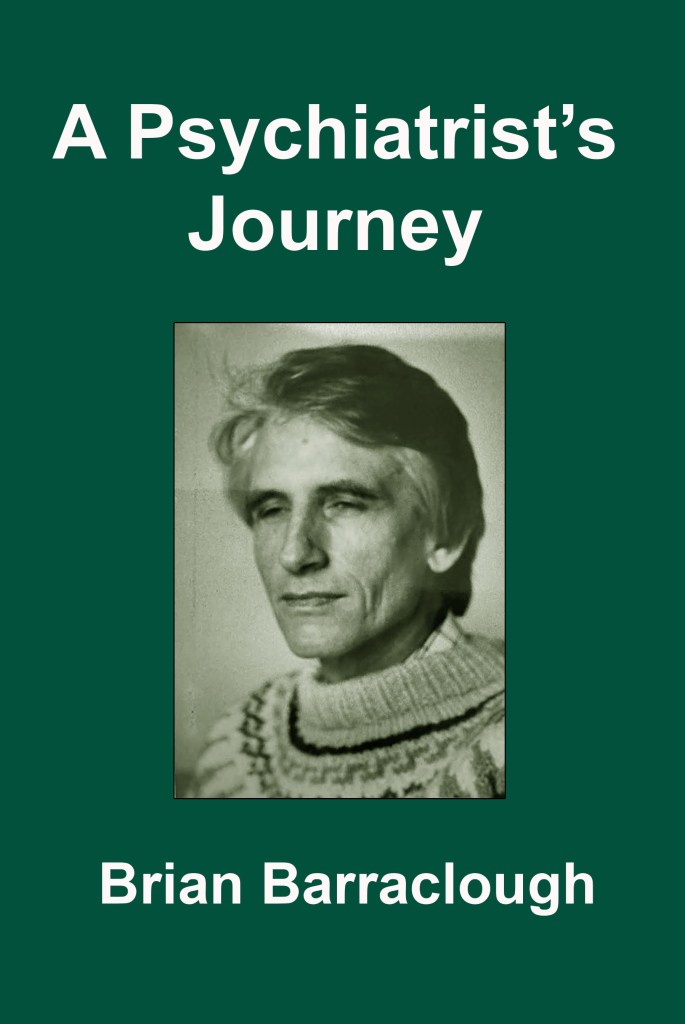
Following the death of my husband Brian, the task of editing the memoir that he had asked me to complete has been a bittersweet experience. His book has now been published under the title A Psychiatrist’s Journey and is available in ebook or print versions from many online retailers: https://books2read.com/u/4NzOJN.
A long detailed account of Brian’s varied and productive life, it’s not intended for a wide commercial market but should appeal to people with an interest in the history of medicine and psychiatry, those who grew up in 1930s Auckland, and those who knew him personally. Taking over this project, which was so important to Brian, has been a big responsibility and I hope I’ve done it justice.
I left the wording almost exactly unchanged, resisting any temptation to add things in or take things out, except where clarification was needed or information was repeated. My main change involved reorganising the document into shorter sections, adding headings to make it easier to read and to navigate. It needed many minor copy edits such as standardising the use of capital letters and the format of abbreviations. I made some use of tools like “search and replace”, but they can introduce errors and anyway it was a labour of love which I preferred to do myself by hand. I did employ help with the layout and illustrations from a colleague who has worked with me on previous books. I didn’t use AI.
A short blurb:
“A candid memoir by Brian Barraclough (1933-2025), best known for his research on psychiatric and social aspects of suicide. His book covers growing up in New Zealand, having tuberculosis aged 17, training as a doctor at the University of Otago, practising general medicine in Christchurch and psychiatry in Dunedin before sailing to England as a ship’s surgeon. He worked at the Maudsley Hospital in London, the Medical Research Council unit in Chichester, and the University of Southampton before retiring back to Auckland. His book describes many memorable patients and colleagues and his wide leisure interests including art, European travel, and medical history.”
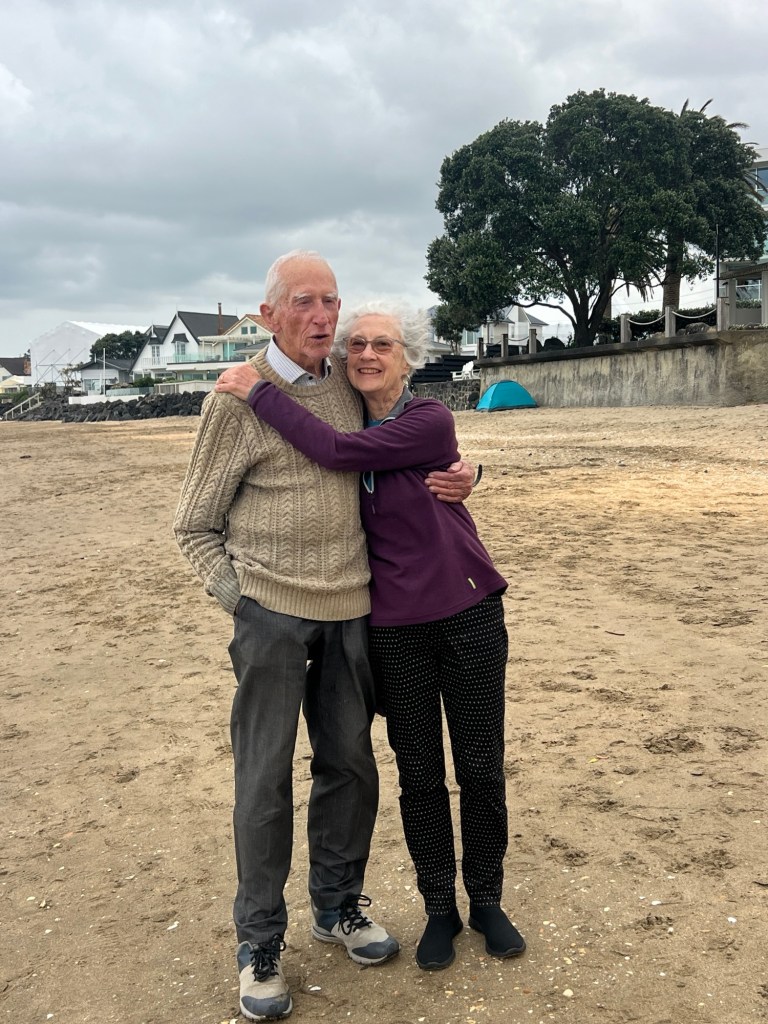
My husband Brian is in hospital. Over recent months he’s been developing a complex, fluctuating mix of physical and mental symptoms. He has been very ill and spent about two weeks on a medical ward before being transferred to a unit for older people, where he is improving, and benefiting from activities – both of us took part in a bowling match (!) and have taken trips to the beach.
My days have taken on a new pattern – in between spending long hours with Brian at the hospital dealing with the house and garden, the cats, my own healthcare appointments, responding to emails and texts. I’ve continued my exercise classes and choir practice, but otherwise am not doing much. There’s no time for socialising and I lack the concentration for any serious reading, writing or other constructive activity. But I am coping better than I did during the similar stressful period ten years ago when Brian had major cardiac surgery and I developed a range of stress-related problems (I described that experience on this blog and in a short book).
We hear a lot of complaints about New Zealand’s hospitals in the media, but Brian has had excellent treatment. The kindness and patience of the staff, including especially the health care assistants, has been wonderful. I hope Brian will be well enough to come back home soon, so we can pick up the threads of our previous life, and it will be important to complete and publish his new book about his long medical career.
I’m pleased to announce the publication of my latest short novel No Good Deed.
“Charlotte and Henry’s quiet retirement is upended when a medical school reunion forces Charlotte to confront a long-buried trauma. Her search for closure takes a sinister turn, and meanwhile Henry’s heart condition is getting worse. A tragicomic tale with a chilling final twist.”
The old saying “No good deed goes unpunished” gave me the idea for this book, and the storyline evolved gradually over a year or two. Although it’s not directly autobiographical it draws on my experience as a medical student, practising doctor, patient, patient’s wife – and life coach. It touches on some serious themes but has humerous aspects too.
No Good Deed is available in ebook or print formats from multiple online retailers. Please have a look: https://books2read.com/u/b5Exvk.
Some years ago, a local Italian restaurant displayed a placard reading “A day without wine is a day without sunshine”. That message would probably attract disappproval nowadays, when there are so many warnings about alcohol-related damage to health. While the risks and benefits of drinking continue to be disputed I continue to have a glass of wine with dinner on most evenings, though I intend to give it up for Lent.
Image from Unsplash
In 2022 the World Health Organisation (WHO) published a statement in The Lancet to the effect that no level of alcohol consumption is safe, primarily because even small amounts can promote cancer growth. However many published studies have reported that light to moderate drinkers have lower mortality than teetotallers, and a reduced incidence of cardiovascular disease, diabetes and dementia. The research methods have sometimes been criticised and the evidence is conflicting. Perhaps it is too difficult to generalise because the effects of drinking vary so much between populations, and between individuals, depending on genetic makeup and lifestyle factors.
Heavy drinking is obviously harmful and people who are pregnant, have a history of alcoholism or of certain medical conditions are advised not to drink at all. But for those of us with no contraindications, any risks of light-to-moderate intake (up to 14 units a week) must be weighed against the benefits of pleasure, relaxation and sociability as well as possible cardiovascular protection. And the Mediterranean diet, widely recommended as a healthy eating pattern associated with longevity, includes red wine with meals.
After Easter I will go back to drinking wine, though not too much of it. As I get older I agree with the saying that one glass is medicine but two are poison.
***
On a different topic – nine of my ebooks are currently FREE in this year’s Smashwords sale. They are listed on the site https://books2read.com/jenniferbarraclough. Please note the promotion will end on March 8th, and only applies to the Smashwords versions – from other retailers they are still full price.
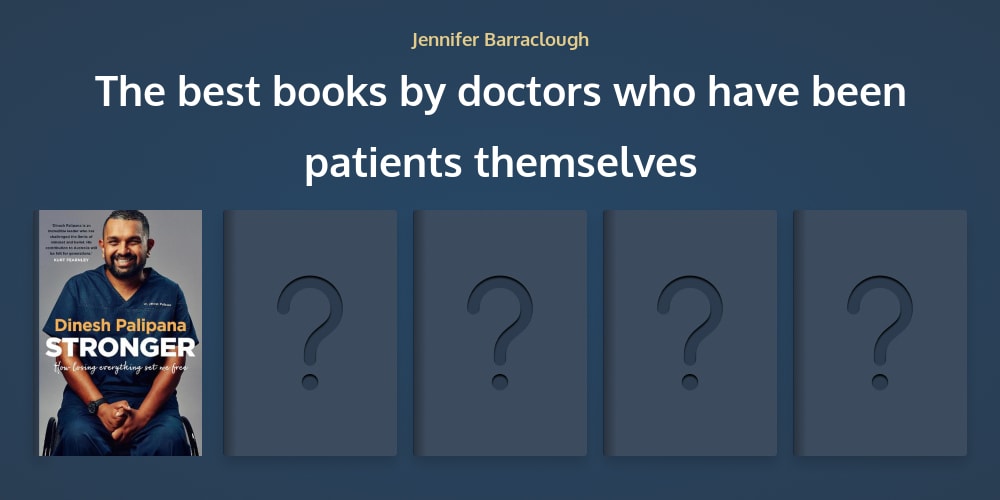
The website Shepherd.com offers readers a new way to discover books that may interest them. Each page describes one book by a contributing author, and five others on a related theme. I was invited to create a page on a theme of my choice, and having just published a memoir about my own migraine, I decided to look for books written by other doctors who had been patients themselves. I was less interested in the medical details than in the way the illness experience had shaped their personal and professional lives. I came up with a varied list of recommendations.
Doctors can face particular challenges when they become patients. The change of status may seem humiliating, as poignantly described in the saddest book on my list, by an eminent surgeon who felt himself reduced to “Just another old man with prostate cancer”. On the positive side, doctors who are still working may well become better clinicians especially as regards communication with patients and relatives. This comes through in a collection of vignettes about the everyday clinical work of a doctor with a long history of ulcerative colitis. A memoir by a medical student who was rendered quadriplegic in a car accident, but went on to qualify and build a successful career, is an inspiring read showing what determination can achieve. My two most unusual book choices are by doctors whose illness experience proved a catalyst for a move away from orthodox medicine towards alternative fields with a spiritual focus.
To see details of my list please click on the image below, or visit this page.
Although medical topics are more openly discussed nowadays, some diagnoses seem more socially acceptable than others. People are quite happy to talk loudly in cafes about their heart attacks and hip replacements, but not about conditions likely to evoke fear, disgust, disapproval – or disbelief, in cases of “invisible” illnesses that are not clearly defined or understood.
When I have been injured in falls caused by my own recklessness while playing with exuberant dogs or running on slippery rocks, other people have always been helpful and sympathetic. Such a contrast to the negative reactions I have sometimes received in relation to migraine, and I know that my experience is not unique. People who have never had an attack themselves may assume migraine to be “just a headache”, or “all in the mind”, a trivial indisposition being exaggerated to gain sympathy or avoid unwanted obligations, and brought on through the sufferer’s own fault.
Research over recent years has identified some of the genes which predispose to migraine, and some of the physiological changes that take place during attacks, and migraine is now classed as a neurological disease. But its validity is not always recognised because it is a complex condition that can present in a wide variety of ways and follow a variable course, and there is no diagnostic test. Other conditions which have a consistent symptom pattern accompanied by specific abnormalities of biochemistry, pathology or Xray, are more likely to be taken seriously.
Someone in the throes of a severe attack, prostrated by pain and vomiting, is clearly very unwell. But in between attacks they may look and feel quite healthy, so that observers cannot believe there is anything wrong with them, and do not understand why they may be trying to control their condition by lifestyle measures. For example, while it would be accepted that someone with diabetes needs to follow certain rules about diet, a migraineur wanting to avoid “trigger foods” when out for a meal risks being considered rude and fussy.
Some of the stigma around migraine may be blamed on lingering sexist attitudes within the medical profession. Historically, certain doctors labelled their female migraine patients as neurotic, hypochondriacal and frigid, while describing their male ones as responsible, ambitious high achievers. Psychoanalysts have claimed, usually without any evidence, that the attacks represent sexual conflicts or the outburst of suppressed emotions such as anger or disgust. Such theories are less fashionable now that the biological basis of migraine is established, but have not entirely disappeared.
Lastly, though I am reluctant to admit it, I believe that migraineurs themselves can play a part in perpetuating stigma. My husband has told me that my personality appears to change during attacks, and not in a good way. If this is true for me and others, maybe we unknowingly give off “vibes” that confuse and alienate people. A projection of the guilt or shame we ourselves may be feeling at these times? If we were better able to retain our self-respect, and not try to hide the attacks nor apologise for them, we might get fewer hurtful responses.
Migraine and Me: A Doctor’s Experience of Understanding and Coping with Migraine by Jennifer Barraclough is available in e-book or print versions from Amazon and other online retailers.
This is not an “anti-drug” post – I fully accept that prescribed medication is the mainstay of migraine prevention. Certain beta-blockers, antidepressants and anticonvulsants are long established for reducing the frequency and severity of attacks, and the newer CGRP inhibitors have even better results. But none of these drugs work for everyone, and all of them can have unwanted side effects. I took propranolol for many years with some benefit, but then its effect seemed to wear off. I then decided to look more closely at what lifestyle factors triggered my attacks, and to explore some complementary therapies that seemed more “natural” and gave me more choice and control over managing my health. Many of the non-drug options for migraine prevention are supported by evidence from clinical trials as well as by anecdotal reports, but the orthodox medical approach tends to focus on drug treatments alone. My new book Migraine and Me: A Doctor’s Experience of Understanding and Coping with Migraine aims to give a more holistic overview. Here is a brief summary of some of the preventive methods it describes. They do not offer a cure for migraine but, whether used alongside drugs or instead of them, they can help. Most of them are relevant to other chronic medical conditions too.
Being instructed to eat better food, get more sleep, take more exercise, stop smoking, drink less, and reduce stress can be irritating – but these deceptively simple “healthy living” guidelines can make a real difference. There are special considerations for migraineurs such as not going too long between meals, and identifying triggers in the diet and environment.
Dietary supplements which have been found effective include magnesium, B vitamins and Coenzyme Q. The herb feverfew, illustrated, is available in capsule form but the most natural way to take it is by chewing its leaves, as described in one of the case histories in my book.
Relaxation techniques can help by activating the parasympathetic “rest and digest” branch of the nervous system, as opposed to the sympathetic “fight or flight” branch which tends to be overactive in migraineurs. Relaxation is a component of many other therapies such as biofeedback and massage.
Psychological therapies may be regarded with suspicion because they are thought to imply that migraine is “all in the mind” rather than being a neurological disease with a genetic basis. I am certainly wary of psychoanalytical theories that cite repressed anger or sexual conflicts as being the cause. But more practical approaches such as cognitive behavioural therapy (CBT) can alleviate the mental distress and social difficulties that make it harder to cope with attacks and may well be exacerbating them.
Creative activity through art, music or writing is a way of processing emotions around migraine. If the results are made public, they can contribute to understanding of the condition. Some works by historical figures such as Richard Wagner and Vincent van Gogh are thought to have been inspired by the migraine experience.
These and other approaches are covered in more detail in Migraine and Me: A Doctor’s Experience of Understanding and Coping with Migraine, available in both print and e-book versions from your local Amazon site and other online retailers. Please forward this post to anyone in your circle who may be interested.
I’m pleased to announce that Migraine and Me: A doctor’s experience of understanding and coping with migraine is now available as an ebook from Amazon Kindle and various other online retailers as listed on this link, with a print version planned to follow soon.
My migraines began in my teenage years and continued until later life. In this short book I’ve combined personal stories from myself and other contributors with information from published research. Writing both as a (retired) doctor and as a (recovered) migraine patient, I’ve aimed to balance the medical aspects with the psychological, social and even spiritual ones. The book describes how lifestyle measures and complementary therapies, as well as prescribed drugs, can help to prevent attacks. It covers some sensitive topics such as the concept of a ‘migraine personality’ and the reasons for stigma, and ends on a positive note with sections about creativity and ‘silver linings’.
To quote from the blurb: “Migraine and Me offers empathy, practical insights, and hope for anyone affected by this complex neurological condition, once described in a drug advertisement as hell on earth.”
If there is anyone in your circle who is affected by migraine and might be interested, please share this post with them. Here again is the link to the book.
My new ebook Migraine and Me is nearly finished but I’ve left the final draft aside for a while, so I can check it through with fresh eyes before publication.
Meanwhile I’ve been continuing my project of “Going wide with D2D”. The aims are to bring some of my earlier books to a wider readership, and to update my basic skills in formatting text and using self-publishing technology.So Wellbeing for Writers and Beautiful Vibrations are now available not only from Amazon Kindle (kdp) as before, but also from many other ebook retailers as shown on this link http://books2read.com/jenniferbarraclough.
“A short practical guide about how to enjoy the journey to becoming a (self)published author, and how to cope with challenges such as lack of time for writing, lack of inspiration, negative criticism, and aversion to marketing. Jennifer’s experience as an author of both fiction and non-fiction books, combined with many years of working with clients in various therapeutic settings, has given her a wide personal understanding of the psychology of writing. This little book includes many practical tips for making the process run smoothly, and enhancing mental and physical wellbeing.”
“Anxiety, sadness, anger and loss of hope are common responses to serious or chronic illness. Symptoms of the condition itself, side-effects of treatment, concerns about diagnosis and prognosis, restriction of activity, and changes in relationships take their toll on both body and mind. Ideally, negative feelings will soon be replaced by a more positive adjustment, but sometimes they are severe or prolonged. Bach flowers are not a cure for physical disease but help to relieve the emotional distress often associated with it. Dr Edward Bach described them as having ‘beautiful vibrations’ capable of promoting positive mental states such as hope, courage and calm. This practical guide, illustrated by case histories and flower photos, explains how to select and use the remedies as part of a holistic approach to healing. Despite all its unpleasant aspects, the experience of illness can have a silver lining and the flower remedies help to bring this out.”
In 2015 my husband Brian had major cardiac surgery. I wrote some posts describing his operation and gradual recovery on this blog – here are the links to Part 1, Part 2 and Part 3. Now it’s time for another episode. Writing about these experiences is my way of processing them, and maybe reading about them will be helpful for other patients and their partners who are going through something similar.
The operation was successful, and Brian remained fit and active both physically and mentally for the next eight years. Then he became slightly less well, with a more irregular heartbeat, and more shortness of breath when climbing up the 68 steps on the hill behind our house. These changes happened slowly and neither of us took too much notice – after all, it would seem normal to be slowing down at the age of 90. But after seeing the results of Brian’s routine followup echocardiogram, his cardiologist was concerned and arranged a series of further investigations.
These included a Transoesophageal Echocardiogram, CT Coronary Angiography, and Coronary Angiogram. Performed at weekly or fortnightly intervals, with blood tests in between to check Brian’s renal function, each of these tests involved spending a long morning at our local North Shore Hospital. They were not without risk, because they required sedation and/or arterial injection of contrast media, but Brian tolerated them well. He was understandably anxious during this period and I gave him a course of Bach flower remedies, Mimulus and White Chestnut, which seemed to help. When all the tests were complete we saw the cardiologist again. He said that the porcine aortic valve inserted in 2015 was broken and that Brian needed another operation “soon” – otherwise his prognosis would be very poor.
Brian said that he didn’t feel ill, so was rather reluctant to have another operation at his age, even though it would be a far less invasive procedure than the open heart surgery he had before. But he did agree, and on the following Monday I got a call from Auckland City Hospital asking us to come straight in that afternoon. Brian was given a single room, and hooked up to an ECG monitor. I tried to concentrate on reading while he had various tests, was visited by the anaesthetist and cardiologist, and was shaved all over in preparation for his TAVI at 7.30 a.m. next day. I went home in the evening and fed the cats.
TAVI stands for Transcatheter Aortic Valve Implantation. The procedure, which takes about two hours, is carried out under light anaesthesia. It involves making an incision in the groin to access the femoral artery, through which the new valve (formed from either porcine or bovine tissue) is delivered to the heart on the end of a catheter. Another incision is made in the radial artery, near the wrist, for the injection of contrast media to allow the procedure to be monitored by x-ray. There is a large team of clinicians involved: two interventional cardiologists, a specialist nurse, other nurses, cardiac physiologists, and radiographers.
It seemed pointless for me to go back to the hospital until Brian was out of the operating theatre, so I stayed at home and occupied myself by changing the bedlinen. In the middle of the morning a doctor rang to tell me that the operation had been completed successfully. I had not realised quite how stressed I was feeling until, on hearing this news, I burst into tears. When I returned to his room about noon I found Brian conscious and lucid though looking rather strange, with most of his body covered in a red dye, and wound dressings on his arms and legs.
Having had another echocardiogram to check that his new valve was working well, Brian was discharged the evening after his operation. A few days later he was feeling reasonably well, still needing to rest much of the time but able to go out for short walks. Full recovery is likely to take a month or two. It is wonderful to see what modern medical technology can achieve, and hopefully Brian’s TAVI will be followed by another long period of good health.
Update: I was going to publish this post last week but then Brian had a serious setback due to bleeding from the bowel. Apparently this can happen after a TAVI for various reasons. He required emergency admission to hospital and was very unwell for several days, but improved after a series of blood transfusions, and is now happy to be back home. He needs to rebuild his strength, and will be having further outpatient investigations to see whether there is a correctable cause for the bleeding.





 Jennifer Barraclough