Novels about the psychology of marriage

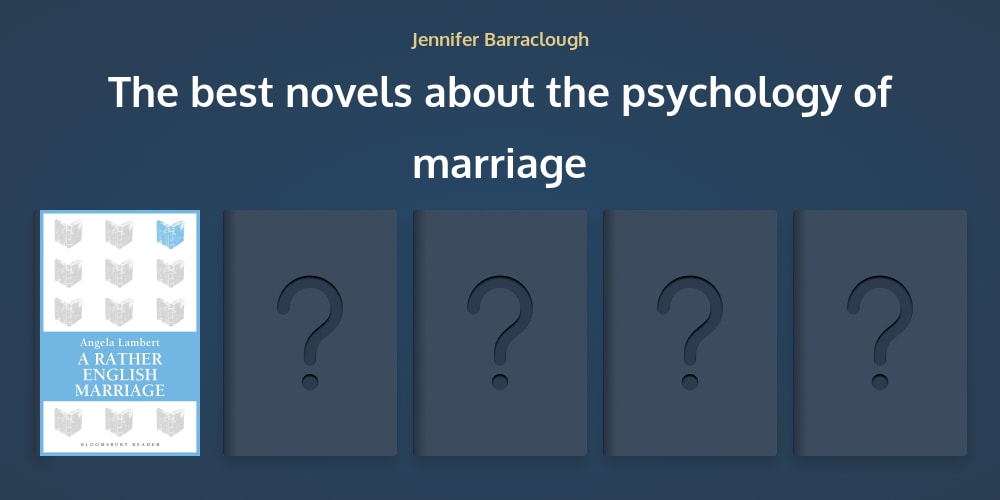
Here’s my list of “The best novels about the psychology of marriage” on Shepherd.com. It includes five books on a theme loosely related to that of my own new novel. Most of the plots involve some kind of marital conflict, or touch on the related topics of adultery, widowhood and divorce, but have (reasonably) happy endings.

This is the third list I’ve published with Shepherd. The process of compiling them encourages me to read more widely and reflectively, as well as providing a stress-free method of publicising my own books.

I dislike promoting my own work. I sometimes feel physically sick when writing emails to friends and acquaintances to tell them about my latest book. I’ve had little success with paid adverts and promotions in the past, so I don’t do them any more. When I was younger I enjoyed giving talks, even to large audiences, but not any more. All the same, with around three million books now being published each year in the US alone, indie authors like myself have to do some marketing if they are going to achieve more than a handful of sales.

So, in the hope that you’ll have a look at No Good Deed, here is a comment emailed to me by one reader:

“My goodness your new book is incredibly powerful, backed up by strong writing. I couldn’t put it down and it affected me emotionally as well … I thought the climax was stunning.”

No Good Deed is available in print and ebook versions from major online retailers through this link.

My new novel

I’m pleased to announce the publication of my latest short novel No Good Deed.

“Charlotte and Henry’s quiet retirement is upended when a medical school reunion forces Charlotte to confront a long-buried trauma. Her search for closure takes a sinister turn, and meanwhile Henry’s heart condition is getting worse. A tragicomic tale with a chilling final twist.”

The old saying “No good deed goes unpunished” gave me the idea for this book, and the storyline evolved gradually over a year or two. Although it’s not directly autobiographical it draws on my experience as a medical student, practising doctor, patient, patient’s wife – and life coach. It touches on some serious themes but has humerous aspects too.

No Good Deed is available in ebook or print formats from multiple online retailers. Please have a look: https://books2read.com/u/b5Exvk.

Writing the blurb for a new novel

Writing a book – in my opinion – is much easier than marketing it. As stated in an article on Draft2Digital, crafting the blurb requires a switch from “author” mode to “copywriter” mode, which may not come naturally. Their recommended structure for a fiction blurb begins with a “hook”, and ends with “social proof” such as excerpts from reviews.

My own forthcoming novel No Good Deed is not directly autobiographical, but in keeping with the advice to “write about what you know” it draws on my own experiences ranging from sexual harassment at medical school, my husband’s heart attack, and on a lighter note life coaching and cookery. I’m currently working on the blurb, and here is a draft version. Any suggestions about how to make it more compelling would be welcome. I haven’t (yet) sought help from ChatGPT.

Marriage. Memories. Medicine. Poison.
Charlotte and Henry, a married couple in their sixties, live a comfortable but monotonous life somewhere in the English midlands. Henry recently retired from his post as a consultant pathologist at the local hospital. Charlotte once hoped for a medical career of her own, but following an experience of abuse during her student days she had a “nervous breakdown” and did not complete the course. She now combines being a homemaker with doing good works in the local community, although her efforts tend to misfire. She has recently started seeing a life coach who is encouraging her to be more assertive. When Henry insists that she accompanies him to a medical school reunion she attempts to confront her abuser, with sinister consequences. This tragicomic story ends with a dark twist.

From Amazon reviews of Jennifer’s earlier novels:

You Yet Shall Die: I found the book both intriguing and unusual. I could hardly wait for the story to unfold as family secrets, crime and murder came to light – the ending was totally unexpected. An absorbing read. 


Cardamine: This is a gripping mystery which keeps you guessing until the end, with twists and turns up to the last page.

Three Novellas: Jennifer brings together all her experiences from previous work to produce a superb trilogy finishing with an interesting twist.

Photo by Debby Hudson on Unsplash

Recurring themes in fiction

Many fiction writers include similar characters, settings, plot lines and underlying themes in different books even if they are not part of a series. This may be deliberate, if they have already found a successful formula and want to give readers more of the same. At other times it happens less consciously, and reflects personal experience or psychology.

In my last post I wrote about entering my eligible novels, through Draft2Digital, into Apple’s trial of digitally narrated audiobooks. Cardamine was first to be published in this format, and Carmen’s Roses is now available too. These two books were originally written several years apart, and until I listened to the previews of their first chapters I hadn’t quite realised that they both begin with an Englishwoman taking a holiday in New Zealand. Not surprising really, because such holidays were a significant part of my own life before I moved permanently to Auckland. Cardamine and Carmen’s Roses are quite dissimilar otherwise although their plots both involve a missing woman. This is the case in some of my other writing too although I don’t know why. I also realise that several of my novels feature unpleasant male doctors. These characters are not based on any one real individual, but are informed by various interactions I have had during my own medical career and as a patient myself. 

Cardamine, Carmen’s Roses and some of my other books can be found at https://books2read.com/jenniferbarraclough.    

The audiobook of Cardamine

I’m pleased to announce that my novel Cardamine: a New Zealand mystery is now available from Apple’s Audiobook Store.

Producing an audiobook in the traditional way, with the text read by live actors, is so expensive and time-consuming that I have never considered doing it. But I was recently invited through Draft2Digital to submit some of my fiction books for inclusion in Apple’s trial of using digital voices. It was free for me to take part, so I decided to accept.

Cardamine is set in New Zealand in the summer of 2019. Kate, on the last day of her backpacking holiday, loses her bag in a vineyard and misses her flight home to England. An eccentric elderly man comes to her rescue and invites her to stay on as his paid companion in his country home. The man’s wife is away, said to be back in her home country, but Kate comes to suspect that her absence has a more sinister explanation… 

My digital voice, called Amberley, has a British accent appropriate for the character of Kate. She’s not very good at pronouncing Māori place names, but otherwise I think she does a good job of telling the story. I am interested to see that Apple has set the price at twice that of the e-book, even though it was presumably very cheap to produce, and it will be interesting to see if anyone buys it.  

This book and some of my others others can be found at https://books2read.com/jenniferbarraclough

Holiday reading recommendations

During this year I’ve read or reread a variety of books, and written brief reviews of some favourite ones for shepherd.com. If you’re wanting ideas either for your own reading over the holidays or for Christmas gifts, you might like to look at the lists below. Click on the images to see my personal appraisals of these books, with links to their details on your local Amazon site.

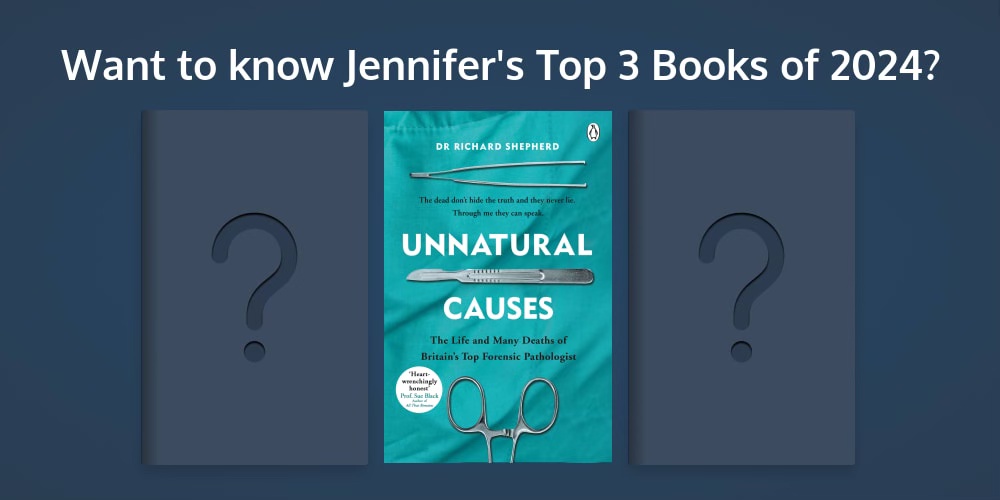
For my “Three favourite reads of 2024” – not necessarily published in 2024 – I chose three completely different books, one novel and two non-fiction:

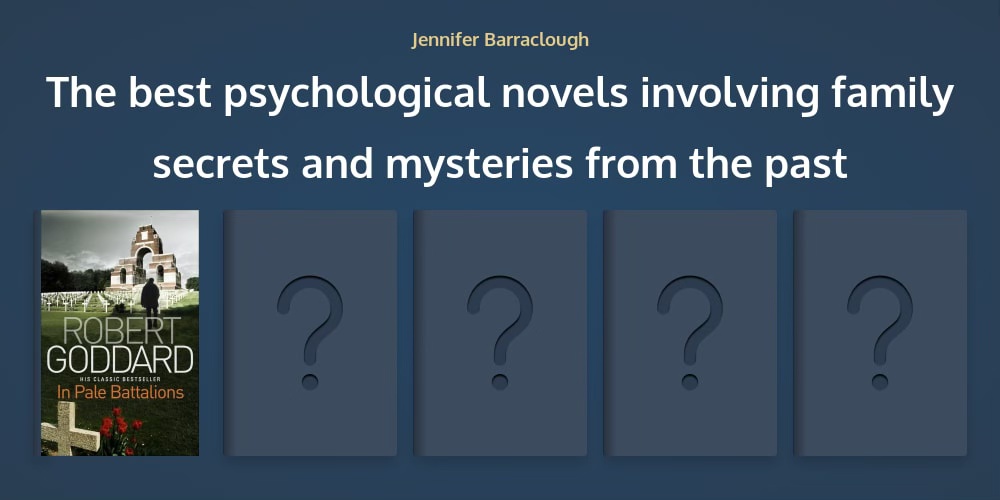
My list of novels on the theme of “Family secrets and mysteries from the past” includes three modern classics which I’ve enjoyed reading again, and two contemporary psychological thrillers, linked to one of my own books:

Thirdly a non-fiction list on the theme of “Doctors who have been patients themselves“, including the short book about migraine that I published this year:

Seasons greetings to all my readers, and thank you for your interest in my blog and my books.

AI for writers – wonders and dangers

An invitation to a free webinar about “AI for Authors” recently popped up in my inbox. Having little experience with AI, apart from using ChatGPT to generate an image for the cover of my last book, I watched the webinar with growing amazement. The presenter demonstrated how AI could write a story on a given topic with lightning speed, and then produce any number of edited versions with different prose styles or plot twists. He also showed how AI could generate content for a daily series of blog posts.

I am currently stuck with my new novel, which is loosely based on an episode of sexual harassment during my student days. I’ve written the first half but can’t decide how to continue the story towards a satisfactory ending. So as an experiment I asked ChatGPT for some ideas. With some apprehension, feeling rather as if I was sending in an essay likely to be criticised, I submitted a 500 word summary of the existing text.

The response came back at once. Following an introductory comment about “psychological conflict and unresolved trauma” it listed five possible directions in which the novel could develop. They were all appropriate, taking account of the story so far and the motivations of the four main characters. A human editor would have taken quite some time to read my summary and come up with so many options. I still find it incredible that AI could give such a detailed response instantaneously.

I could ask ChatGPT to give me more ideas, or even to finish the book for me, but I don’t intend to do so. Because I write mainly for my own satisfaction and enjoyment, it would seem pointless and a bit like cheating. AI must be an invaluable tool for certain professional writers, for example journalists working to a deadline. But over-reliance on AI, especially for fiction, could stifle originality and lead to the rapid churning out of books with recycled content and wide scope for plagiarism.

The awe-inspiring power of AI was predicted in a quote attributed to the late Stephen Hawking: ‘Somebody asks a computer “Is there a God?” and the computer replies “There is now”.’

Disclaimer: AI was not used in writing the text of this post. But I did ask ChatGPT for an image and received this reply:

“Here is the symbolic illustration representing the use of AI as a tool for writers. It highlights the harmony between creativity and technology. Let me know if you’d like any adjustments!”

Revisiting my NZ/UK Trilogy

Except for those outstanding ones that acquire classic status, most modern novels lapse into obscurity within a few months of publication. This is a pity because they might well remain readable for years to come. The huge number of new books being released every day is one reason for declining sales. Another is a lack of ongoing marketing and, in common with many other authors, I feel uncomfortable with self-promotion. But there are times when it has to be done, so this post is about the revival of some of my earlier work.

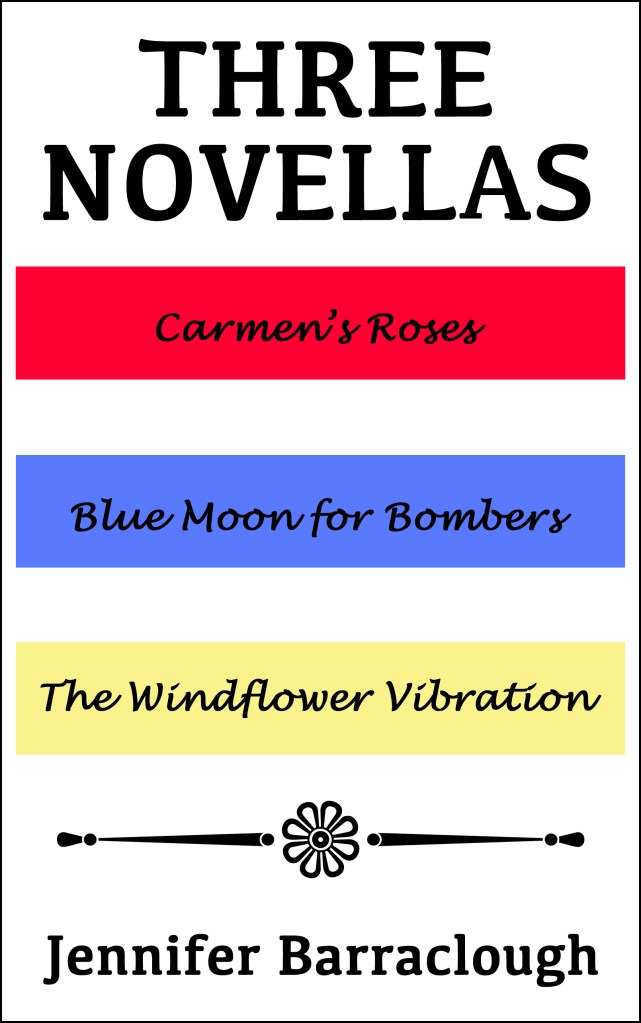
Ten years have passed since I began my self-publishing career through Amazon kdp, with a short novel called Carmen’s Roses. Encouraged by its success I went on to write two sequels, Blue Moon for Bombers and The Windflower Vibration, published separately and then as a combined set called Three Novellas. To mark their 10th anniversary, and in the hope of reaching a wider readership, I am now reissuing them as low cost e-books on multiple channels through the Draft2Digital platform.

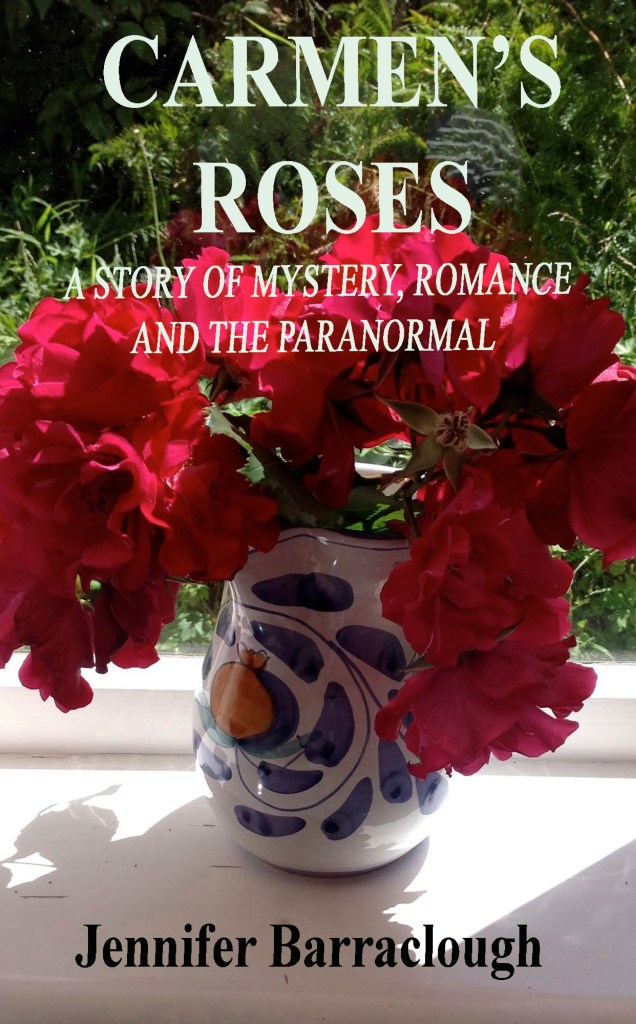
The first book Carmen’s Roses is set in Devonport, the Auckland suburb where I live. It is a story of mystery and romance which touches on some deeper themes. The narrator, Iris, is leaving the English winter to take a holiday in the New Zealand sunshine, with the intention of completing her recovery from a serious illness and making amends for a shameful episode in her past. But the shock of a sudden death, the shadow of an old love affair, and the onset of ominous new symptoms threaten to destroy her hopes of happiness and healing. The book, described by one reader as an “Interwoven tale of love, mystery and more than a touch of the paranormal'” received 5-star reviews on Amazon, for example “Jennifer draws believably on her medical background and in this story weaves a very tangled web indeed”.

The second book, Blue Moon for Bombers, is set in England in 2007, when an old man in his hospital bed is haunted by memories of serving with Bomber Command in World War Two. Meanwhile back in his country home, the continuing fallout from his wartime trauma leads to rising tension among the two younger couples who are marooned indoors by the summer floods. With testimony from an unexpected visitor, and some guidance from the spirit world, the family’s secrets are revealed and the emotional wounds begin to heal. Again, the reviews were positive: “Excellent strong plot … like a Victorian novel set in modern times” “Brilliant ending”.

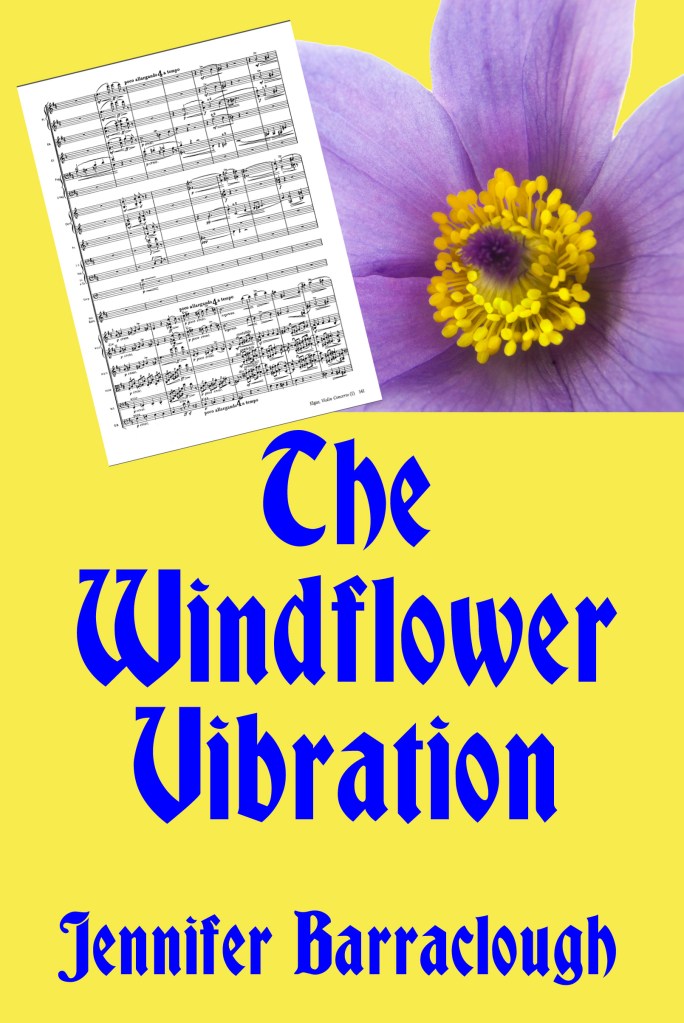
Thirdly The Windflower Vibration, with action split between Takapuna in New Zealand and Malvern in England, continues and weaves together the stories from the first two books. A man dies while swimming off an Auckland beach, and a woman who witnesses the event becomes involved in its aftermath. Was the death due to natural causes hastened by medical malpractice? Or was it one strand in a complex web spread over two hemispheres and two centuries? Although I think this book is equal in standard to the previous ones it gained less attention, perhaps because it deals with characters in later life – just one 5 star rating, no reviews.

Rereading my three novellas recently I felt they deserved a new lease of life. So if you haven’t seen them before, please have a look at these ebooks, and some of my others, through this link. There are print versions on Amazon too.

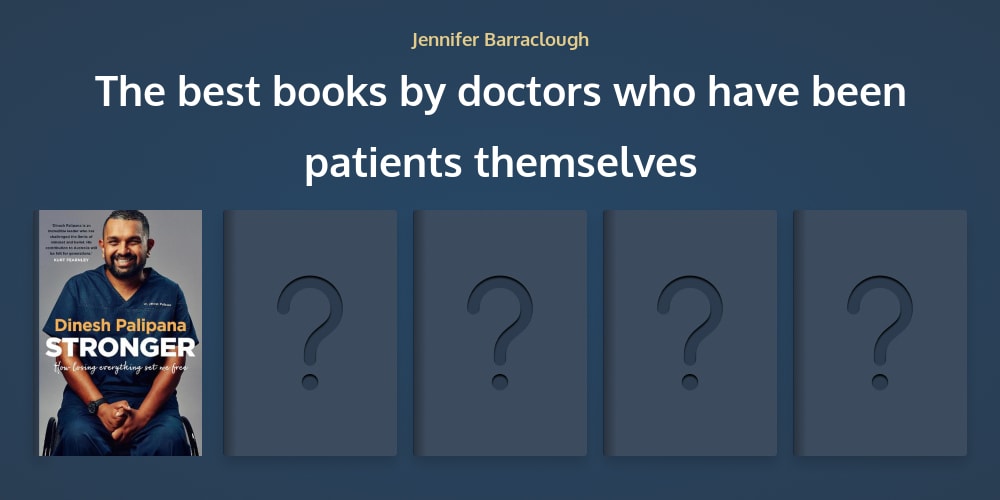
The best books by doctors who have been patients themselves

The website Shepherd.com offers readers a new way to discover books that may interest them. Each page describes one book by a contributing author, and five others on a related theme. I was invited to create a page on a theme of my choice, and having just published a memoir about my own migraine, I decided to look for books written by other doctors who had been patients themselves. I was less interested in the medical details than in the way the illness experience had shaped their personal and professional lives. I came up with a varied list of recommendations.

Doctors can face particular challenges when they become patients. The change of status may seem humiliating, as poignantly described in the saddest book on my list, by an eminent surgeon who felt himself reduced to “Just another old man with prostate cancer”. On the positive side, doctors who are still working may well become better clinicians especially as regards communication with patients and relatives. This comes through in a collection of vignettes about the everyday clinical work of a doctor with a long history of ulcerative colitis. A memoir by a medical student who was rendered quadriplegic in a car accident, but went on to qualify and build a successful career, is an inspiring read showing what determination can achieve. My two most unusual book choices are by doctors whose illness experience proved a catalyst for a move away from orthodox medicine towards alternative fields with a spiritual focus.

To see details of my list please click on the image below, or visit this page.

,

Migraine: stigma and misunderstanding

Although medical topics are more openly discussed nowadays, some diagnoses seem more socially acceptable than others. People are quite happy to talk loudly in cafes about their heart attacks and hip replacements, but not about conditions likely to evoke fear, disgust, disapproval – or disbelief, in cases of “invisible” illnesses that are not clearly defined or understood.

When I have been injured in falls caused by my own recklessness while playing with exuberant dogs or running on slippery rocks, other people have always been helpful and sympathetic. Such a contrast to the negative reactions I have sometimes received in relation to migraine, and I know that my experience is not unique. People who have never had an attack themselves may assume migraine to be “just a headache”, or “all in the mind”, a trivial indisposition being exaggerated to gain sympathy or avoid unwanted obligations, and brought on through the sufferer’s own fault. 

Research over recent years has identified some of the genes which predispose to migraine, and some of the physiological changes that take place during attacks, and migraine is now classed as a neurological disease. But its validity is not always recognised because it is a complex condition that can present in a wide variety of ways and follow a variable course, and there is no diagnostic test. Other conditions which have a consistent symptom pattern accompanied by specific abnormalities of biochemistry, pathology or Xray, are more likely to be taken seriously. 

Someone in the throes of a severe attack, prostrated by pain and vomiting, is clearly very unwell. But in between attacks they may look and feel quite healthy, so that observers cannot believe there is anything wrong with them, and do not understand why they may be trying to control their condition by lifestyle measures. For example, while it would be accepted that someone with diabetes needs to follow certain rules about diet, a migraineur wanting to avoid “trigger foods” when out for a meal risks being considered rude and fussy. 

Some of the stigma around migraine may be blamed on lingering sexist attitudes within the medical profession. Historically, certain doctors labelled their female migraine patients as neurotic, hypochondriacal and frigid, while describing their male ones as responsible, ambitious high achievers. Psychoanalysts have claimed, usually without any evidence, that the attacks represent sexual conflicts or the outburst of suppressed emotions such as anger or disgust. Such theories are less fashionable now that the biological basis of migraine is established, but have not entirely disappeared. 

Lastly, though I am reluctant to admit it, I believe that migraineurs themselves can play a part in perpetuating stigma. My husband has told me that my personality appears to change during attacks, and not in a good way. If this is true for me and others, maybe we unknowingly give off “vibes” that confuse and alienate people. A projection of the guilt or shame we ourselves may be feeling at these times? If we were better able to retain our self-respect, and not try to hide the attacks nor apologise for them, we might get fewer hurtful responses. 

Migraine and Me: A Doctor’s Experience of Understanding and Coping with Migraine by Jennifer Barraclough is available in e-book or print versions from Amazon and other online retailers.