
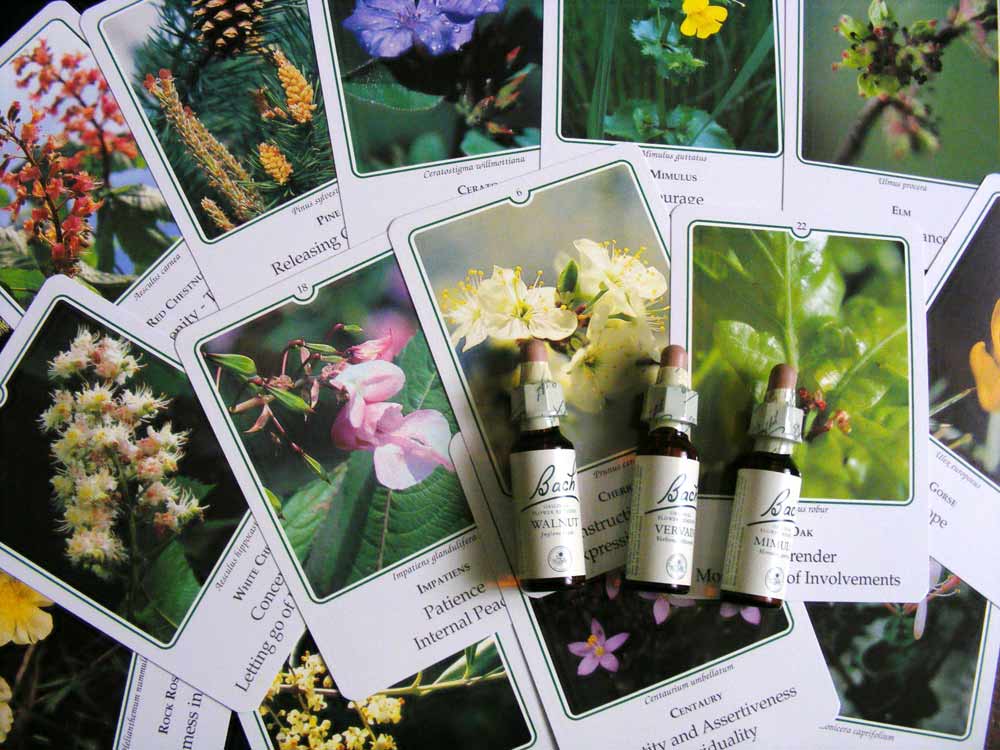
The Bach flower remedies are not intended to treat migraine or any other medical disorder directly, but to correct any imbalances of mood or personality which may be associated, whether as cause or effect. They are among the many “complementary” modalities which can aid in the management of this complex condition.
The system was developed in England by Dr Edward Bach almost a hundred years ago. Through intuition, he identified a series of wild flowers corresponding to the emotional states of people and animals. This may sound unscientific and bizarre, but the therapy continues to be widely used around the world, and a number of clinical trials have testified to its effectiveness: I am one of the practitioners contributing to a new database of published studies which can be found at https://www.cambridge-bach.co.uk/bach-science-studies-database/ . The remedies, prepared in liquid form and taken by mouth, carry the energetic signature of the source plant. They are safe and free from side effects, having no chemical content apart from the low concentration of brandy used as preservative. An individualised mixture, containing up to six of the 38 remedies, is chosen for each client.
Because the therapy is prescribed for the person not the disease, there is no standard formula for migraine. Theoretical examples of flowers to address the emotional burden of the condition include Mimulus for fear of more attacks, Elm for feeling overwhelmed by responsibilities, Gentian for being discouraged about the lack of improvement, Red Chestnut for worries about how the attacks are affecting others. Treatment needs to be continued for several weeks to have a lasting effect but can be short-term for acute situations and Rescue Remedy, a combination of five flowers available as spray, can have a calming effect in the early stages of a migraine attack.
Whether or not a “typical migraine personality” exists, any long-term traits of personality which are making life more stressful could be contributing to attacks. Philip Chancellor’s book Illustrated Handbook of the Bach Flower Remedies, published in 1971, reads as somewhat old-fashioned but contains many interesting case histories from the records of Dr Bach’s clinic in the Oxfordshire village of Brightwell-cum-Sotwell. It describes five women with migraine, all of whom improved on remedies chosen according to their personality type. These included Chestnut Bud for being slow to learn from experience and repeating the same mistakes in life; Oak for working to the point of exhaustion due to a strong sense of duty; Scleranthus for an inability to make decisions; Vervain for being unable to relax due to over-enthusiasm; Wild Rose and Centaury for a woman passively resigned to being dominated by her husband and having no life of her own.
Two of my own books are relevant to this topic. Beautiful Vibrations: Living through medical illness with Bach flower remedies and Migraine and Me: A doctor’s experience of understanding and coping with migraine. Both are available in print or e-book formats through major online retailers.

 Jennifer Barraclough